


Dijk, Antonius Johannes Maria van, born 19-04-1905, in Helmond, 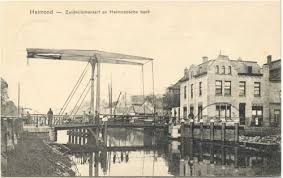 the son of Petrus Jacobus van Dijk (*1877) and Maria Aldegonda, born Welten (*1881) and was married with Anna Theodora Arts. Antonius became a member of the NSB
  under leader Anton Adrian “Ad” Mussert
 and the German SS
  . Van Dijk followed the HBS in his birthplace Helmond. He then found work with the police in my hometown Eindhoven. He was a convinced National Socialist. In September 1941, Van Dijk was appointed commander of the police force in Nijmegen, succeeding police commissioner J.T Veltman, sitting second from left.
 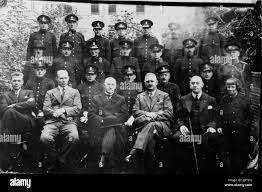 In the course of 1942 he formed the so-called “Political Service” within the police apparatus, consisting of fanatical Jew hunters led by NSB member Marinus Verstappen,
 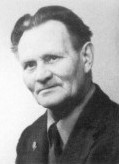 .
.
Van Dijk’s predecessor as police commissioner J.T. Veldman had tried to keep the police force “clean” and had avoided contact with the Sicherheitsdienst  from Arnhem as much as possible. After his appointment as commissioner, Van Dijk appointed a number of reliable NSB members to key positions, including the infamous Marinus Verstappen. Initially, the police were mainly concerned with monitoring listening to the banned English radio broadcasts, but the emphasis soon shifted to tracking down resistance fighters and Jews.Many belongings of deported Jews were not handed over to the Germans by the Nijmegen police, but were confiscated for their own use. As police chief, Van Dijk had the first choice. He even went so far as to have a wealthy Jew tipped off by a subordinate that his arrest was imminent. The person in question then went into hiding, after which Van Dijk was able to seize a large part of his possessions. Several of his subordinates objected to Van Dijk’s raids, not because it was morally wrong, but because it left them with less. From that moment on, Van Dijk turned a blind eye to allowing them too to confiscate things for their own use.In his performance, Van Dijk was very aggressive towards detainees. In May 1943, an investigation was conducted into the actions of the policeman and he himself received a reprimand. In the same period he was expelled from the NSB. The reason for this was that he sent a fellow party member, who had a pregnant wife and two sick children, to Camp Vught,
 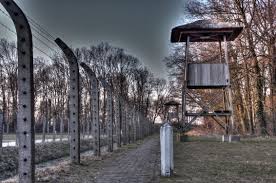 because he had stayed in the porch of his own home during curfew.
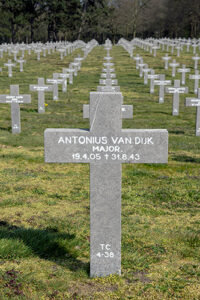
Death and burial ground of Dijk, Antonius Johannes Maria van.
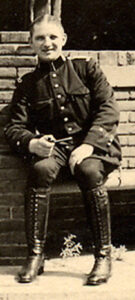
As head of the police in Nijmegen, Van Dijk was primarily responsible for the arrest of five hundred Jews. Every day Van Dijk walked from home to the police station via a fixed route to show that he is not afraid of anyone. This overconfidence becomes fatal for him. Van Dijk was liquidated on 08-07-1943, age 38, on the Hertogplein in Nijmegen by the Drunense resistance member Hendrik Romeijn 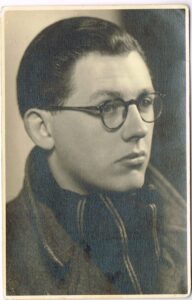 .a resistance fighter from Waalwijk. Henk “Hendrik” was born on 21-08-1921 in Rotterdam. Because his single mother Bets cannot take care of him, Henk is given over at a young age to the foster family Jannes and Kee van Loon-Klerkx from Drunen. Henk has weak health and suffers from tuberculosis, but he is nevertheless energetic. Henk is known as a restless hothead and was very fiercely anti-German during the occupation years. During his stay in a sanatorium in IJsselstein, he becomes involved in the active resistance. He starts working at the distribution office in Waalwijk and is initially concerned with the distribution of illegal newspapers and the assistance to people in hiding in Drunen. Romeijn was a member of the Amsterdam resistance group CS-6, which regularly committed attacks on “wrong” Dutch people, such as Lieutenant General. Hendrik Alexander Seyffardt.

 Hendrik was arrested for this on the same day and executed by the Germans on 05-04-1944, age 22. The place of execution has never become entirely clear. Hendrik would have been put in front of the firing squad in Arnhem, but Vught and Amersfoort are also mentioned as places of death. His body has never been found.
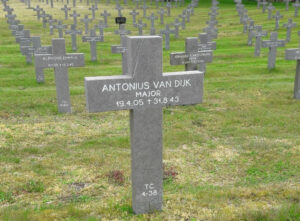
Van Dijk died in the following August and is laid out in state in the new council chamber of the town hall. On his deathbed he was rehabilitated by the NSB. His funeral at Rustoord takes place with the well-known Germanic splendor. (below) Van Dijk was laid out in the new council chamber of the city hall in Nijmegen, and buried with military honors in the “Heldenfriedhof” of Rustoord. 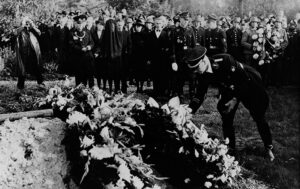 After the war, the grave was cleared and his remains were transferred to the German military cemetery in Ysselsteyn, Limburg. Section of Dutch traitors TC-4-38
Message(s), tips or interesting graves for the webmaster: robhopmans@outlook.com




Leave a Reply