


Baird, Henny Welles, born13-08-1881, on Kent Island,  Queen Anne’s County, Maryland, United States. Henny was married to Elizabeth Baird (1892–1984) and the couple had two daughters and one son, Elizabeth Baird (1914–1976),
  Isabelle Baird Sprague (1916–2004) and Dr Henry Welles Baird III (1922–1987)
  . Between 1904 and 1907, Henry Baird was a private in the 15th Cavalry Regiment,
  which was stationed in Cuba at the time. In 1907, he entered the officer corps of the U.S. Army
  as a cavalry lieutenant. In the army, he subsequently went thru all the officer ranks from lieutenant to two-star General. In the following years, he completed the customary service for officers at the corresponding ranks in various units and locations. This also included duties as a staff officer in various headquarters. In 1923, he graduated from the Command and General Staff College in Fort Leavenworth, Kansas.

 .
.
Between 1929 and 1935, Baird was an instructor for reserve units in Florida (Instructor of Organized Reserves, Florida). Afterward, he was assigned to the staff of the 1st Cavalry Regiment,  which had just been converted from a classic horse cavalry unit to a mechanized armored unit, until 1937. The commander of the U.S. Army’s 1st Cavalry Regiment (Mechanized) in 1935, a pivotal time for mechanized cavalry, was Colonel George Smith Patton Jr.


After a temporary transfer to the reserve units of the state of Maryland, where Baird also served as a training officer, he returned to the 1st Cavalry Regiment, where he commanded the regiment stationed at Fort Knox between November 1938 and July 1940.
In May 1941, Henry Baird took command of the newly formed 4th Armored Division  , a position he held until May 1942.
The 4th Armored Division was an armored division of the United States Army that earned distinction while spearheading General Patton’s Third Army in the European theater of World War II. The 4th Armored Division suffered significant losses in WWII, with estimates around 6,000+ battle casualties, including approximately 1,300-1,500 killed in action (KIA) and over 4,200 wounded, with total casualties (battle + non-battle) nearing 10,500, demonstrating heavy engagement in the European Theater from Normandy through Germany.
The 4th Armored Division, unlike most other U.S. armored divisions during World War II, did not officially adopt a nickname for the division during the war. However, their unofficial nickname “Name Enough” came into use postwar; the division commander having said, “Fourth Armored Division was name enough”; “They shall be known by their deeds alone.” The 4th was named the “Breakthrough” division in 1954, but that name was eventually discontinued.
During this time, the United States entered World War II. The division was understaffed and poorly equipped at that time. At the beginning, it only had 20 vehicles, so among other things, they worked with tank decoys. The division under Baird’s command did not see any military action.
On 04-04-1945, the “Breakthrough” division overran Ohrdruf, a subcamp of the Buchenwald concentration camp. It was the first Nazi camp liberated by US troops. 
The SS established the Ohrdruf subcamp in November 1944 near the town of Gotha. At its peak in late March 1945, the camp had a prisoner population around 11,700. The SS forced prisoners to construct railway lines and dig large caverns inside a nearby mountain for the construction of a new communications center. This communications center, however, was never completed because of the rapid US advance. Conditions at the work site were harsh, unsafe, and unhealthy. As the Allies approached in early April 1945, the SS moved thousands of prisoners from Ohrdruf on foot and in trucks to the Buchenwald main camp and toward Regensburg. Prisoners who were too ill to walk to the railway cars were killed by SS guards.
Death and burial ground of Baird, Henny Welles.
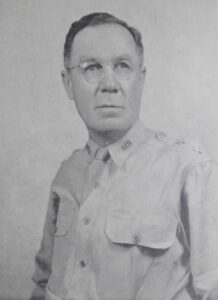
After his time as division commander, Baird was demoted from his then-temporary rank of Major General to Colonel and placed on the Retired List, where he remained until 1948, when he retired again with the rank of Major General. There is no information in the sources regarding the background of these actions or any assignments between 1942 and 1948. There is also no record of his time after his retirement. Henry Baird passed away on 10-10-1963, age 82, and was buried at Arlington National Cemetery, Arlington, Arlington County, Virginia, United States. Section 1-936-A.


Leave a Reply