


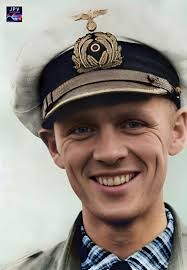
Hardegen, Reinhard, born 18-03-1913, in Bremen, 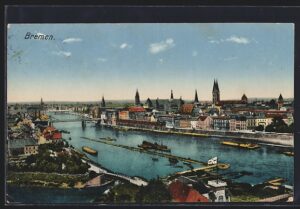 Germany, to Dr. phil. Friedrich Hardegen (1882–1917) and his wife Elisabeth, born Dreier, Hardegen (1884–1975). Reinard had one sister Agnes-Marie Hardegen Georgii (1911–2005) and Reinhard was married with Barbara, born Petersen, Hardegen (1915–2004).
Even as a child, he dreamed of a career in the German Navy. After finishing secondary school, he enlisted in the Kriegsmarine as a naval cadet.
Hardegen began his naval career in April 1933. After two and a half years he was transferred, together with other officers, to the Marineflieger (Naval Air Force) 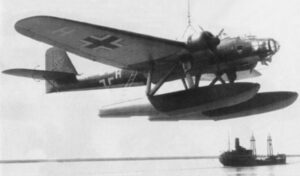
 branch of the Kriegsmarine. He was trained as an aircraft observer and later as a pilot. Following a crash and an ensuing six months in hospital, he transferred to the U-boat force in November 1939.
Hardegen received his first operational experience on U-124, 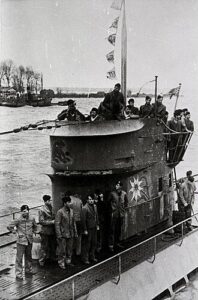
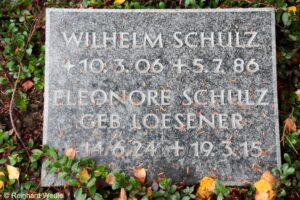
 under Kapitänleutnant Georg-Wilhelm Schulz.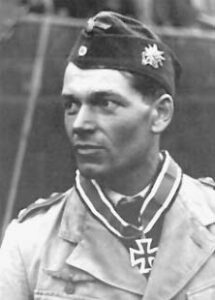
 In December 1940 he was made commander of U-147. On his first patrol in her in March 1941 he sank the Norwegian steamer Augvald (4,811 tons).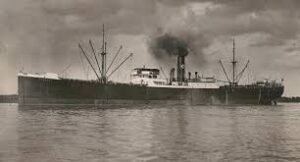
On 16-05-1941 he took over U-123, 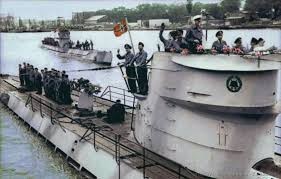 a very successful boat, from Korvetten Kapitain Karl-Heinz Moehle.
 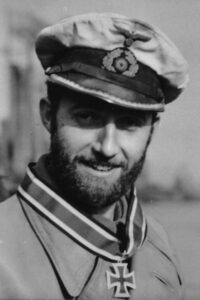 who survived the war and passed away age 86, on 17-11-1996, in Ahrensburg.
On his first patrol, in summer 1941 in West African waters, Hardegen sank five ships with a total of 21,507 tons. In October 1941 he torpedoed the British auxiliary cruiser HMS Aurania (13,984 tons), 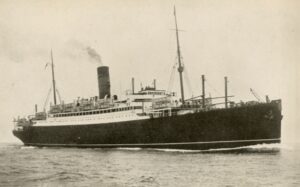 but the badly damaged ship was towed to harbour by two destroyers.
Hardegen’s medical history then finally caught up with him. Due to injuries received in the 1936 plane crash, Hardegen had actually been classed as unfit for U-boat service. However, his papers had repeatedly arrived at each training location after he had already departed for the next. Now Grossadmiral Karl Dönitz 
 learned of Hardegen’s lingering injuries (including a shortened leg and chronic bleeding of the stomach which required a special diet), but rewarded Hardegen’s dedication by permitting him to carry out two further patrols.
On 23-12-1941 U-123 left Lorient on a special mission. She was one of five U-boats ordered to launch an attack against the eastern coast of the United States, part of operation Paukenschlag (Drumbeat). Operation Drumbeat was a successful German U-boat campaign in 1942, aimed at disrupting American shipping along the East Coast.
On 12-01-1942, before reaching the operational area, Hardegen sank the British freighter Cyclops 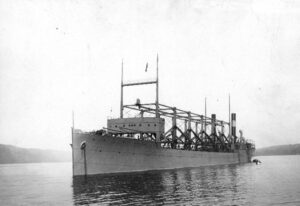 in Canadian waters. Although this was two days before the official start of Operation Paukenschlag, the commanders had permission to sink ships on the crossing to the US coast if they were larger than 10,000 tons. The next two weeks were very successful for U-123, sinking nine ships with a total of 53,173 tons. On 20 January Karl Dönitz sent the following radiogram:
An den Paukenschläger Hardegen. Bravo! Gut gepaukt. Dönitz.
- (For the drum-beater Hardegen. Well done! Good beating. Dönitz. )
Three days later Hardegen received a radio message that he had been awarded the Knights Cross .
In March 1942 Hardegen was once more in U-123 off the US east coast. During this second Drumbeat patrol he sank ten ships with a total of 57,170 tons. For this additional outstanding patrol he was awarded the Oak Leaves to his Knights Cross 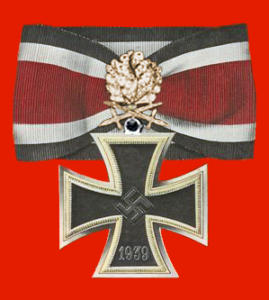 while still at sea. In May 1942 Hardegen brought U-123 back to Kiel for repair.
During the return journey, Hardegen sank the cargo ship SS Alcoa Guide (4834 GRT) on April 16 with the deck gun, 37 mm, and 20 mm Flak cannons. On April 23, Hardegen received a radio message confirming that he was awarded the Oak Leaves to his Knight’s Cross. On May 2, U 123 was back in dry dock at Lorient, marking the end of Hardegen’s career as a U-boat commander. He was then invited to a dinner with Adolf Hitler, along with fellow Oak Leaves recipient Erich Topp. 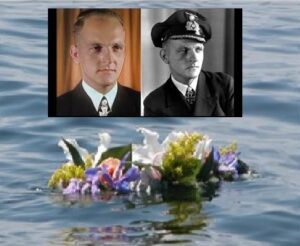 During this dinner, Reinhard Hardegen embarrassed his colleagues by sharply criticizing Der Führer’s decision not to prioritize the U-boats, causing Hitler to turn red. After this pleasant gathering, Hardegen received a stern reprimand from Chief of Staff Alfred Jodl,

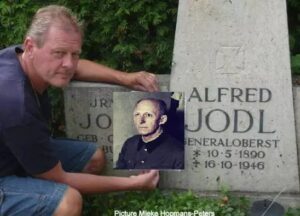 to which Hardegen replied:
The Führer has the right to the truth, and I have a duty to speak!
On 31-07-1942 he left U-123 to become an instructor with the 27th (Training) Flotilla in Gotenhafen. In March 1943 Korvetten Captain. Hardegen became chief of U-boat training at the Torpedo School at Mürwik. After then serving in the Torpedowaffenamt (torpedo technical department) for a few months, he was made a battalion commander in Marine Infanterie Regiment 6 in February 1945.
After the war Reinhard Hardegen spent more than a year in British captivity before returning home in November 1946. He built up a successful oil trading company and was a representative in the parliament of his hometown of Bremen for 20 years.
After his release, he launched a successful business in the oil industry in Bremen. Subsequently, he served in the Bremen Parliament for more than 32 years. He was an efficient and effective commander and was never known as an ardent Nazi supporter.
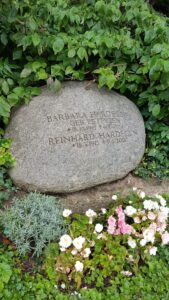
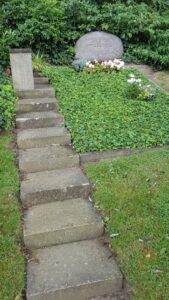
Death and burial ground of Hardegen, Reinhard.

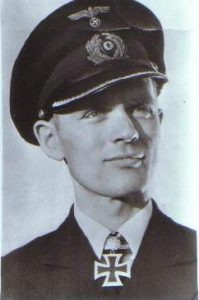

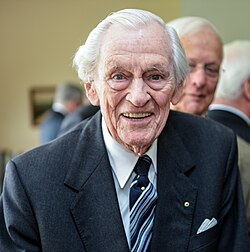
After the war, Hardegen was mistaken for a SS officer with the same last name, and it took him a year and a half to assemble the evidence to convince the Allied interrogators of his real identity. He went into the heating oil business—representing, among others, Texaco, whose ships he had sunk. He visited the United States many times, conversing with survivors and veterans regularly, including men who had tried to kill him during his U-boat service, and made friends with them. In 1989, he appeared in an episode of the American TV show, Unsolved Mysteries, presented originally by Robert Stack, 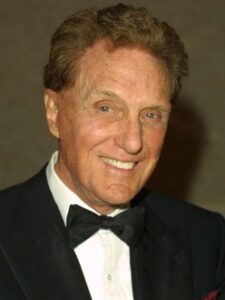 which examined the sinking of the Muskogee. The Muskogee was sunk on 22-03-1942 by Hardgen’s U 123 335 miles north-east of Bermuda, while sailing unescorted from Caripito (Venezuela) to Halifax with 67,000 barrels of crude oil. The ship sank in sixteen minutes, and ten of her 34 crew managed to jump overboard and climb onto two rafts; U 123 questioned and photographed them before leaving the area.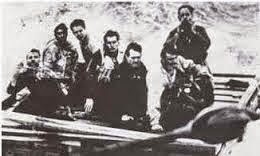
Hardegen returned to Jacksonville in 1990, where he was received as an honoured guest. He would say of the occasion that “The town was very friendly to me.” In 2012, he was honoured by the modern military in Germany for his wartime service. He turned 100 in March 2013 in very good health, winning golf trophies and still driving a car. Hardegen passed away on 09-06-2018, aged 105 and is buried at Friedhof Riensberg, Field EE, Friedhofstreet 51, 28213 in Bremen, Germany.
Message(s), tips or interesting graves for the webmaster: robhopmans@outlook.com


Leave a Reply