

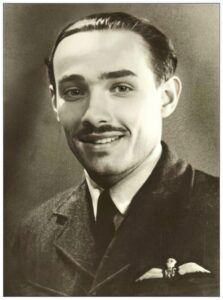
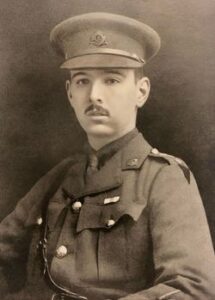
Oberdak, Czesław, born 20-07-1921 in Krakau, 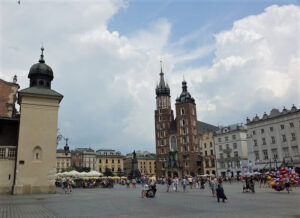 Poland. There he grows up with his older sister, Ludmila, and a younger brother, Roman. His childhood dream is to become a pilot. In 1939, he begins to pursue that dream at the Air Force School in Poznań.
  When the Germans invaded Poland in September 1939, he fled Poland just like so many other Polish soldiers. He follows the route thru Romania, Yugoslavia, and Italy. In France, he joins the Polish Air Force
  formed there in Lyon. His stay there is temporary. Most Poles are evacuated to the United Kingdom during the fall of France in June 1940, including Czesław.
On Tuesday the 30th of May 1944 at 12.30 hours the Polish pilot Czesław Oberdak made an emergency-landing in a pasture near the village of Dalmsholte – situated between Dalfsen and Ommen, 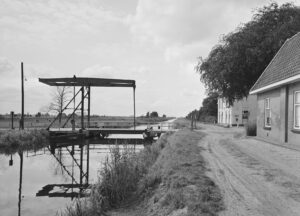 the Netherlands. He flew a North-American Mustang MK III with the code UZ-A,
 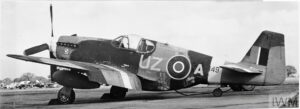 escorting American bombers, which had bombed the town of Schornebeck/Magdeburg in Germany. The engine of his Mustang was damaged by German anti-aircraft fire, while he was returning to his home base in Coolham, England. After a successful emergency-landing he first set fire to his plane and after that he ran to the woods to hide himself for the possibly present Germans. A Dutch young man took him up and contacted him with the Dutch Resistance.
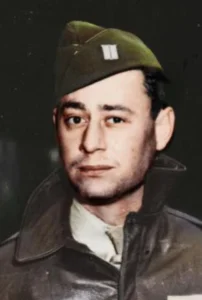
 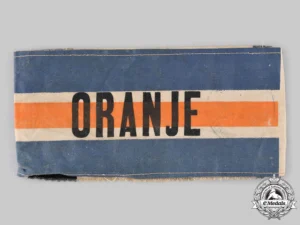 Afterwards someone of this organisation transported him to Ommen on his bike. There Oberdak met three Allied Airmen, who had found refuge there earlier. One of them was the American Frank Dent Coslett,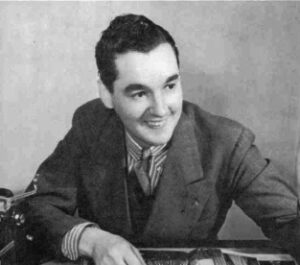
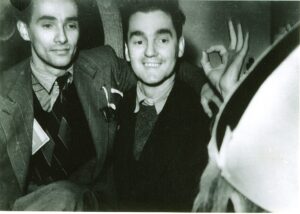 here with Czeslaw Oberdak, in whose company he remained for several months. When it became too dangerous at Ommen, they were transported to Dalfsen and later-on they were accommodated at Zwolle. At the end of July Oberdak and Coslett travelled to Amsterdam by train, where they got a safe hiding-place. There they left on the 6th of December 1944 in order to reach the liberated Southern part of the Netherlands by bike. Alas! they were discovered in their hiding-place in the neighbourhood of Otterlo by Germans. After that they were locked up in “De Kruisberg”, a prison at Doetichem.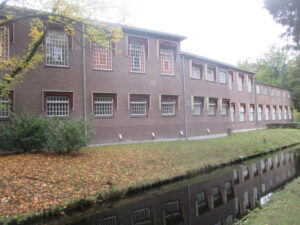
There he was seen alive for the last time by witnesses in the beginning of March 1945 and afterwards any trace of Czesław Oberdak was lacking. With reference to a letter from Czesław’s sister Ludmilla the journalist Richard Schuurman 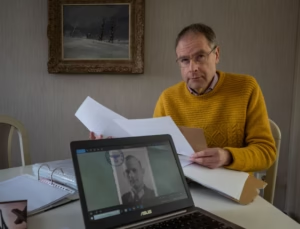 started a search which lasted a great many years. From the witnesses’ stories he heard, is to be concluded what kind of personality Oberdak was: a good singer and a talented drawer. But also he was afraid; so afraid, that he nearly always was at the outlook when other persons-in-hiding were playing cards or busy with other things. When he went to sleep, he hid himself at the most remarkable places; sometimes to his hosts’ displeasure.
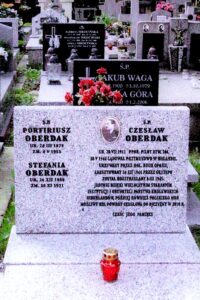
Death and burial ground of Oberdak, Czesław.
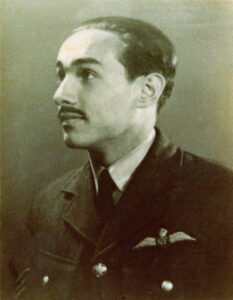
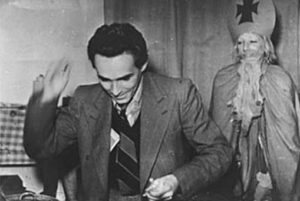
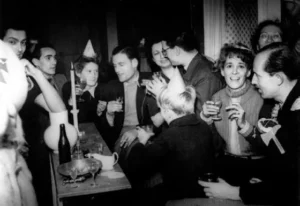 Oberdak second from left.
Because he was caught as a Pole in civilian clothes, the Germans did not consider him a prisoner of war but a “terrorist.” He was imprisoned in the De Kruisberg prison in Doetinchem. On 08-03-1945, at the age of 23, he was executed by firing squad along with 116 others at the Woeste Hoeve  in retaliation for the assassination attempt on SS leader Hanns Albin Rauter.


Oberdak was buried as an unknown 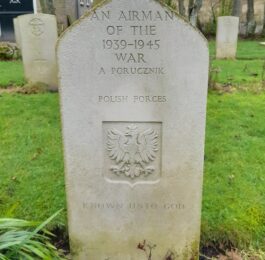 after the war, first in Ugchelen and later at the National Cemetery of Honor in Loenen. Only after years of detective work by journalist Richard Schuurman and a DNA match with his sister Ludmila in 2008, was his identity officially established. In 2009, he was reburied with military honors in the family grave in Krakow.




Leave a Reply