

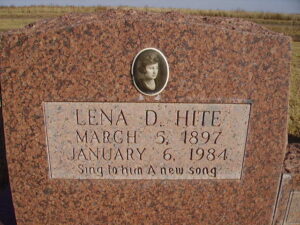
Hite, Robert Lowell “Bob”, born 03-03-1920, in Odell, Wilbarger,  Texas, United States, to Robert Parks Hite (1896-1941) and his wife Lena Dorothea, born Attaway, Hite (1897-1984).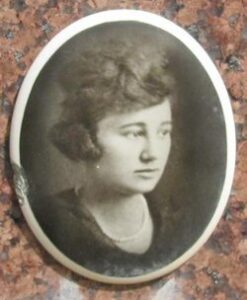
 “Bob” had one sister and one brother, Hazel Lorraine Hite Ricketts (1921–2023) and Colonel Kennith Frank Hite (1926–2019)
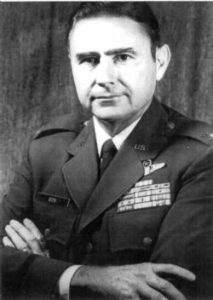
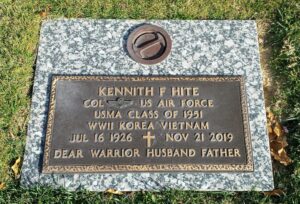 Kenneth was also a Colonel, U.S. Air Force U.S. Military Academy Class of 1951, active in World War II, Korea, Vietnam a dear warrior, husband, father.
The Hite family called young Robert by his middle name Lowell. The family had its roots in Georgia where they practiced farming. In Texas, the Hites lived and farmed for a time near Vernon until they moved to Earth in the Texas Panhandle in 1934. While living in Vernon, Lowell, his brother Ken, and father visited the Vernon Airport  and flew in a Ford Tri-Motor plane, an early transport aircraft. This event sparked Lowell’s early interest in aviation. In Earth, his father purchased land that had once been a part of the XIT Ranch. The Hites grew cotton, corn, grain sorghum, and raised horses and cattle. In the 1930s the Hite family, consisting of Robert, Lena, sons Lowell and Ken, and daughter Hazel, experienced hardship with the Great Depression
  and the Dust Bowl.
 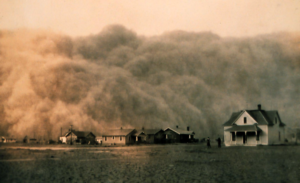 At times, the youngsters wore wet bandannas around their faces to prevent breathing dust. Living like pioneers in poverty conditions, the Hites worked with horses and mules, lived off the land, and made their own clothing. In spite of the difficulties, the family managed to improve their condition by building a new house with running water, and purchasing a tractor.
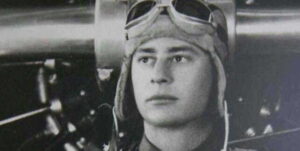 Robert Lowell Hite earned his wings in the U. S. Army Air Corps in May 1941.
Lowell Hite graduated from Spring Lake High School (now Spring Lake-Earth High School) in 1937. 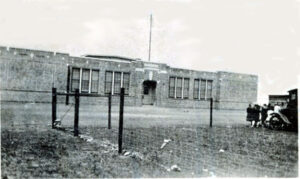 After high school, he studied agriculture at West Texas State Teachers College in Canyon (now West Texas A&M University), but, with an endorsement from his congressman George Herman Mahon,
 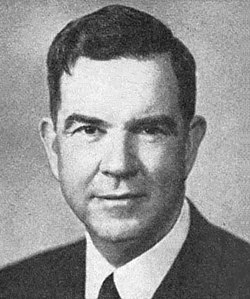 Hite made the decision to leave school as the nation prepared for World War II and enlisted in the Aviation Cadet Program of the U. S. Army Air Corps
 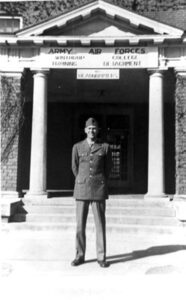 at Lubbock, Texas, on 09-09-1940. After completing officer training and flight school in California, on 29-05-1941, Robert Lowell Hite was commissioned a second lieutenant and awarded his wings
 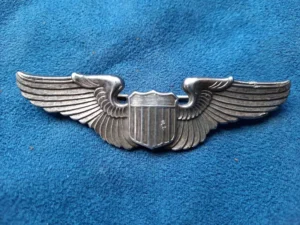 in the Army Air Corps,
  which, effective 09-03-1942, and as part of a reorganization of the War Department, would be merged into the U. S. Army Air Forces.
During the next year, Hite experienced a number of personal and professional setbacks. In July 1941 he returned to Texas to attend his father’s funeral. Lieutenant Hite was assigned to the Eighty-ninth Reconnaissance Squadron  of the 17th Bombardment Group
  under command of Lieutenant Colonel Walter Raymond Peck
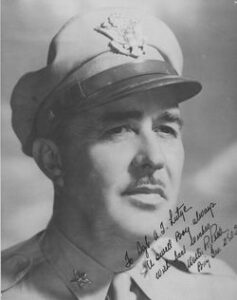
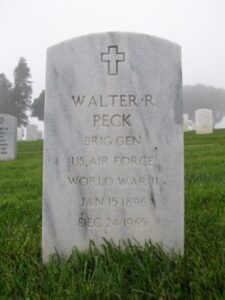 at Pendleton Field in Oregon when the Japanese attacked Pearl Harbor
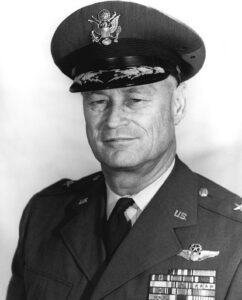
  on 07-12-1941. In February 1942 Hite volunteered and was accepted for a secret mission that involved an air raid on the Japanese homeland. Under the leadership of Lieutenant. Colonel. James Harold “Jimmy” Doolittle
  and his deputy Lieutenant. Cololnel. John Allen Hilger,
  the volunteers trained on B-25 Mitchell bombers
 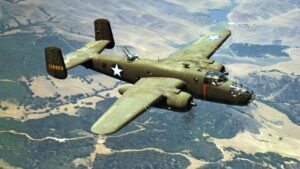 at Eglin Field in Florida for a month. At Eglin Field, Hite trained as a pilot with his own crew. Unfortunately, after the transfer of the bombers and the volunteers to the West Coast, his crew and plane were bumped from the mission after it was determined that only sixteen bombers could fit on the aircraft carrier USS Hornet.
  Crushed by the decision, Hite made his case to the other pilots that he would accept any spot on any crew to take part in the mission. Displeased with his own co-pilot, Lieutenant. William Glover “Billy” Farrow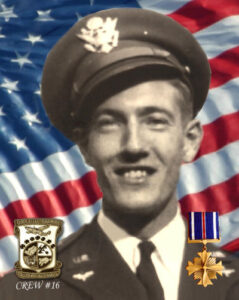
 asked Hite to join his crew.
 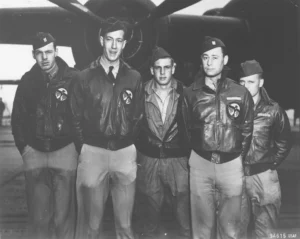 The crew of the B-25 Mitchell bomber named Bat Out of Hell. (Left to right) Navigator Lieutenant. George Barr, Pilot Lieutenant. William Farrow, Engineer Gunner Sergeant. Harold Spatz, Co-pilot Lieutenant. Robert Lowell Hite, and Bombardier Corperal. Jacob DeShazer. Courtesy United States Air Force.
The Doolittle Raid commenced on 18-04-1942. Twenty-two-year-old Lieutenant Hite was assigned as the co-pilot of crew sixteen. In fact, Hite had rejected offers up to $500 from other trained airmen who wanted to take part in the mission. Named by the crew the Bat Out of Hell, 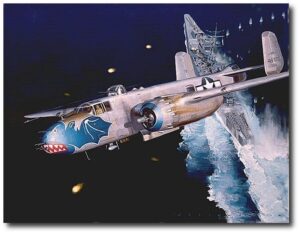 the bomber was the last one to take off from the Hornet. Although the plan was to start once the Hornet, under command of Captain Marc Andrew “Pete”. Mitscher,

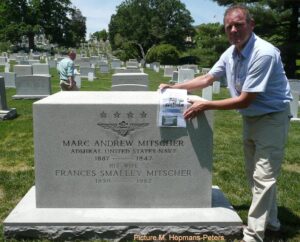
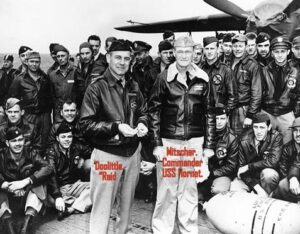 reached a point 500 miles from Japan, the operation was moved up after the aircraft carrier and its escorts were spotted by a Japanese picket ship, and the bombers were more than a hundred miles farther from their targets. By 9:15 A. M. fifteen bombers had successfully launched from the flight deck and began their journey. Because of the rain, rough seas, and heavy winds, a seaman slipped and fell into the left propeller cutting off his left arm at the shoulder. One heavy gust of wind almost pushed the last bomber off the aircraft carrier. A few minutes later, the Bat Out of Hell lifted off the Hornet and proceeded toward Japan.
As the last of the bombers to reach Japan, the Bat Out of Hell proceeded toward its targets—an aircraft factory and an oil storage facility in the city of Nagoya. After releasing their four incendiary bombs, the aircraft circled to view the fires and then headed west for the coast of China. The bombs found their targets but inflicted minor damage. As expected, the sixteen bombers ran low on fuel which made a successful landing in China impossible. One aircraft landed in the Soviet Union, but the other planes experienced crash landings and bailouts that resulted in three deaths. Of the eighty airmen that took part in the Doolittle Raid most were rescued by Chinese and moved to safe zones. Bailing out of the Bat Out of Hell, the entire crew managed to land on Chinese soil that was occupied by the Japanese. After landing in a rice paddy, Hite was one of eight aviators captured by the Japanese. 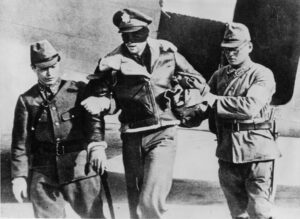
Taken prisoner by Japanese forces, Lieutenant Hite spent the rest of World War II as a prisoner of war. Since 18-04-1942, he was listed as missing in action. His mother had received a letter from Jimmy Doolittle that indicated that her son’s fate was unknown. The Hite family only learned that he was alive after a photo emerged of a blindfolded Robert being led by his Japanese captors became public.
After three were executed, Hite and four others were granted a reprieve, though they were told that they would be shot if Japan lost the war. He remained in prison until Japan’s surrender in August 1945, then released, which he termed a miracle.
After the war ended, he continued to serve. He married his first wife Portia in 1946, with whom he had a son and a daughter.
After returning home, he married Portia Wallace. 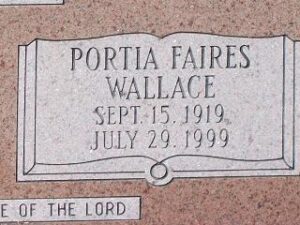 She died in 1999. Mrs. Hite died in a Nashville nursing home.
In 1955, Hite moved his family to Arkansas where he took a job as manager of a hotel. Here in 1961, he hosted a convention of Doolittle Raid veterans. He went on to manage a series of hotels before his retirement in 1984.
Recalled during the Korean War, Hite trained pilots until he left active duty in 1955. Afterward, he operated hotels in Oklahoma, Arkansas and Texas. He retired at 51, his son said, “because of the wear and tear of the 40 months he was a prisoner.”
That emotional toll had been lightened when his jailers provided the captured crew with a copy of the King James Bible, Robert Hite said in an oral history for the Air Force Historical Research Agency.
“We were no longer afraid to the extent that we had been, at least,” Hite recalled. “We no longer had the hatred.”
Robert Hite was imprisoned for 40 months, 38 of them in solitary confinement. His weight had dropped to 76 pounds from 180 when the war ended.
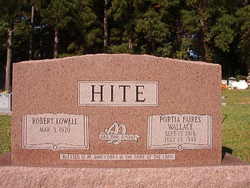
Death and burial ground of Hite, Robert Lowell “Bob”.
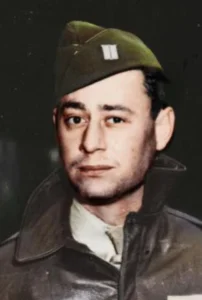
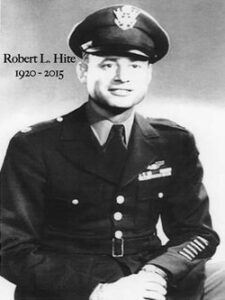
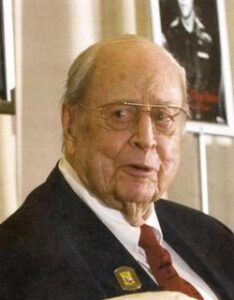
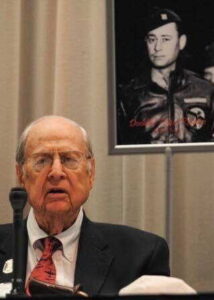
We can conclude that Robert Hite paid a heavy price for our freedom. He was one of the Raiders unlucky enough to be captured. Captured by the Japanese on 19-04-1942. A Japanese kangaroo court sentenced Hite to death along with the seven other American airmen captured in the raid. Three of these men, Hite’s pilot, William Farrow,  his gunner, Harold Spatz
 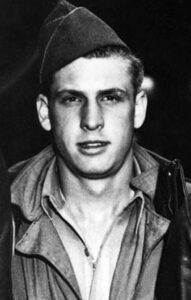 along with fellow pilot Dean Hallmark
  were all subsequently shot to death. This of course pales in comparison to the reprisals Imperial Japan exacted with a ferocious appetite upon countless thousands of Chinese civilians for aiding the majority of the Doolittle Raiders to escape.
For some reason Hite and the four others were spared the firing squad, although each was told that they too would be executed should Japan lose the war. Hite endured the next three years withering under the brutal hammer that every Imperial Japanese prison camp wielded against its inmates. He spent 38 of those 40 months in solitary confinement. As a testament of just how severe his treatment was, and as a measure of his strength as a man in that he survived, Robert Hite weighed just 76lbs when he gained his freedom in August, 1945. He had been 180lbs before his imprisonment.
Robert Hite married his first wife Portia Faires Wallace Hite in 1947. The couple had 2 children. One son and one daughter. His wife Portia Faires Wallace Hite died in July 1999. Later he remarried the widow of another Doolittle raider William Fitzhugh. 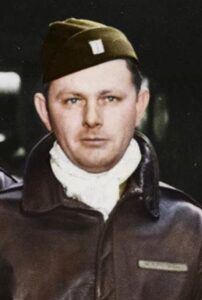
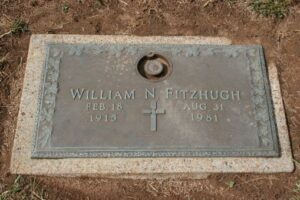 Dorothea Louise “Dotty” Pursley Fitzhugh-Hite died 26-05-2012 (age 89) in Fairhope, Baldwin, Alabama Hite. Robert Lowell “Bob” is buried at the Memorial Park Cemetery, 759 Maul Road, Camden, Ouachita, Arkansas, United States.




Leave a Reply