


Kube, Wilhelm Paul Richard, born 13-11-1887, in Miasto Wrocław, Dolnośląskie, Poland, 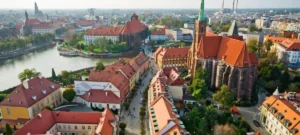 the son
 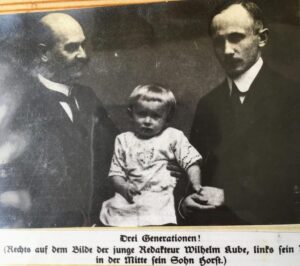 of tax collector Richard Kube and his wife Ida, born Kadach
  . Kube was raised in Berlin and attended the Gymnasium zum Grauen Kloster
 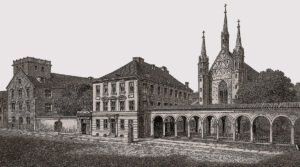 , a prestigious gymnasium where he developed a reputation for his anti-semitic remarks. From 1908 to 1912, he studied history, economics and theology at the Royal Friedrich Wilhelm University of Berlin.
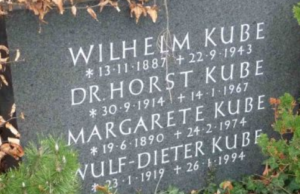
Kube in 1913 was married to Margarete Emma Berta, born Schmidt, Kube (1890–1974) 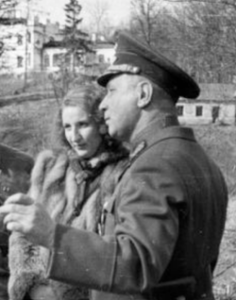 The couple had two sons Horst Wilhel Robert Richard Kube (1914–1967) and Wulf-Dieter Kube (1919–1994). Kube was active in the Völkisch movement as a student and a member of the Berlin chapter of the anti-semitic German Student Association.
  In 1911, he received a Moses Mendelssohn Scholarship, ironically named in honour of Moses Mendelssohn, a German-Jewish philosopher and theologian. In 1917, during World War I, Kube was briefly conscripted into the Imperial German Army,
 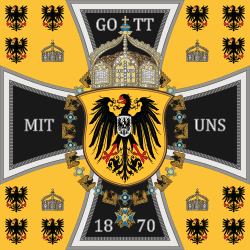 but his service was quickly deferred due to his position as general-secretary of the German Conservative Party in Silesia. Kube worked as a journalist for a number of conservative newspapers after the war, and joined the German National People’s Party (DNVP)
  in 1919 when the German Conservative Party merged into it. He co-founded the Bismarck Youth, the DNVP’s youth wing, and became leader of that organisation in 1922. He became general-secretary of the Berlin DNVP in 1920 and sat on the Berlin City Council from 1922 to 1923.
Kube first became involved with Nazism in 1923 when he left the DNVP, believing it not militant enough, and instead joined the more radical German Völkisch Freedom Party (DVFP)  which had splintered from the DNVP a year earlier. At the time, the DVFP had a close relationship with the National Socialist Freedom Movement (NSFP),
  the legal replacement of the Nazi Party that had been banned after the failed Beer Hall Putsch.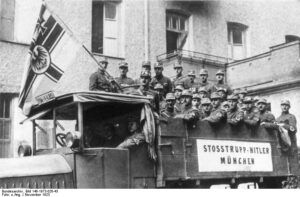
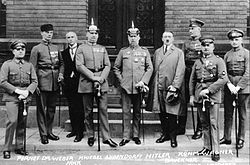 In May 1924, Kube was elected to the Reichstag for the NSFP
 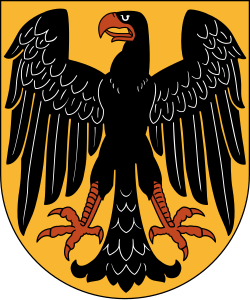 though he was not an official member. In February 1925, the NSFB was dissolved when the Nazi Party reformed after its ban expired in January and Adolf Hitler had been released from prison. Kube continued his affiliation with the DVFP, but infighting within the party led to his explusion in 1926. Members from northern and eastern Germany also left the DVFP with Kube to join the Nazi movement.
Kube joined the Nazi Party (membership number 71,682) in late 1927 and soon became the leader of the party in the Prussian Landtag. Under his leadership, the Nazi Party in Prussia grew from a tiny faction of 6 seats in 1928 to be the largest party in the Landtag by 1932. On 01-02-1928, he was appointed Gauleiter (regional party leader) 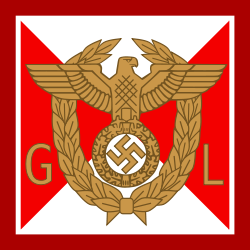 of Gau Ostmark with his seat at Frankfurt an der Oder. On 01-06-1933, this was merged with the neighboring Gau Brandenburg to form Gau Kurmark, which was later reorganized as the Gau March of Brandenburg with its seat in Berlin. After the Nazis came to power in 1933, he was made Oberpräsident of the Prussian provinces of Brandenburg and Posen-West Prussia, thus uniting under his leadership the highest party and governmental offices in the provinces. On 14-09-1933, he was appointed to the Prussian State Council by Prussian Minister-President Hermann Göring.
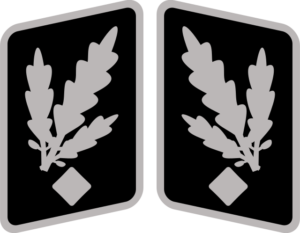
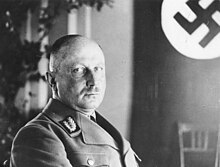
 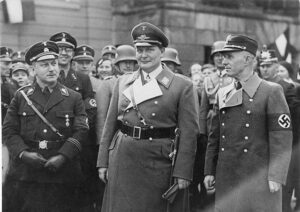 Kube, on the left, joined the SS on 29-09-1933 with the rank of
 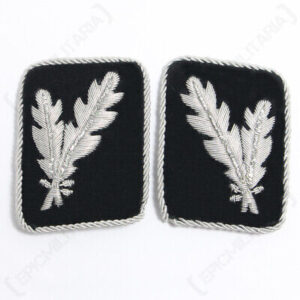 and on 27-01-1934, he was promoted to SS-Gruppenführer.
  In November 1933, he was elected as a Nazi deputy to the Reichstag from electoral constituency 5, Frankfurt/Oder. On 09-09-1935, Kube was made a member of the Academy for German Law..
Kube remained an active Christian as well as a zealous Nazi, becoming one of the leading supporters of the Nazification of Christianity. In 1932, he organised the list of candidates of the Faith Movement of the German Christians for the ordinary election of presbyters and synodals within the Evangelical Church of the old-Prussian Union on 13 November that year. The German Christians then gained about a third of all seats in presbyteries and synods. Kube was elected as one of the presbyters of the congregation of Gethsemane Church 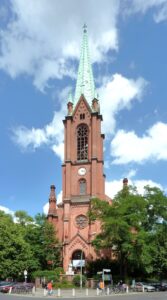 in Prenzlauer Berg, Berlin. The presbyters elected him from their midst as synodal into the competent deanery synod ;( Berlin then comprised 11 deaneries altogether), and these synodals again elected him a member of deanery synodal board). He remained active in the German Christian movement which sought to “Nazify” the 28 Protestant Landeskirche (church bodies) in Germany. For 23-07-1933, Hitler ordered an unconstitutional, premature re-election of all presbyters and synodals, with the German Christians now gaining 70–80% of the seats, so Kube could then further advance as head of the Berlin synod of the old Prussian Church.
 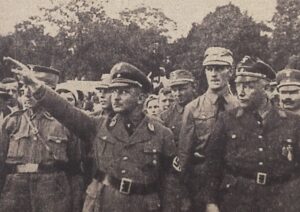 Following the German conquest of Poland in 1939, his Nazi party domain was extended to include Reichsgau Danzig-West Prussia and Reichsgau Wartheland.
In 1933, he was appointed by Hermann Göring, 
 as Oberprasident of the Brandenburg district, which included Berlin, and from November he represented the Frankfurt /Oder electoral constituency in the Reichstag. He was removed from all his positions in September 1936, by Walter Buch,
  chief judge of the Party court, on charges of blackmail, seduction of colleague’s wives and embezzlement. Kube’s career recovered thanks to Heinrich Himmler,
  who had been impressed by his willingness to volunteer for the Waffen-SS,
  at the age of fifty-three. In July 1941, Kube was appointed GeneralKommissar of White Russia, in charge of civil administration, and at first he co-operated closely with the SS in exterminating the Jews of Minsk and Belorussia. One way or another Kube managed to protect a group of about 6000-7000 Jews deported from the Reich, till the following July. During February 1942, Franz Walther Stahlecker,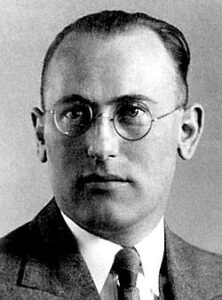
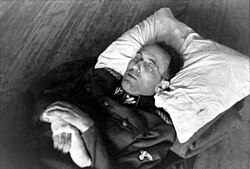 sent the toughest of his executioners SS-Obersturmbannführer Dr.Jur. Eduard Strauch,
 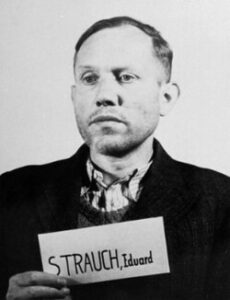 to keep a close watch on Wilhelm Kube in Minsk, but Kube managed to get the Jews from the Reich excluded from the Aktion. Indeed by keeping the Jews who were employed out of the German ghetto a day or two before the ‘aktion’ commenced. Kube also warned the Jews in the Russian ghetto, and as a result only 3,412 Jews were killed in place of the expected 5,000. Stahlecker 23-03-1942 (aged 41) was fatally wounded in action by Soviet partisans and was replaced by Heinrich Maria “Heinz” Jost.
  Strauch died in custody on 15-09-1955, age 49, in a hospital in Uccle, Belgium Strauch’s complaints against Kube make a fascinating document. In the course of the ‘Aktion’ on 02-03-1942, Strauch declared Kube ‘hurt the feelings’ of Hans Stark,
 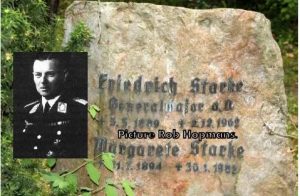 an SS-Officer, by abusing him in front of Jews. Strauch had even heard that Kube had given sweets to Jewish children who were being buried alive, in a pit on Ratomskaya Street. Kube had also denounced SS-Brigadefuhrer Carl Peter Zenner,
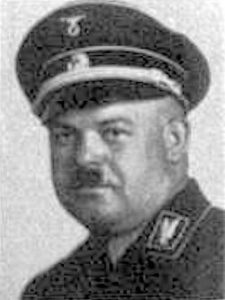
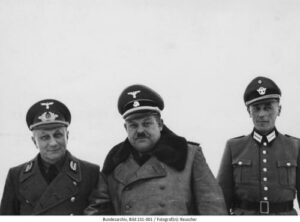 who commanded the Security Police in White Russia, for refusing to restore to him his three Jewish barbers. And yet Strauch declared, Kube always protested that he was the great enemy of the Jews.
On 02-04-1942, Reinhard Tristan Eugen, “The Blonde Beast” Heydrich  flew to Minsk, and he gave Kube a severe telling off, for sending him a list of Jews whom he had registered as ‘illegally removed from Germany.’ He demanded from Strauch the complete liquidation of the Jews within the Minsk territory, though Strauch testified at the IMT at Nuremberg, that he had managed to obtain a deferment ’till after the harvest.’
During 1943, Kube had another serious disagreement with Dr Strauch. On 20-07-1943, Strauch arrested seventy Jews employed by Kube and killed them. Kube called Strauch immediately and accused him of chicanery. If Jews were killed in his office but Jews working for the Wehrmacht were left alone, said Kube, this was a personal insult. Somewhat dumbfounded Strauch replied that, ‘he could not understand how German men could quarrel because of a few Jews.’
Five days later, Dr Strauch sent a letter to SS-Obergruppenfuhrer Erich von dem Bach-Zelewsk
i 
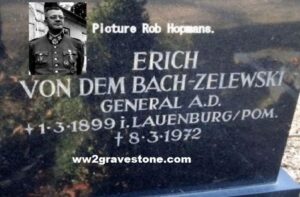 in which he recommended Kube’s dismissal. In a long list of accusations, Dr Strauch pointed out that Kube had for a long time favoured the Jews, especially the Jews from the Reich. So far as the Russian Jews were concerned, Kube could quiet his conscience, because most of them because most of them were ‘partisan helpers,’ but he could not distinguish between Germans and German Jews. He had insisted that Jews had art. He had expressed his liking for Jac Offenbach
 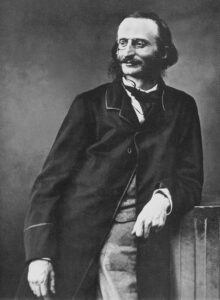 and Felix Mendelssohn.
 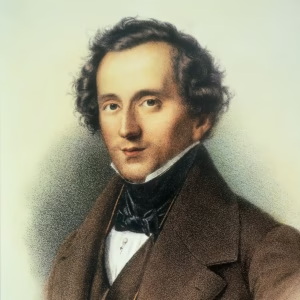 When Strauch had disagreed, Kube had claimed that young Nazis did not know anything about such things.
Death and burial ground of Kube, Wilhelm Paul Richard.
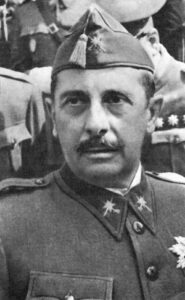
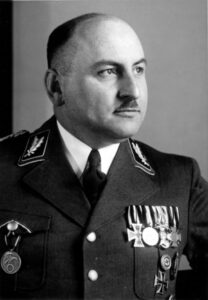
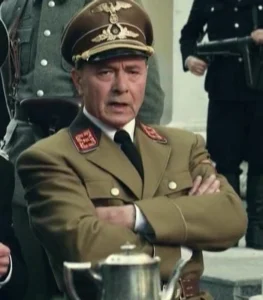
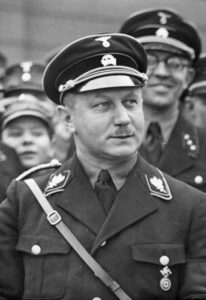
Repeatedly Kube had shown his feelings openly. He had called a policeman who had shot a Jew a ‘swine.’ Once when a Jew had dashed into a burning garage to save the Generalkommissar’s expensive car, Kube had shaken hands with the man and thanked him personally. When the Judenrat in Minsk 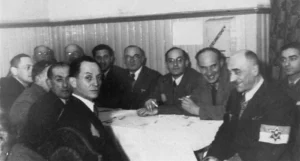 had been ordered to prepare 5,000 Jews for resettlement, Kube had actually warned the Jews. He had also protested violently that fifteen Jewish men and women who had been shot had been led, covered with blood, through the streets of Minsk. Thus Kube had sought to pin on the SS, the label of sadism.
On 22-09-1943, Kube, age 55, was assassinated, by Yelena Grigoryeyvna Mazanik
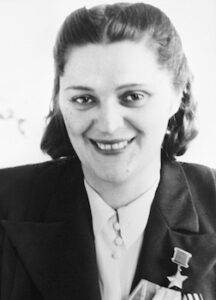
 one of his housemaids. She placed a bomb hidden in a water bottle in his bed, in the Yanchevskii Mansion, where Kube and his family lived. She escaped but 1,000 male Belorussians were killed as a reprisal. Adolf Hitler ordered a State Funeral for his veteran Party comrade. For assassinating him Yelena and her co-conspirators were awarded the title Hero of the Soviet Union
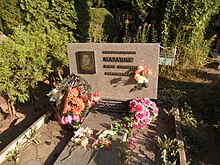
 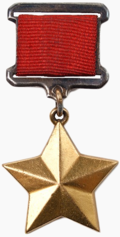 on 29-10-1943 by decree of the Supreme Soviet. Her post-war life was spent as a librarian. In 1946 Yelena joined the Communist Party before graduating from the Minsk Pedagogical Institute in 1952. She later worked as the deputy director of the Main Library of the Academy of Sciences of the Byelorussian SSR. She died on 07-04-1996, age 82, and was buried in the Eastern Cemetery of Minsk.


Leave a Reply