

Heston, Charlton (born John Charles Carter) “Chuck, born 04-10-1923, in Evanston, 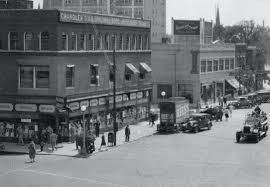 Illinois, United States, to Russell Whitford Carter (1897–1966)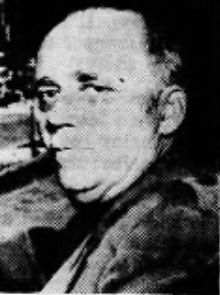
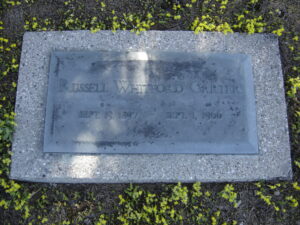 and his wife Lilla Charlton, born Baynes, Heston (1899–1994)
 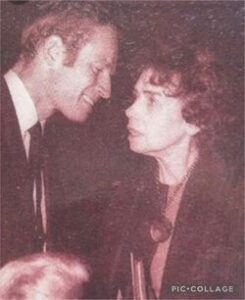 “, grew up during a time when the world was on the brink of monumental change. Heston spent his youth in a backwoods town in Michigan, a shy boy with few friends. He attended a one-room school with a pump in front. There were 13 pupils, three were his cousins, and he was the only student in his grade level.
The actor’s parents divorced in 1933, and his mother moved the future actor and his siblings back to Illinois, marrying a man named Chester Heston. Thus, ‘Charlton Heston’ was born — although his lifelong nickname was ‘Chuck’.
As a young man, Heston developed a passion for acting. “I can’t remember a time when I didn’t want to be an actor,” said Charlton Heston in an interview about his early life. Eventually, the family moved to the Chicago suburbs, where he played football in high school and got a taste of his future life in amateur theatricals. He then attended Northwestern University on a scholarship. At Northwestern, he acted in University theater productions and made his movie debut in classmate David Bradley’s
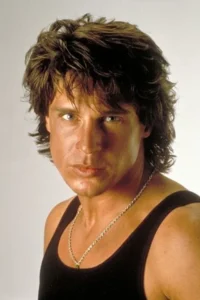
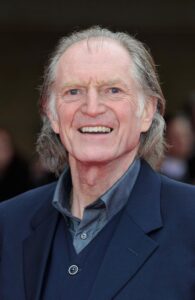 Peer Gynt
  play, in 1942.
In 1943, at the age of 20, Heston enlisted in the United States Army Air Forces (USAAF), 
 determined to contribute to the war effort. Like many of his generation, Heston was deeply moved by a sense of duty and responsibility, particularly after the Japanese bombing of Pearl Harbor
 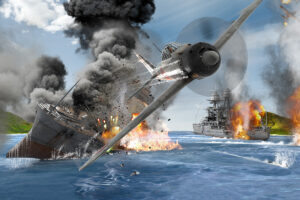 on 07-12-1941. The attack had a profound impact on him, and he knew that he wanted to play a role in securing freedom and democracy.
Charlton Heston’s military service began with his enlistment in the USAAF, where he trained as a radio operator and aerial gunner. Heston’s service took him to the Pacific Theater, where he was assigned to the 77th Bombardment Squadron 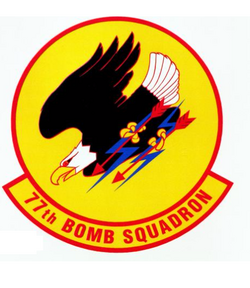 of the 11th Bombardment Group,
 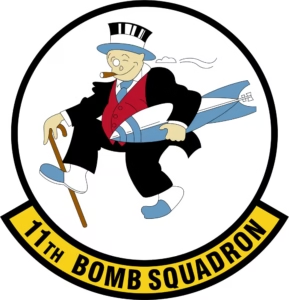 under command of Colonel LaVerne G. Saunders,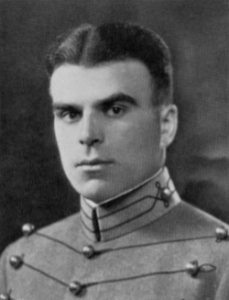
 stationed in the Aleutian Islands.
In 1942, Japanese forces invaded the islands of Kiska and Attu, part of the Aleutian chain off the coast of Alaska. On the 3rd and 4th of June 1942, a Japanese carrier strike force attacked the U.S. military bases at Dutch Harbor, 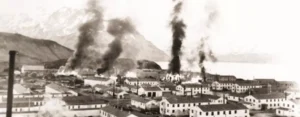 inflicting minor physical, but considerable psychological damage. It was bombed by Japanese forces on June 3-4, 1942. The attacks on Dutch Harbor (Unalaska Island, Alaska) resulted in approximately 43 American military and civilian deaths, with the deadliest strike hitting the Margaret Bay Naval Barracks.
This marked the only time during World War II that enemy forces occupied U.S. soil. The harsh weather conditions and rugged terrain made the campaign particularly challenging for the Allied forces. The American military, aware of the strategic importance of the Aleutians in defending the Pacific Northwest, launched operations to reclaim the islands. It took over two years of intense fighting, under extreme conditions, to drive out the Japanese forces.
As a radio operator and aerial gunner, 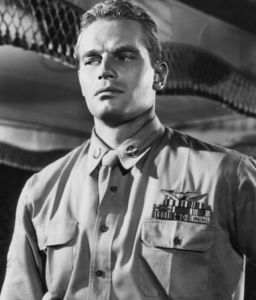
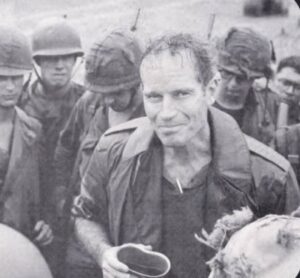 Heston was responsible for maintaining communication between the aircraft and ground stations, as well as operating the aircraft’s defensive armament. This dual role required a unique blend of technical skill and bravery, as aerial gunners were often tasked with defending their aircraft against enemy fighters during bombing missions.
Late in 1944, Charlton Heston and his fellow servicemen at their base received grim news that the upcoming invasion of Japan could cost at least half a million American lives. Heston believed he would be part of this massive assault, known as Operation Coronet, Part, of Operation Downfall, the planned invasion of Japan in March 1946, made the Japanese surrender in August 1945, after the atomic bombs on Hiroshima and Nagasaki. 
However, after an army plane crashed on the base, Heston was injured  when he slipped on ice and was run over by an ambulance. Despite being confined to a wheelchair and assigned to a control tower, he was determined to join the invasion, convinced his injury shouldn’t hold him back.
In August 1945, the United States abruptly ended the war in the Pacific by dropping atomic bombs on Hiroshima and Nagasaki. Charlton Heston, like many American soldiers, celebrated the decision, believing it saved countless lives, including his own. Reflecting on the situation later, Heston acknowledged that had the invasion occurred, he might not have survived.
A few weeks after Japan’s official surrender, 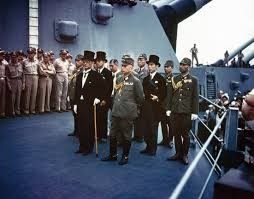
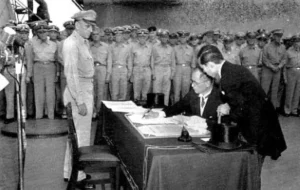 Charlton Heston, still recovering from his injury, was transferred to Great Falls, Montana, where he received a formal discharge from the military. By March 1946, at the age of 23, Heston had returned to civilian life.
After the war, Charlton Heston returned to the United States, where he pursued his passion for acting. He returned to Northwestern University on the G.I. Bill, further honing his craft before moving to New York City to launch his acting career.
Since 1944, the GI Bill 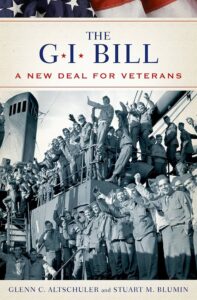 has helped qualifying Veterans and their family members get money to cover all or some of the costs for school or training.
At Northwestern, he met and married a fellow drama student, Lydia Clarke, 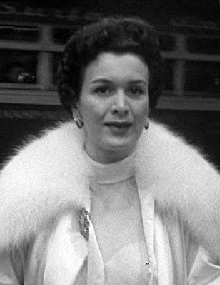
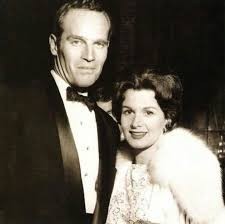 his wife of more than 60 years. the couple had two children.
 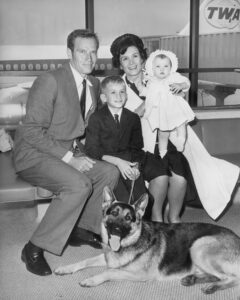 Heston’s military service had a lasting impact on him, shaping his worldview and influencing the roles he chose to portray on screen.
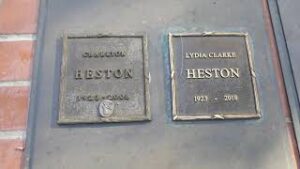
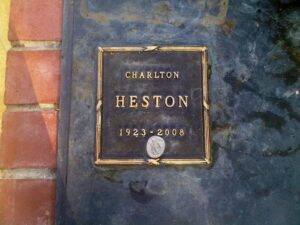
Death and burial ground of Charlton Heston, (born John Charles Carter) “Chuck”.
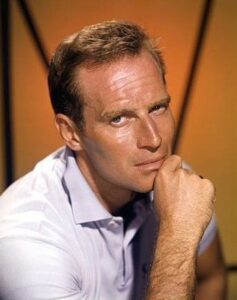
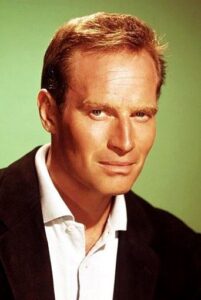
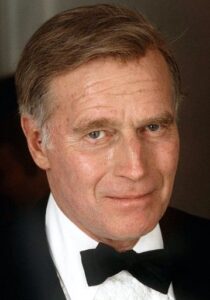
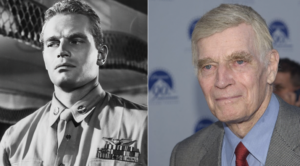
Charlton Heston passed away on 05-04-2008, at the age of 84. He died in his own home in Beverly Hills, California, after having battled Alzheimer’s disease for many years. His wife Lydia, with whom he had been married for 64 years, was by his side at the time of his passing.
Message(s), tips or interesting graves for the webmaster: robhopmans@outlook.com





Leave a Reply