

Pruis, Carel, born 20-07-1922 in Velp, municipality of Rheden, 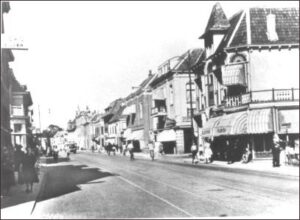 Netherlands, son of laborer Carel Pruis (25-03-1884, Arnhem – 24-08-1941, Velp) and ironer Geertruida Johanna, born van Zwam (27-09-1892). Carel was not married and worked as a driver and was a member of the resistance. Carel was part of the resistance group led by Geert Gosens from Apeldoorn, who, after much deliberation, agreed to operate under the banner of the Dutch Resistance.
Geert Gosens 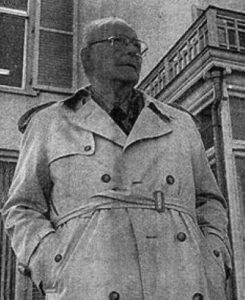 was born on 12-09-1915, in Bölkum, a small town in Germany near Wuppertal. His father was a veterinarian who emigrated to Germany shortly before World War I. In 1919, his father was murdered and the Gosens family returned to the Netherlands. Gosens soon became involved in the resistance and in 1943 he set up his own resistance group, he died 01-10-1997 (age 82).
Pruis was Gosens’ brother-in-law. The leader of the resistance group was married to his sister Johanna. His brother Louis was also a member of the resistance group. Along with Hendrik de Weerd, Wim Kok, Gosens, and the deserted Austrian Waffen-SS officers Joseph-Sepp-Köttinger and Hermann Kempfer, he attacked the car of Higher SS and Police Leader Johan Baptist Albin “Hanns Rauter 

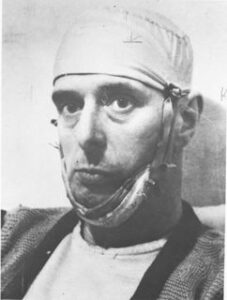
 in the hamlet of Woeste Hoeve
 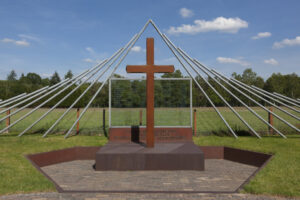 during the night of March 6-7, 1945. His adjutant, Untersturmführer Erwin Exner,
 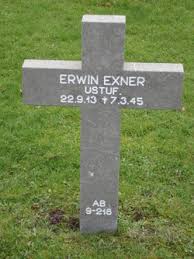 and driver Wilhelm Klotz
 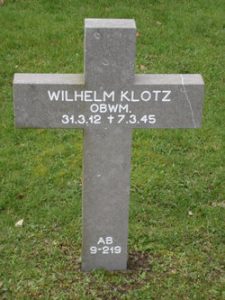 were killed (almost) instantly. Rauter was seriously injured. The most widely accepted theory is that the attack was unintentional: the resistance fighters were not targeting the highest-ranking German police chief in the Netherlands, but wanted to seize a passing truck. They needed that truck to transport three thousand kilograms of pork, which was to be stolen from a meat factory in Epe.
The occupying forces took bloody revenge. A total of 274 Todeskandidaten were executed at five locations (Fort de Bilt, 6 victims Woeste Hoeve, 117 victims 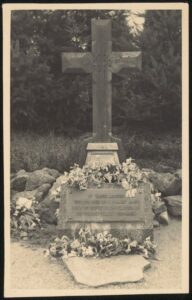 , Waalsdorpervlakte 38 victims, the shooting range in Leusden, and Amsteldijk in Amsterdam 140 victims). The resistance group remained inactive for a week. Then they could no longer remain in their hiding place, as Wehrmacht soldiers systematically searched a large area for “terrorists” and people in hiding.
On 14-03-1945, Pruis and Kempfer attempted to transport as many weapons and ammunition as possible by bicycle from their hideout at the Coldenhove campsite to Velp to keep them out of German hands. However, along the way, they encountered a German patrol. When they fled into the woods of the De Imbosch estate, 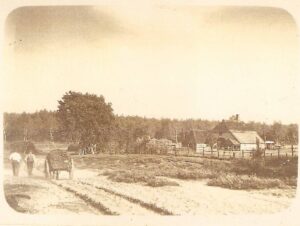 they came under fire. Pruis was wounded.
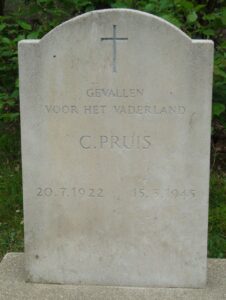
Death and burial ground of Pruis, Carel.

The Germans Ferdinand Frankenstein and Roald Ohmstedt of the Einsatzkommando Apeldoorn were ordered to search for the two men that same evening, but the darkness played tricks on them. The next day, they saw Pruis lying on a farm cart. According to Kriminalsekretär Frankenstein, he had a serious gunshot wound to the back of the head, and an accompanying doctor indicated he would not survive. Therefore, the German had given the seriously wounded man Carel Pruis on 15-03-1945, age 22, who was carrying weapons (including grenades), a fatal shot to the heart. Inspector Johannes de Groot of the Apeldoorn police later that day observed that Pruis had received two non-lethal graze wounds to the head. He noticed that the victim’s head showed signs of abuse. The Germans took the body away on the cart and buried it in a hole in the woods. In early June 1945, the victim’s body was exhumed from a single-man grave at the intersection of the Eerbeekseweg and a dirt road.
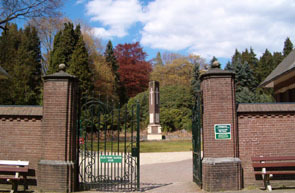
Pruis was reburied at the Heiderust General Cemetery in Rheden, 4th class, grave number 595. Gerhard Geert Gosens (12-09-1915, Bölkum near Wuppertal, Germany – 01-10-1997, Longwarry, Australia), nicknamed Grote Geert, alias P.H. den Hartog, sheet metal worker, later garage owner, emigrated to Belgian Congo in 1954 and later Australia).
Kriminalsekretär Frankenstein, like Ohmstedt, had worked for the SD in Antwerp. Due to the Allied advance, he ended up in the Einsatzkommando in Apeldoorn. Frankenstein, sometimes referred to in court records as the monster (of) Frankenstein, was sentenced to death by the Special Court of Arnhem on 08-06-1949, as per the plea. The Court found that he had killed Prussians and had directed the shooting of six Jewish people, including a young child, from the Pas-op camp near Vierhouten. Frankenstein, who had administered the coup de grace to a number of victims in the hamlet of Woeste Hoeve on 08-03-1945, was acquitted of any criminal involvement in the mass execution. In July 1950, the Special Court of Cassation upheld the imposed sentence. A request for review was rejected in December 1951, but a month later the Council commuted the death sentence to life imprisonment, arguing that Frankenstein had been under immense pressure from his superiors while committing the crimes, and that refusing an order would have led to his death. His sentence was later reduced again. On 05-10-1959, he was deported to Germany.
The attack at the Woeste Hoeve was a coincidence. The resistance wanted to capture a truck to use for transporting meat. The resistance fighters who would carry out the raid were Geert Gosens (leader), Henk de Weert, Carel Pruis and Wim Kok, Sepp Köttinger, and Herman Kempfer. Both of the latter were Austrian SS deserters.


Leave a Reply