

Okulicki, Leopold “Niedźwiadek”, born 12-11-1898, in Powiat bocheński, Malopolskie, 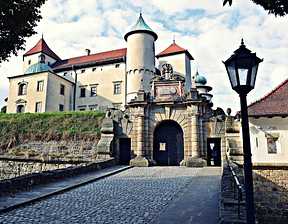 Poland. to Błażej Okulicki and his wife Anna, born Korcyl. Leopold was married with Władysława Jabłońska.
In 1910 Leopold enrolled at a local gymnasium (secondary school), and after 1913 was a member of the Związek Strzelecki (Riflemen’s Association). 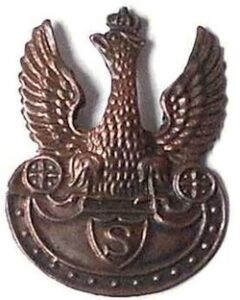
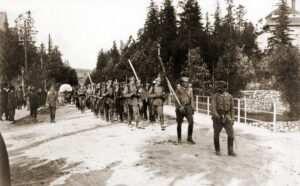 The following year, aged 16, after finishing basic military training, he passed his NCO exams.
After the outbreak of World War I, in October 1915, he left school and volunteered for the Polish Legions, 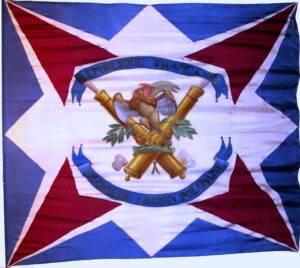 where he served with distinction in the 3rd Legions Infantry Regiment.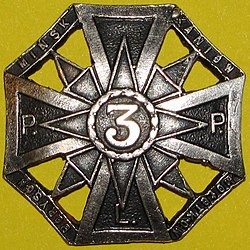
He remained in the Polish Army and fought in various units during World War I and the subsequent Polish–Bolshevik War (1919–1921). Okulicki was decorated with the highest Polish military order, the Virtuti Militari. 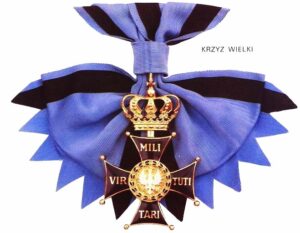
During the interwar period he remained in the army and in 1925 graduated from the prestigious Warsaw Military Academy. 
 Afterward Okulicki took a post in the Grodno local corps headquarters.
Until the late 1930s, he taught at the Infantry Training Centre in Rembertów, and became commanding officer of Polish 13th Infantry Division. 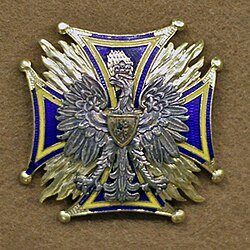
In 1939, Okulicki was made commander of one of the departments of the Polish Commander-in-Chief’s Headquarters.
At the outbreak of World War II and the defense of Poland against Nazi Germany in 1939, Okulicki was in Warsaw. After Commander-in-Chief and Inspector General of the Polish Armed Forces, Edward Rydz-Śmigły

 evacuated his staff from Warsaw, Okulicki remained in the Polish capital and served in various posts during the Siege of Warsaw.
After the capitulation of the Polish troops defending the capital, Okulicki evaded capture by the Germans and joined Służba Zwycięstwu Polski (en.Service for Poland’s Victory), one of the first underground resistance organizations formed in Nazi and Soviet-occupied Poland. This organization later changed its name to the Union of Armed Struggle and then to the Home Army.
In January 1940, Okulicki moved to Łódź, where he assumed the post of commander of the local area of that organization. After a brief stint at Headquarters, he was transferred to Soviet-occupied Lwów and became head of that area. General Stefan Rowecki, 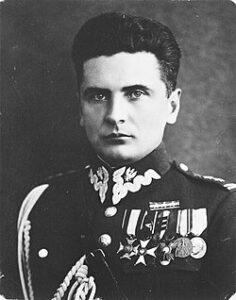
 `the commander-in-chief of the ZWZ, appointed Okulicki as the commander of the Soviet occupation in Area No. 2 – Białystok and Area No. 3 – Lwów, with the difficult and dangerous task of eliminating the organizational breakdown in the Lwów Area and putting the affairs of the ZWZ in order throughout the entire occupation.
Arrested by the NKVD  in January 1941, Okulicki was imprisoned and tortured in various Soviet prisons. The NKVD, the People’s Commissariat for Internal Affairs, was a department and one of the most powerful state organs of the Soviet Union.
Released after the Wladislaw Eugeniusz Sikorski 
 – Ivan Mikhailovich Mayski
 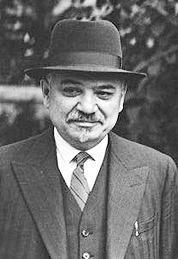 Agreement of 1941, he joined the Polish Army recreated in the USSR, where he assumed the post of chief of staff.
After a brief period commanding the Polish 7th Infantry Division,  he was moved to London for training in the Cichociemni training camp and transported to occupied Poland. In July 1944, during Operation Tempest, he became the commander of the 2nd Echelon of the Home Army. General Bór-Komorowski, anticipating his own arrest by the Soviets after the Warsaw Uprising, named him his deputy and successor.
Okulicki fought in the Uprising, among other posts as chief of staff of the Home Army. After the capitulation of the Uprising, he managed to evade capture by the Germans and moved to Kraków, from where he started to reorganize the Home Army. On 03-10-1944, he became commander of the entire Home Army. 
On 03-01-1945 he met in the “Zacisze estate” near Odrowąż, Radomsko County near Radomsko with the British special SOE Mission Freston. Captain Duane Tyrell “Bill” Hudson, 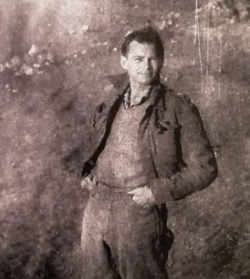 wrote on 03-01-1945: “we met the Commander of the Home Army and our friend, Colonel Rudkowski […]. There were also several other people whose names and functions we did not have time to learn. The commander of the Home Army seemed to us a decisive, sincere and clear-minded man. His demeanor was calm and friendly. He knew many personalities from the London SOE office
 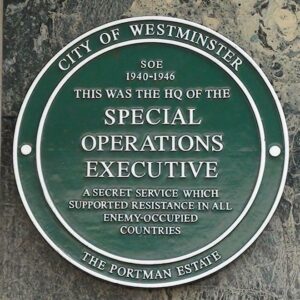 and stated that he commanded the 7th Infantry Division in the army of General Anders, Albert Wladyslaw.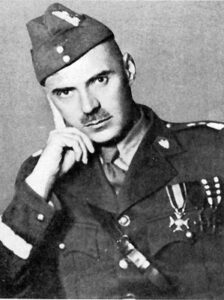
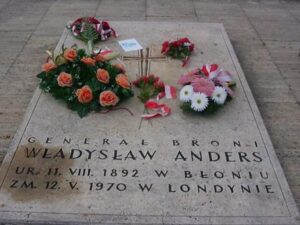 We didn’t know his name.”
In order to protect Polish soldiers against the NKVD and more general Stalinist repression, Okulicki, in consultation with the government delegate and on the basis of the government instruction from London of 14-11-1944, providing for the dissolution of the Home Army in the areas occupied by the USSR, issued an order on 19-01-1945 dissolving the Home Army and releasing soldiers from their oath. He feared that the existence of Allied forces in Poland would only lead to the Soviets murdering or arresting more people.
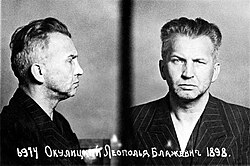 Okulicki after 1945 arrest by NKVDOkulicki during Trial of the Sixteen
In February 1945, Okulicki and his commanders were summoned by the NKVD to a meeting in Warsaw. They were arrested and then flown to Moscow. Okulicki was charged with “preparing an armed uprising against the Soviet Union in league with the Germans.”
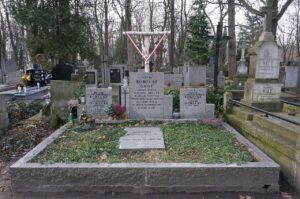
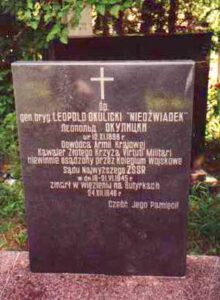
Death and burial ground of Okulicki, Leopold “Niedźwiadek”.
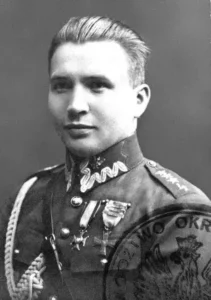
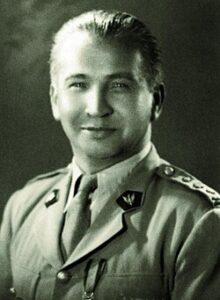
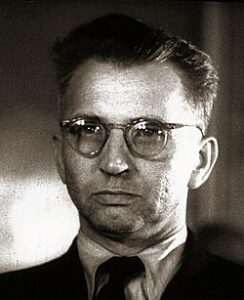
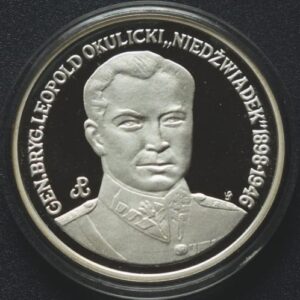
Okulicki was sentenced to 10 years’ imprisonment in the staged Trial of the Sixteen. Under international law, this was a completely illegal verdict. He independently defended Poland in the courtroom against Soviet accusations. “He left the courtroom with his head held high,” noted an Englishman present at the trial. Okulicki died 24-12-1946, age 48, at the Butyrka prison. 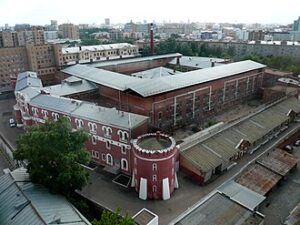 A cenotaph
 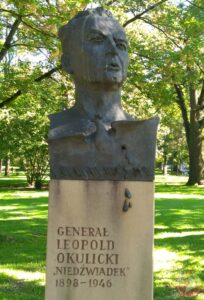 commemorating his death was built in the Powązki Military Cemetery, Warsaw.


Leave a Reply