

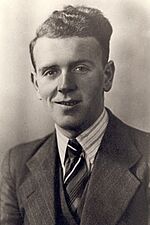
Levi, Primo, born 31-07-1919, in Turin, 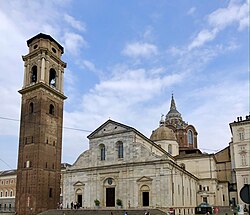 Torino, Piemonte, Italie, to Cesare Levi, who obtained a degree in electrical engineering in 1901, and was employed by Ganz, a manufacturing company based in Budapest. His mother, Ester, born Luzzati, known as Rina, was an avid reader and amateur pianist who spoke impeccable French.
Levi’s ancestors were Piedmontese Jews who had come from Spain and Provence.
Levi came from a Jewish middle-class family. From a baby who was often sick, he grew into a lively and clever toddler. His parents had a second child, Anna Maria, 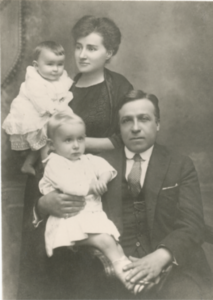
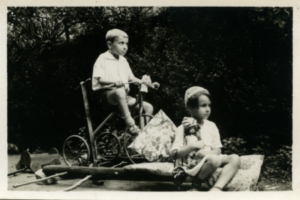 two years after his birth, with whom he would have a close bond throughout his life. In his early school years, Primo was a beloved child. This changed as he got older. His small stature, intelligence, and dislike of sports were some of the reasons why Primo was bullied. Moreover, classmates looked down on him because the Levi family was of Jewish descent. Although the family was fully assimilated and the Jewish laws were not observed – only the Jewish holidays were celebrated, not out of religious conviction, but to strengthen family ties – Primo was looked down upon because of his Jewish background.
As a teenager, Primo decided to become a chemist. After high school, he went to study chemistry at the University of Turin. 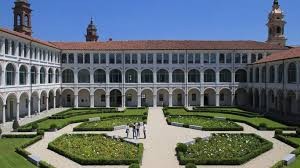 He achieved excellent results, which allowed him to write a dissertation after his studies. Because in fascist Italy the anti-Jewish sentiments continually grew stronger and from 1938 antisemitic laws came into effect, Levi did not receive a position at the university after his doctorate. Even outside the academic world, he was unable to find a job. This made him extremely desperate. Since his childhood, he had regularly struggled with severe depression. Psychologically, Levi was far from stable. Due to the lack of a permanent position, he became desperate and his depression intensified. To a friend, he stated that he had considered suicide. Eventually, he was able to get a job under a false name in a small laboratory.
In 1939, Levi discovered his love for hiking in the mountains. Together with his friend Sandro Delmastro, 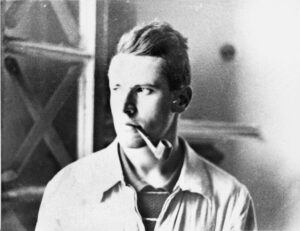 he spent many weekends in the mountains of Piedmont.
 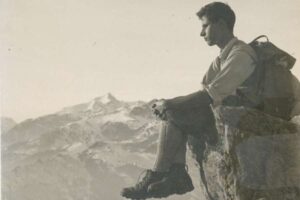 The physical exertion, the risk, and the struggle against the elements provided him with an outlet for all the frustrations in his life. In June 1940, Italy declared war on the United Kingdom and France, and the first air raids on Turin followed just two days later. Levi continued his studies, but received a heavy blow when it turned out that his father had colon cancer.
During World War II, his work in the laboratory came to an end, and Levi had to go into hiding. In the summer of 1942, he became involved in the Italian resistance. Initially, he was assigned only small tasks, such as writing the slogan Viva la pace (Long live peace) on banknotes. 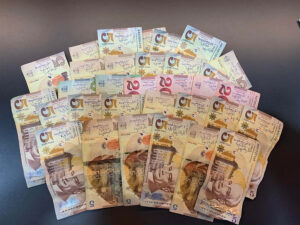 After Turin became part of the Republic of Salò,
 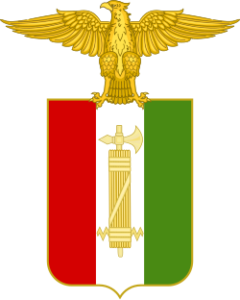 the fascist German puppet state, a year later, Levi joined a group of armed partisans called Giustizia e Libertà (‘Justice and Freedom’).
Italian anti-fascist resistance movement, active from 1929 to 1945. The movement was cofounded by Carlo Alberti Rosselli, 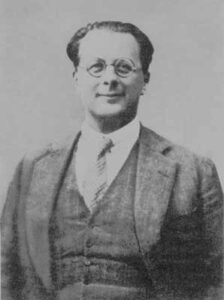 and Ferruccio Parri,
 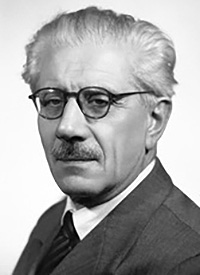 who later became Prime Minister of Italy, Emilio Lussu,
 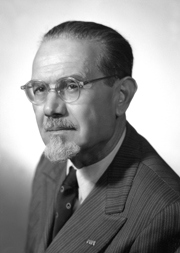 Alessandro Sandro Pertini,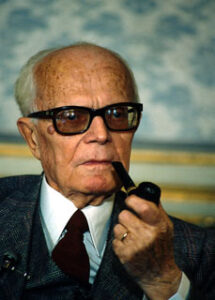
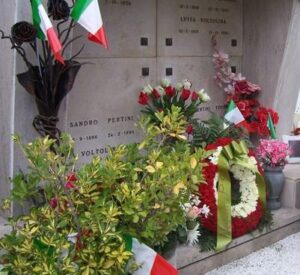 who became President of Italy, and other Italian anti-fascist refugees.
At the end of his term, Pertini was, according to the Guinness Book of Records, the oldest president in the world. Pertini was then 88 years old. He passed away over four years later in Rome at the age of 93. His death was felt as a national tragedy.
The unit Levi ended up in had a poor organizational structure; the group mainly consisted of students, most of whom had never seen a weapon before. Betrayal by an infiltrator led to Levi, along with a few group members, being arrested early in the morning on 13-12-1943; however, most managed to escape to the mountains. After it was discovered that Levi was a Jew, he was taken to the Durchgangslager (transit camp) in Fossoli. 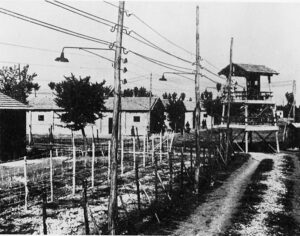 From here, Levi was deported to Auschwitz
  on 22-02-1944, as a Jew and resistance fighter, where he eventually ended up in Auschwitz-Monowitz (Auschwitz III), a labor camp at the Buna factory of I.G. Farben,
  where synthetic rubber was produced.
Levi, along with other Jewish fellow sufferers, was rented out as forced labor to the Bunafactory by the SS, 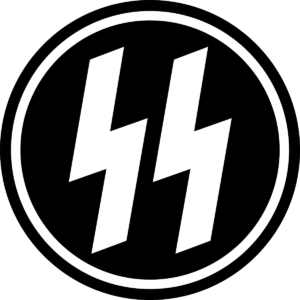 where he, as a laboratory technician, also came into contact with ordinary ‘civilian workers’. Compared to, for example, slave labor in the mines, where the average survival period was a month, the laboratory work in the factory was physically less demanding. Levi survived Auschwitz, as one of the 20 from a group of 650 Italian Jews who had been part of the same train transport. Several factors helped him in this. As a graduated chemist, he was a so-called ‘useful Jew’ and knew a bit of German, which was the language of many important chemistry books at the time. Additionally, an Italian mason, Lorenzo Perrone,
 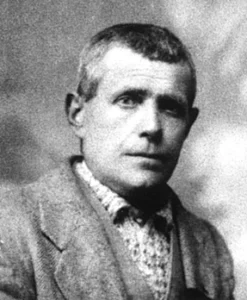 a fellow countryman of Levi, provided him daily with an extra portion of soup, which he stole from the kitchen at nite for Levi (and others). Finally, the Germans’ defeat at the Battle of Stalingrad in February 1943 was the turning point for the Nazi occupation of Europe: eleven months after Levi’s arrival at the end of February 1944, Auschwitz was liberated by the Red Army
  on 27-01-1945.
Major General Vasili Petrenko 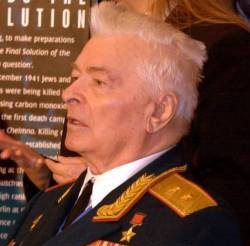 commanded the 107th Rifle Division of the Red Army, which liberated the Auschwitz concentration and extermination camp. His unit was part of the First Ukrainian Front under the command of Marshal Ivan Stepanovik Konev.
  . About his time in the concentration camp, Levi wrote Se questo è un uomo (Is this a man),
  which was published in 1947. The book, however, only became known in 1958 when it was reissued by a larger publisher. In this book, Levi describes life in the camp and how people behave under extreme conditions. The underlying question is constantly: is this a human being? That question applies to both the oppressors and the oppressed. The detached manner in which Levi describes life in Auschwitz made a very strong impression.
In The Reprieve, 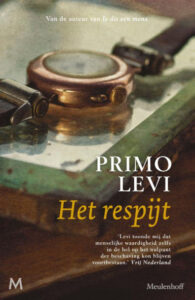 Levi describes his journey from Auschwitz to Turin after the liberation of the camp. It would be a long train journey with many hardships, thru the chaotic, disrupted Europe just after the German capitulation. On 19-10-1945 – after a journey of nine months – Levi arrives in Turin.
Death and burial ground of Levi, Primo.
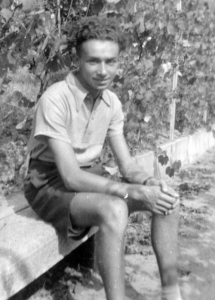
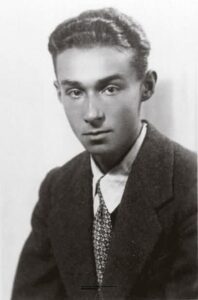

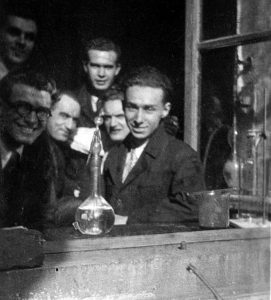
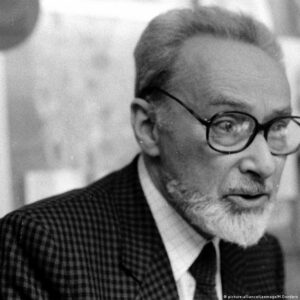
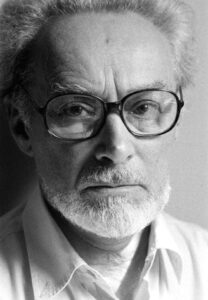
Levi passed away on 04-11-1987 (67 years old) in Turin, Torino, Piemonte, Italy. He fell in a stairwell and tumbled down several flights. Opinions are divided on the manner in which Levi died. Was it an accident or suicide? Levi translator Reinier Speelman attributes it to a fatal fall, but others believe that Levi jumped because he could no longer cope with his memories.
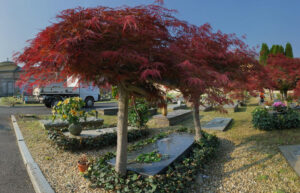
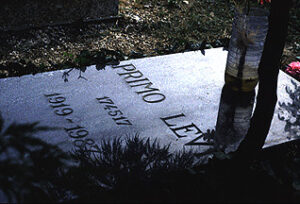
Message(s), tips or interesting graves for the webmaster: robhopmans@outlook.com




Leave a Reply