

Kozhedup, Ivan Nikitovich, born on 08-06-1920 to a Ukrainian, as the youngest of five children, family in the village of Obrazhiivka, in Chernihiv Governorate,  located within what is now Shostka Raion of Ukraine’s Sumy Oblast. After graduating from his seventh grade of school in his hometown in 1934 he went on to complete two more years of school in Shostka. There he initially worked as a librarian until completing his ninth grade of school in 1936, and from that year to 1940 he attended the Shostka Chemical Technology College. In addition to his studies, he attended training at the local aeroclub, from which he graduated in 1939. Ivan subsequently joined the Red Army
  in February 1940, and in January 1941 he graduated from training at the Chuhuiv Military Aviation School of Pilots,
 where he initially learned to fly the UT-2, UTI-4, and I-16.
  Remaining at the school as a flight instructor, he continued to train pilots after the school was forced to evacuate to Shymkent in the autumn of 1941 due to the German invasion of the Soviet Union. Ivan was sent to Moscow in November 1942, where was posted to the 240th Fighter Aviation Regiment, but he did not arrive on the warfront until March 1943 when the 302nd Fighter Aviation Division was deployed to the Voronezh Front.
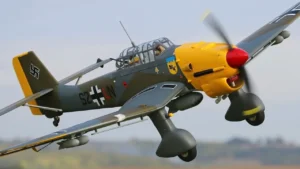
Despite having started in the regiment as a regular pilot, he quickly mastered the new La-5  and was promoted to flight commander. Ivan opened his tally on 06-06-1943 with the shootdown of a Ju 87
  dive bomber. Kozhedub became friends with Kirill Yevstigneev, an accomplished flying ace; although they did not often fly together, Kozhedub acquired many of his tactics and, in a spirit of competition, they shared their experiences using different techniques. Vasily Filippovich Mukhin
  who often flew as Kozhedub’s wingman, also went on to become a flying ace.
Over the next few months Kozhedub steadily gained more aerial victories and a promotion to squadron commander, but in the first half of October he rapidly increased his tally with 14 shootdowns. On 10-10-1943 he was nominated for the title Hero of the Soviet Union  for flying 146 sorties, engaging in 27 aerial battles, and totaling 20 aerial victories; he was awarded the title on 04-02-1944.
In July 1944 the 240th Fighter Regiment was honored with the Guards designation and renamed the 178th Fighter Aviation Regiment, and Kozhedub was nominated for a second gold star for 46 aerial victories across 256 sorties. Ivan did not stay with his regiment much longer, though, having been reassigned as the deputy commander of the 176th Guards Fighter Aviation Regiment, a special “free-hunting” regiment equipped with the new Lavochkin La-7 fighter,  per the initiative of Chief Marshal of Aviation Aleksandr Novikov.
 There, he was rarely assigned such specific missions as escorting other aircraft or providing air support for troops, enabling him and his subordinates to tally more aerial victories. In mid-February 1945, during a free-hunting mission in an area south of Frankfurt with his wingman Dmitry Titarenko, Kozhedub shot down an Me 262 jet, thereby becoming the first Soviet pilot to do so. When Kozhedub and Titarenko encountered the Me 262, Kozhedub quickly accelerated from low to full speed; when the Me 262 banked left and slowed — spooked by tracer rounds fired by Titarenko — Kozhedub shot it down.
By the end of the war, Kozhedub tallied 330 sorties, had engaged in 120 dogfights, and had shot down 64 enemy aircraft. Having gained all his aerial victories on the La-5F, La-5FN, and La-7, he expressed his strong preference for Lavochkin fighters, and met with Semyon Lavochkin  to comment on various aspects of the fighters’ designs. Having been nominated for a third gold star in May 1945, he became thrice a Hero of the Soviet Union on 18-08-1945, and remained deputy commander of the 176th Guards Fighter Aviation Regiment based in Schönwalde until September that year.
Preferring short, intense attacks to stun and bring down enemy aircraft, one favorite technique he developed and used in the war involved darting at a target from below and subsequently opening fire only when extremely close. Kozhedub used this tactic very successfully against the Ju 87 dive bomber, gaining him an unsurpassed 18 shootdowns of the type (equal with Arseny Vorozheykin).  However, being so risky, the manoeuvre was neither promoted nor taught to young pilots. Though never shot down throughout the war, Kozhedub did experience several close calls. He nevertheless always managed to land his airplane, regardless of damage.
Upon returning to the USSR, Kozhedub attended the Air Force Academy based in Monino, graduating in May 1949. He was originally to be posted as deputy commander of the 31st Fighter Aviation Division based in Baku, but — per orders ‘from above’ owing to his high status as a top flying ace — he was reassigned to the 324th Fighter Aviation Division. He initially served as assistant commander for flight training, but was soon promoted to command the division in November 1950. Shortly thereafter the unit was sent to China, where they initially trained Chinese and North Korean pilots. Kozhedub, despite being one of the first pilots to master the MiG-15 fighter jet back in 1949, was strictly forbidden from participating in combat sorties by order of his commanding officers. His division consisted of only two regiments (the 176th Guards and 196th Fighter Aviation Regiments) rather than the usual three. Nevertheless, pilots of his division claimed 216 aerial victories in Korea from April 1951 to February 1952, while sustaining only 27 MiG-15 losses and nine pilots killed.
Death and burial ground of Kozhedup, Ivan Nikitovich.


Upon its return to the Soviet Union in February 1952, the 324th Fighter Division was stationed in Kaluga as an air defense unit. The following year Ivan was promoted to the rank of Major-General, and in February 1955 attended the High Command Academy,  graduating in 1956. He then served as deputy head of the air force’s combat-training and frontline aviation-training directorates. Having become the 1st deputy commander of the 76th Air Army in April 1958, he visited Cuba alongside the unit’s commander Viktor Davidkov
  from 1962 to 1963. From 1964 to February 1971 he served as 1st deputy commander of the air force of the Moscow Military District, although he ceased flying in 1969. During his career as a pilot he totaled 1937 flight hours, piloting the Yak-3, Yak-11, Yak-17, Yak-28, MiG-15, MiG-17, MiG-21, Li-2, and Il-14 airplanes and the Mi-4 and Mi-8 helicopters. From 1971 to 1978 he served as deputy chief of combat training of the air force, and subsequently became a military advisor in the Ministry of Defense; in 1985 he was promoted to the rank of Marshal of Aviation. Beyond his military duties, he served as a deputy of the Supreme Soviet of the USSR from 1946 to 1962 and chairman of the Federation of Aviation Sports from 1967 to 1987. He resided in Moscow for the rest of his life, where he died of a heart attack on 08-08-1991 and was buried in the Novodevichy cemetery..




Leave a Reply