


Hazelhoff Roelfzema, Siebren Erik, born 03-04-1917 in Surabaya,  Java, Indonesia, the son of Siebren Erik Hazelhoff Roelfzema, senior, and Cornelia Vreede. His family moved to The Haque in the 1930s, and then Wassenaar. He travelled to the US in 1938, writing a book of his experiences in 1939, Rendezvous in San Francisco.He was a law student at Leiden University when the Second World War broke out. He joined the Dutch army reserve, and became involved in the underground after Germany occupied the Netherlands. He managed to escape to the United Kingdom as a crew member aboard of the Saint Cerque, a Swiss merchant ship in June 1941, together with Bram van de Stok
  , Peter Tazelaar
  , Gerard Volkersz and Toon Buitendijk. In London,
  Hazelhoff Roelfzema, with the help of General Francis van ’t Sant
  , director of the Dutch CID (Central Intelligence Service) and Colonel Cuthbert Euan Rabagliati
  , Secret Intelligence Service set up a secret service group known as the Mews, after Chester Square Mews where they lived in London. Van der Stok died age 77 on 08-02-1993 in Virginia Beach, USA. Peter Tazelaar died age 73 on 06-06-1993 in Hindeloopen Netherlands. Van ‘t Sant died old age 83 on 03-06-1966 in Rotterdam, Rabagliati died old age 86 on 06-01-1978 in Cannes, France. The goal was to establish a contact with the Resistance in the Netherlands. Several agents were parachuted, others were put ashore at the beaches of Noordwijk and Scheveningen. Roelfzema did not receive much cooperation from the Dutch government, and Van ‘t Sant was forced to transfer control over the CID to Colonel Mattheus Reindert de Bruyne
  of the Dutch Marine Corps. De Bruyne who died age 78 on 13-10-1973 in Renkum, did not do a good job. He failed to recognize the fact that his agents were arrested and continued to broadcast messages – for the Germans. The usual procedure for transmitting messages was to include small errors. If an agent was forced to work for the Germans, he would leave out the errors. The result should be that contact was aborted immediately. De Bruyne, however, concluded that the agents simply forgot to use the security-checks and even sent messages to remind them. Other intelligence blunders were the maps he had attached to the wall in his London office, showing the landing sites of Noordwijk, Scheveningen and Walcheren in full detail. Hazelhoff Roelfzema and De Bruyne did not get on. De Bruyne threatened to court-martial for ignoring an order – at the same time Hazelhoff Roelfzema was proposed for the Willemsorde, the highest military decoration in the Netherlands. He was awarded the Willemsorde, Knight, 4th class
  in 1942: the court-martial was cancelled after a meeting with Dutch Navy minister Furstner. The 1979 history of the Special Operations Executive network in the Netherlands by M.R.D Foot has confirmed the degree of German penetration of SOE’s Dutch networks, something SOE denied during the War. The British intelligence effort in the Netherlands was penetrated throughout the war, from the capture of two SIS agents, Captain Sigismund Payne Best
  who died very old age 93 on 21-09-1978 in Caine, England and Major Richard Stevens
  in the Venlo Incident in November 1939, to the capture of some 50 British and Dutch agents by the Abwehr and the Sicherheitsdienst in Operation North Pole.Stevens died age 73 of cancer on 12-02-1967 in London. Hazelhoff Roelfzema became frustrated by the treatment and joined the Royal Air Force in 1942. He attended flying school in Canada, where he became the best pilot cadet of his group. He returned to England in 1944, and joined No 139 Squadron RAF
  , part of the elite Patfinder Force, tasked with illuminating targets for the night bombers of RAF Bomber Command. He made 72 sorties in Mosquito bombers, of which 25 went to Berlin, and was awarded the Distinquished Flying Cross
  . In April 1945, Hazelhoff Roelfzema was appointed adjutant to Queen Wilhelmina.


 He accompanied her back to the Netherlands in May 1945, and piloted the airplane in which Princess Juliana , Prince Bernard von Lippe Biesterfeld and their daughter Princess Beatrix flew back to the Netherlands. Hazelhoff Roelfzema helped Beatrix walk her first steps on liberated Dutch soil.


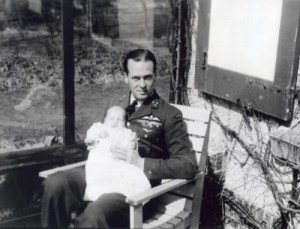 Hazelhoff Roelfzema led a fairly restless life after the war, including a stint in Hollywood as an actor and then a writer. He later wrote for Dutch newspapers. He was appointed director of Radio Free Europe in Munich in 1956. Later he was involved in a failed attempt by the CIA to support the South Moluccas Republic’s bid for independence from the rule of Indonesian dictator Sukarno
 .
.  Sukarno died age 69 on 21-06-1970. He was involved in the creation of Racing Team Holland, attracting sponsors using his fame. His book Soldier of Orange (Soldaat van Oranje), published in 1970, relates his adventures during the war and the political turmoil of the Dutch government in exile. In 1980, Hazelhoff Roelfzema played a ceremonial role as one of two kings of arms at the inauguration of Queen Beatrix. He was close to Prince Bernard of the Netherlands, whom he entertained frequently at his home in Maui.
Death and burial ground of Hazelhoff Roelfzema, Siebren Erik.
He moved to Hawaii in early 1973, and joined energy company Barnwell Industries Inc as a director in 1977. He wrote a second autobiography, In Pursuit of Life, in 2000. He died on 26-09-2007 at his home in Ahuloa near Honoka’a, on the Island of Hawaii, at the age of 90.

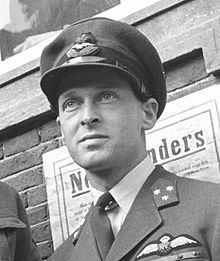
 He is survived by his wife
  , Karin Steensma, daughter, granddaughter, great granddaughter and great grandson. A memorial in Wassenaar was established in memory of all victims of war. The war memorial in Wassenaar is a white stone statue of a kneeling male figure with his eyes upwards and his left hand on the heart. In the beginning of 2008 the urn with the ashes of Erik Hazelhoff Roelfzema was removed from Ahualoa cemetery, Hawaii and were placed into the monument in Wassenaar, Schouwweg 75, 2243BA, Wassenaar, Zuid-Holland.


Message(s), tips or interesting graves for the webmaster: robhopmans@outlook.com


Leave a Reply