


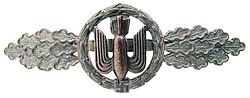
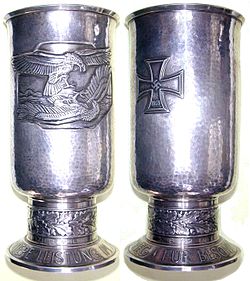


Geisshardt, Friedrich, born on 22-01-1919 in Sonnefeld, near Coburg  in Oberfranken. Friedrich was the son of a teacher who had died early from wounds sustained during World War I. Aged fifteen, he joined the Flying Hitler Youth (Flieger-HJ)
  and became a glider pilot. Friedrich joined the military service of the Luftwaffe
 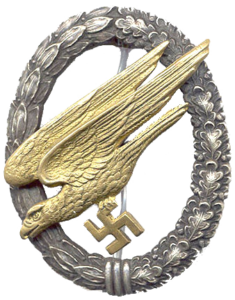 in 1937 and was transferred to the 2. Staffel (2nd squadron) of Lehrgeschwader 2 (LG 2—2nd Squadron of the 2nd Demonstration Wing) on 01-07-1939.
In preparation for the German invasion of Poland on 01-09-1939, I.(Jagd) /LG 2 (1st Fighter Group of the 2nd Demonstration Wing) under command of Hauptmann Hanns Trübenbach had been ordered to airfields at Lottin (now Lotyń), where the Gruppenstab (headquarters unit), 2. and 3. Staffel where based, and to Malzkow (now Malczkowo) near Stolp (now Słupsk), where 1. Staffel had been sent. Following the German advance, I.(Jagd)/LG 2 relocated to Lauenburg (now Lębork), near Bromberg on 9 September in support the 4. Armee (4th Army). Unteroffizier (a non-commissioned officer) Geißhardt claimed his first aerial victory, a PZL P.24 fighter,  that day. The aircraft shot down was misidentified and was a PZL P.11c fighter of Polish III/3 Squadron (132 escadrille)
  flown by podporucznik Witold Jaroszka who was killed in action near Lubień. The following day, flying a Messerschmitt Bf 109 E,
  Geißhardt had to make an emergency landing behind Polish lines near Włocławek following combat with Polish PZL P.11 fighter aircraft. After several hours in Polish captivity, he escaped during the confusion caused by a German Junkers Ju 87
  dive bomber attack. Friedrich returned to German lines after walking and riding on a stolen horse for five days, arriving with his unit on 15 September. Following the Battle of the Bzura, the Luftwaffe ordered I.(Jagd)/LG 2 to move to Garz on the island of Rügen on 20 September. He was promoted to Leutnant der Reserve (second lieutenant of the military reserve forces) on 01-12-1939.
Geißhardt was transferred to the 1./LG 2 (1st Squadron of the 2nd Demonstration Wing) on 27-02-1940. By the end of 1940, he claimed six Royal Air Force (RAF) aircraft shot down during the Battle of Britain, followed by six more claims in early 1941. On 06-04-1941, Geißhardt shot down four Hawker Fury biplane fighter aircraft  in the aerial battles against the Yugoslav Royal Air Force’s
 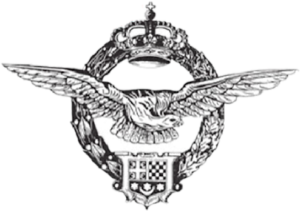 36th Fighter Group during the Balkans Campaign. During the German Invasion of Crete he claimed two Hawker Hurricanes. He was posted as an adjutant of the Stab to the I.(Jagd)/LG 2 at the end of April 1941.
Following the Invasion of Crete, I.(Jagd)/LG 2 was again subordinated to Jagdgeschwader 77 (JG 77—77th Fighter Wing)  on 18-06-1941 and was moved to Bucharest, Romania in preparation for Operation Barbarossa, the German invasion of the Soviet Union on 22–06-1941. JG 77 supported the German advance as part of Heeresgruppe Süd (Army Group South) under command of Generalfeldmarschall Karl Rudolf “Gerd” von Rundstedt.
  On 21 June, the Gruppe was ordered to Roman, a forward airfield near the Siret river. Geißhardt claimed his first aerial victory on the Eastern Front, his twentieth overall, over a Tupolev SB-2 bomber at 05:52 on 23-06-1941.
Shortly after the Oak Leaves  presentation, I. Gruppe under the command of Hauptmann Oscar Heinz “Pritzl” Bär
 was ordered from the Eastern Front to the Mediterranean theatre of operations.
I. Gruppe began transferring to the North African theatre on 26-10-1942. That day, Geißhardt and five other pilots from 3. Staffel flew to Tripoli, Libya. There, he added nine more victories, among them his century on 10-11-1942. Friedrich was the 30th Luftwaffe pilot to achieve the century mark.
Geißhardt arrived at Wevelgem on 11-01-1943 to take over command as Gruppenkommandeur (group commander) of the III. Gruppe (3rd group) of Jagdgeschwader 26 “Schlageter” (JG 26—26th Fighter Wing) from Major Josef “Pips” Priller.
 Geißhardt’s arrogance grated on some of the pilots, who felt that he treated his fellow pilots who had not yet earned the Knight’s Cross with too much disdain.
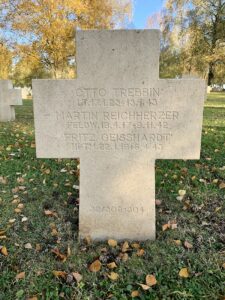
Death and burial ground of Geisshardt, Friedrich.
Geißhardt, who was flying Fw 190 A-4 in Priller’s Schwarm, was severely wounded in combat with United States Army Air Forces (USAAF) B-17 Flying Fortresses  of the 306th Bomb Group
  under command of Colonel Col James S Sutton,
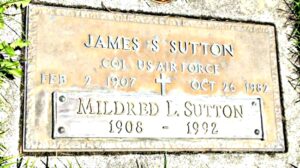 flying a mission to the Erla aircraft factory at Antwerp on 05-04-1943. Friedrich had been hit by the defensive fire from the bombers. He was bleeding profusely from a wound in the abdomen but managed to make a smooth landing on the airfield at Sint-Denijs-Westrem, Belgium. He succumbed to his injuries early the next morning on 06-04-1943, age 24. Geisshardt was buried at the Bourdon German war cemetery. 14 Rue du 8 Mai 1945, 80310 Bourdon, France. Section 32/302/304.


Leave a Reply