


Eijl, Joseph “Joop”, born 01-10-1896 in Amsterdam, 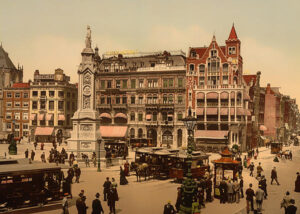 Netherlands, to Levie Joseph Eijl (1864–1932) and his wife Klara, born Parser Eijl (1866–1929). Joop had one brother and five sisters, Rosetta Eijl (1889–1942), Hadassa Eijl Wijnschenk (1890–1942), Mietje Eijl Rabbie (1892–1942) , Elisabeth Eijl (1898–1942), Meijer Levie Eijl (1903–1943) and Susanna Eijl Musikant (1904–1942).
Eijl grew up in an initially conservative Jewish family.  His father worked as a wallpaper hanger, and the family of eleven had to make ends meet on the meager wage he earned. He worked as a warehouse manager. In the 1920s, he was active within the trade union movement, particularly in the General Dutch Union of Commercial and Office Employes. From 1933, he was a member of the CPN,
  as were his brother Meijer and sister Mietje. During the Spanish Civil War,
 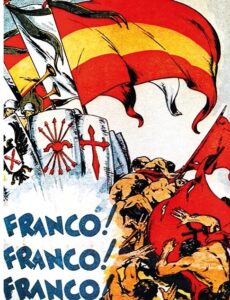 Joop went to Spain to fight alongside the Republicans against Bahamond Franco,
 but he didn’t get further than Southern France. His brother Meijer then rode a motorcycle to meet him and pick him up.
In the 1930s, he was involved in the communist sports movement. He himself played football for the Jewish football club TDC,[1] a club that switched from the Amsterdam Football Association to the Red Sport Unity. TDC was dissolved in 1937. Additionally, Eijl was an administrator at the Red Sports Union, 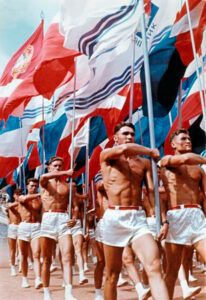 a communist sports federation that primarily organized many unemployed athletes. Their matches were always marked by the daily political struggle and were accompanied by numerous international statements of support.
Joop Eijl was actively involved in the 1941 February Strike. The Dock Worker, 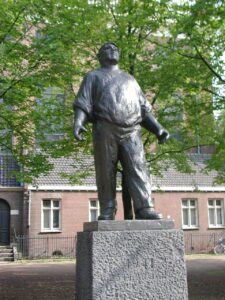 a monument in memory of the February Strike at the Jonas Daniel Meijer Square. In the background is the Portuguese-Israelite Synagogue. The February strike (Dutch: Februaristaking) of 1941 was a general strike in the Nazi-occupied Netherlands during World War II. It was organized by the outlawed Communist Party of the Netherlands in defence of persecuted Dutch Jews and against the anti-Jewish measures and the activities of Nazism in general.
Fellow striker Tonie Klomp recalled: We had seen Joop in the afternoon of the 25th behind Dam Square, when one of the large demonstrations — which had marched from the Jordaan district — was broken up by the Nazis. He had been extremely active all day, and we warned him to be careful. He laughed at our concern, however: “What a great strike, what a day!” he said.
Death and burial ground of Eijl, Joseph “Joop”.

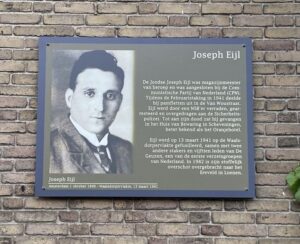
On the second day, February 26, Joop was arrested by the Amsterdam police at half-past three in the afternoon while distributing leaflets on Sint Willibrordusstraat in Amsterdam.  An NSB
  under command of Anton Adrian Mussert


 , member had pointed him out to the agents. After his arrest, he was handed over to the Security Police. Until his death, Eijl was imprisoned in the House of Detention in Scheveningen, better known as the Oranjehotel.
 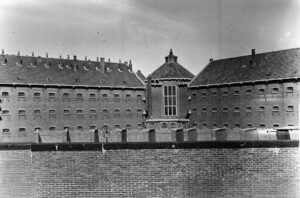 He was sentenced to death as a February striker and executed on 13-03-1941, age 44, on the Waalsdorpervlakte
 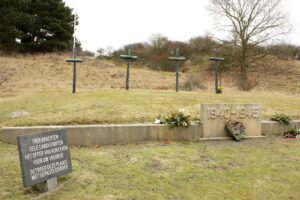 along with members of the resistance group De Geuzen.
 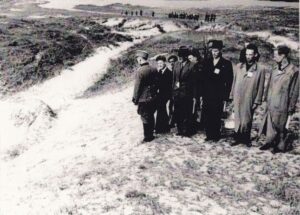 (The sentence of three underage Geuzen was changed to life imprisonment at the last moment; in their place, three February strikers came; alongside Eijl, Hermanus Coenradi,
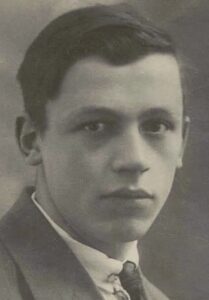
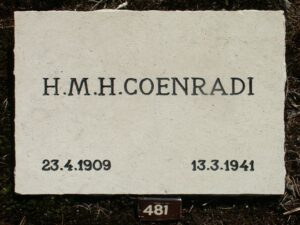 and Eduard Carel Frederik “Ward” Hellendoorn, age 28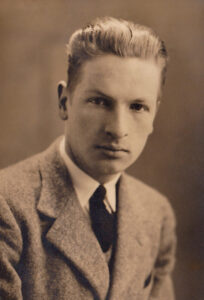
Joop Eijl is one of the eighteen in the resistance poem “The Song of the Eighteen Dead” by Jan Campert. In Schiedam and Amsterdam, streets have been named after him.
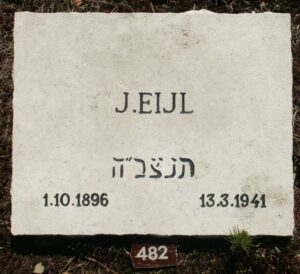
Eijl, Joseph “Joop”, is buried at the Nationaal Ereveld Loenen, Groenendaalseweg 64, 7371 EZ Loenen. A Dutch military cemetery located in Loenen on the Veluwe. Grave 482. It was officially opened by Princess Wilhelmina on 18-10-1949. There are almost 4,000 war victims buried there.


Leave a Reply