


Campanella, Silvio, born 21-06-2017 in Albany County, New York,  tried to follow his brothers into the Navy.
  But poor eyesight led him to enlist in the Army instead at age 19 in January 1943. After basic training, he was assigned to the 42nd Infantry Division,
  under command of Brigadier General Harry John Collins “Hollywood Harry”.
 known as the Rainbow Division for its shoulder insignia and its WWI service.
Campanella deployed in December 1944, arriving in the front lines with the division just days before the onslaught of Operation Nordwind on New Year’s Day. Operation Nordwind was the last major German offensive of World War II on the Western Front. It began on 31-12-1944, in Alsace and Lorraine in northeastern France and was carried out by the Wehrmacht  and the Waffen-SS.
  The main German combat forces were formed by the 6th SS Mountain Division Nord
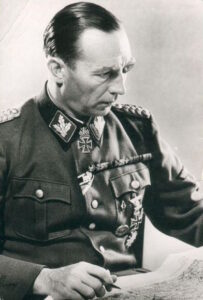
 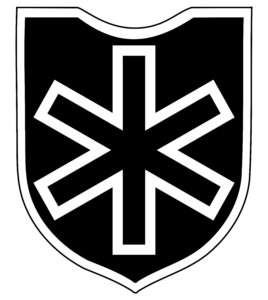 under command of SS-Gruppenführer Karl-Heinrich Brenner
  and 9 Volksgrenadier divisions, under command of Generalmajor Werner Kolb,
 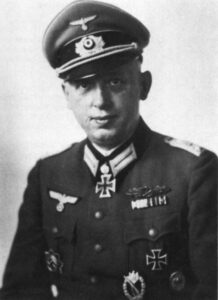 including the 559th Volksgrenadier Division. Generaal Brenner survived the war and died 14-02-1954 (aged 58) in Karlsruhe, Baden-Württemberg, West Germany. Generalmajor Werner Kolb also survived the war and died 18-02-1975, age 79, in Neu Isenburg/Hessen, Germany.
In January 1945 Campanella,s unit, Company A, 232nd Infantry Regiment, was defending a French village called Sessenheim without tanks or artillery support.
It was a close quarter fight of small infantry units. Small pockets of infantry Soldiers found themselves surrounded and his friend overwhelmed. Campanella and his fellow G.I.s fought bravely, but their rifles and hand grenades were no match for Nazi tanks,” His friend, retired U.S. Army Major Patrick Chaisson, 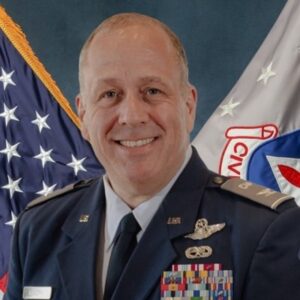 said. “Those tanks began destroying Sessenheim house by house.”
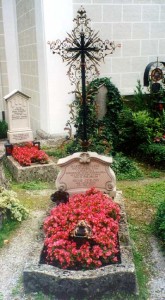
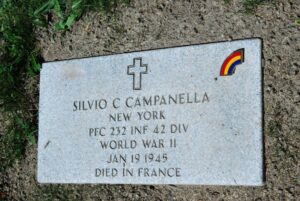
Death and burial ground of Campanella, Silvio.
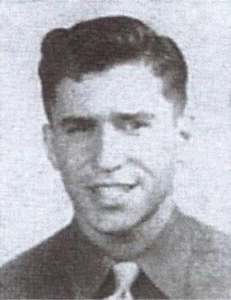
Campanella found himself with 18-20 other Soldiers as German prisoners on 19-01-1945. “The Germans commenced to move in from all sides. We held them off until around noon,” wrote Staff Sergeant James Nichols, also from Company A in his report of September 1945.
“At approximately 11:30, I gave the order to surrender,” Nichols report says. “Then we shoved a white sheet out of the window, destroyed all of our equipment, personal belongings and any other items that might have given our organization away. Then leading the column, I marched out of the house, hands over my head,” he wrote of the event.
But the entire group would not find their way to a prisoner of war camp. In the midst of the battle, the Germans sought retribution for what they believed was the intentional killing of one of their unit medics.
Sergeant Gerald O’Brien of Company A described what happened in his September, 1945 statement to investigators:
“I saw the group of Americans lined up, and I saw a German officer making a lot of threatening gestures and heard him yelling about the shooting of a German medic by Americans. Then the German officer pulled seven more men out of the group and sent them up the street in (the) charge of a German soldier; they went up the street and that is the last I saw of them,” O’Brien recounted.
One of those seven men was Silvio Campanella and his fate was sealed that afternoon when his German captor fired on the seven, killing him and five others.
“Several of these dead Soldiers were hastily buried by French civilians in the village of Sessenheim. Their remains were later recovered by the U.S. Army, but due to a bureaucratic foul-up these Soldiers’ death certificates were all wrong. The Army recorded the date they were found – January 31st – not the actual day they were killed – January 19th,” Chaisson said.
Campanella’s remains were reinterred in Albany in 1948 with the incorrect date at the St. Agnes Cemetery in Albany, New York, United States .
One Soldier captured with Campanella did survive. He was Private George Sotak and he left this harrowing account in a letter to weapons platoon veteran Sam Polis in February 1946. Sotak played dead until nightfall, with bullet wounds to his left shoulder, lung and arm. After dark, he escaped back to American lines. Treated for his injuries, Sotak eventually made a full recovery. He also made a full report on the incident to headquarters, which was classified after the war.
Message(s), tips or interesting graves for the webmaster: robhopmans@outlook.com


Leave a Reply