


Bijnen, Johannes Arnoldus “Jan” van, born 31-05-1910, Oosterhout, 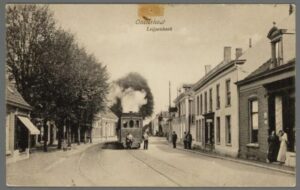 Noord Brabant Netherlands, to Arnoldus van Bijnen, insurance inspector, and Antonia, born Kastelijns. Johannes married on 02-01-1940, to Cornelia Elisabeth, born Proost. From this marriage, one son was born.
Van Bijnen attended the Higher Commercial School in Bergen op Zoom with a five-year course, where he obtained his diploma in 1930. After his enlistment in military service on 03-10-1930, he attended the reserve officer training at the School for Reserve Officers in Kampen. In 1931, he was appointed as a reserve second lieutenant of the Infantry Corps,  and his promotion to reserve first lieutenant followed in 1935.
During the years of crisis, Van Bijnen held various positions until he was appointed in 1938 to the Department of Social Affairs in Bergen op Zoom. 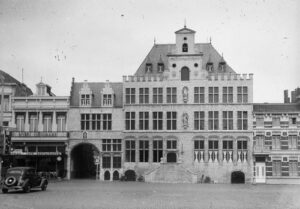 “Jan” enjoyed regional fame as a chess player during that time. During the mobilization of 1939/1940, he was stationed in Odiliapeel. His company commander was reserve captain Cornelis (Kees) Bastiaan Ninaber van Eijben, also known as Karel den Houter.
 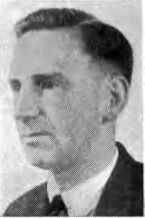 who would later play an important role in the National Organization for Assistance to Hiding Persons (LO).
Cornelis Ninaber van Eijben was the district leader of the National Organization for Assistance to Hiders (LO)  in Driebergen and the surrounding area. He was arrested in August 1943 with a large number of ration cards in his possession. Ninaber van Eijben died in captivity 06-03-1945, age 46, in Bergen-Belsen. Also the last resting place of Anne Frank,
 she rests in a mass grave on the concentration camp Bergen Belsen.
After the May days of 1940, Van Bijnen was demobilized and resumed his work in Bergen op Zoom, where he was known to be very anti-German. During his school years, he had become very close friends with Johannes Josephus Franciscus (Jan), alias Peter Zuid,. (1910-1966), 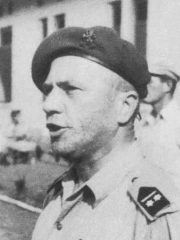 who would later operate as a resistance fighter under the alias ‘Peter Zuid’. In 1941, Borghouts became a civil servant at the Regional Employment Office in Bergen op Zoom, where Van Bijnen had also remained employed. Both were already involved in helping people in hiding in 1942, with frequent contacts with Ninaber van Eijben. On 21-06-1943, Van Bijnen went into hiding and settled in Driebergen, where Ninaber van Eijben lived. When the latter was arrested on 19-08-1943, and deported to Germany—Peter Zuid died on 10-03-1945, age 55, also in the Bergen-Belsen concentration camp—Van Bijnen, under the alias Frank, took over his role as the leader of the LO district of Driebergen. Together with Borghouts, who was also in hiding in Driebergen, he developed significant activity for the LO.
In the spring of 1944, Van Bijnen came into contact with Liepke “Bob” Scheepstra, 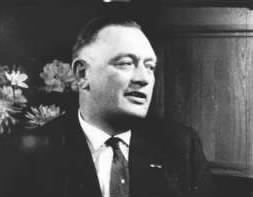 one of the top leaders of the National Sabotage Groups (LKP). With him, Van Bijnen had almost weekly discussions about the armed resistance to be carried out. In the months of June and July, he devised a well-thought-out sabotage plan and advocated for the formation of so-called Civil Resistance Groups, which would hinder the enemy in their movements. On 25-08-1944, “Bob” was appointed National Sabotage Commander by the leaders of the LKP and established his headquarters in Rotterdam. He divided the country into four regions, with Region III (Zeeland, North Brabant, and Limburg) coming under the command of his friend “Jan”Borghouts. At the end of August 1944, an order came from London to proceed with sabotaging the railroad connections in the Netherlands. Van Bijnen, who thanks to the weapon drops now had explosives at his disposal, had a series of sabotage actions carried out in the first half of September, severely disrupting German railroad traffic.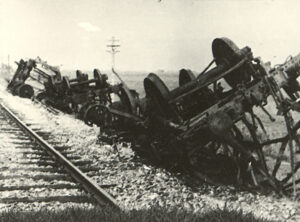
By the time the Binnenlandsche Strijdkrachten were established on 05-09-1944, Van Bijnen initially had reservations about his organization LKP merging into a larger entity. Nevertheless, he began to realize that the unification of the resistance was a necessity, so in connection with the coordination in mid-November 1944, he declared his willingness to move his headquarters to Amsterdam, where the commander of the Binnenlandsche Strijdkrachten, Colonel Henri Koot,
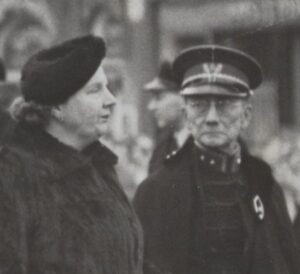
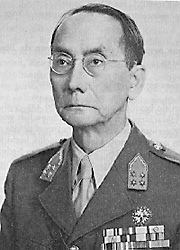
 was located. Then shortly thereafter, on 22-11-1944, a number of well-known resistance members in Utrecht were arrested by the Germans and imprisoned in the Koning Willem III barracks in Apeldoorn,
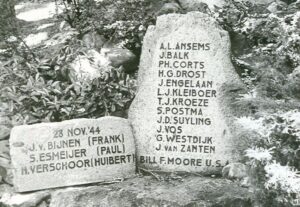
 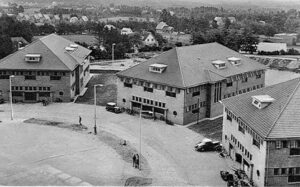 Van Bijnen made plans to rescue them. Since the local resistance leaders were, in his opinion, acting too slowly, he himself, accompanied by the Rotterdam resistance fighter Samuel Esmeijer (“Paul”), age 23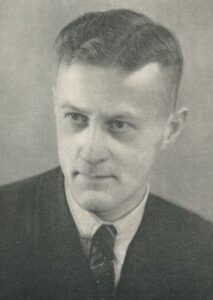
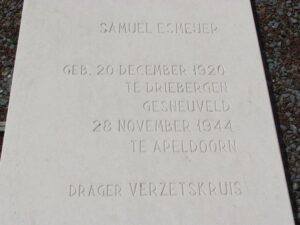 was killed and Huib Verschoor, age 42, who was driving the car, went to Apeldoorn on 28-11-1944, to assess the situation. A German patrol surprised them, and a scuffle ensued. Van Bijnen was severely injured. The Germans took him to a hospital, where he succumbed a few days later age 34 on 01-12-1944. Verschoor was arrested and would die in a concentration camp in 1945.
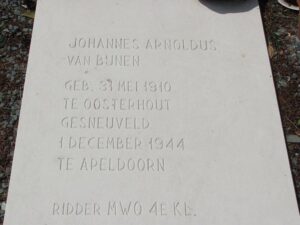
Death and burial ground of Bijnen, Johannes Arnoldus “Jan” van.
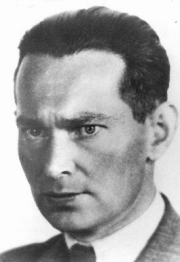
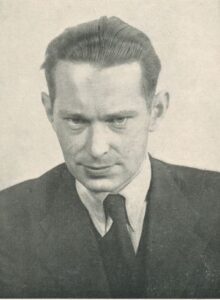
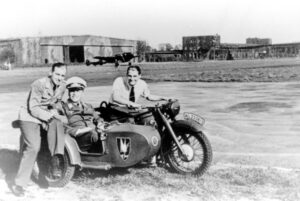
The remains of Van Bijnen were handed over to the Municipal Police of Apeldoorn by the Sicherheitsdienst on 06-12-1944. Van Bijnen was initially buried in Apeldoorn and was later reburied at the General Cemetery of Driebergen. His acts of resistance were posthumously honored with the Military William Order 4th class 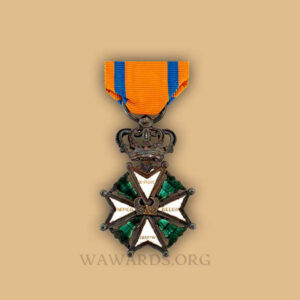 and the American award of the Legion of Merit.
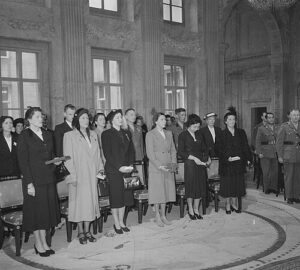 Posthumous award of the Military William Order to Jan van Bijnen’s widow, and to five other widows (1949)




Leave a Reply