

Robert van Genechten, born 25-10-1895 as a Belgian in Antwerpen, 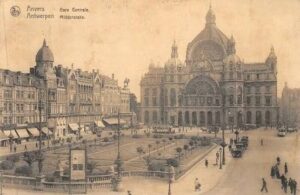 the son of Maria Rosalia, born Mariën and Fredericus Lambertus Hubertus Van Genechten, a teacher in Antwerp. Robert completed his gymnasium education in 1914, when World War I broke out. He studied law for a year in Utrecht. From 1916 to 1918, he continued that study at the Flemish University in Ghent.
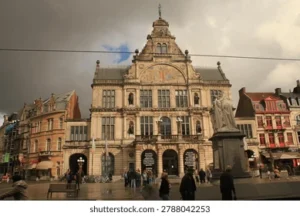 That institution was established by the German occupiers and was highly controversial.Robert aligned himself with the ‘activist’ part of the Flemish Movement, which advocated for cooperation with the Germans. He became an editor of the student magazine Aula. In 1918, he passed his preliminary examination in Philosophy and Literature. Due to his collaboration with the Germans, he had to flee his country immediately after the war. He fled to the Netherlands. In 1920, he was tried in absentia by the court of assizes in Antwerp and sentenced to “8 years of imprisonment and 20 years of deprivation of his civil rights.”
On 23-10-1922, Robert van Genechten married Popkje Hiemstra in Amersfoort. From this marriage, two sons were born. Van Genechten successfully completed his studies in Utrecht and earned his doctorate cum laude in 1927 with the dissertation “The Development of Value Theory since 1870,” after which he received an appointment at the university as a private lecturer a year later. He had already been working for several years as a lawyer and attorney in association with Mr. Anton Johan van Vessem. In 1930, Van Genechten was naturalized. In the meantime, however, he continued to advocate for Flemish autonomy.
Mr. Anton van Vessem 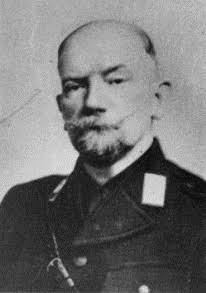 was a National Socialist, whose speeches as a member of the Senate often led to heated exchanges. Proponent of the Greater Netherlands idea and fierce opponent of the Treaty with Belgium regarding the Scheldt-Rhine connection. Met Mussert during the actions against that treaty. Thought that the NSB
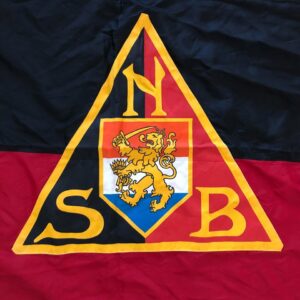 should cease its activities after the Dutch capitulation, but still became the leader of the NSB, Anton Adrian Mussert‘s legal advisor.


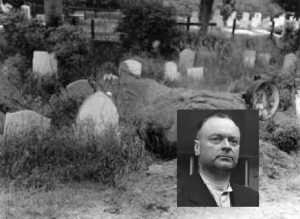 After the war, several years in captivity due to mediation in the purchase of Jewish property. After the war, he was ultimately sentenced to four years of internment. What was particularly held against him was his involvement in the purchase of houses and shares from Jewish property for the benefit of Anton Mussert and his sister-in-law Maria (Rie) Mussert-Witlam.
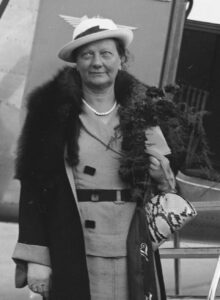 In 1948, he was released. Eight years later, he was once again given the opportunity to resume his profession as a lawyer and attorney.
By law of 14-06-1930, Van Genechten was naturalized as a Dutch citizen.
In 1934, Van Genechten joined the NSB, the National Socialist Movement. His associate Van Vessem had been intensively involved there since its founding in 1931/32. Van Genechten took over the leadership of the political education work in the NSB.
In the autumn of 1940, Van Genechten was appointed as the Attorney General, succeeding Antoni Brants 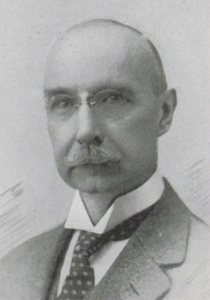 at the Court of Appeal in The Hague. He certainly did not act reservedly in public. Louis “Lou” de Jong
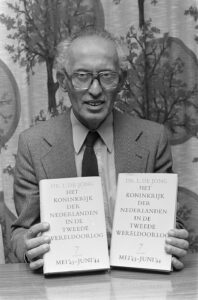 cites the most striking testimony of this as the appearance of Van Genechten on Wednesday, 11-09-1940, at the funeral of WA member Peter Ton,
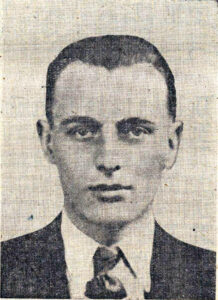 a Dutch National Socialist political activist, who was shot dead during a scuffle in The Hague. On behalf of Mussert, Van Genechten spoke at the funeral, “one of the most prominent NSB members, (…) head of the education department of the headquarters and recently appointed attorney general in The Hague.” He literally exclaimed: “We will take over the power.”
His attitude provoked sharp reactions. For example, two months after his appointment, he was told that his body, “when the time comes… will not be carried down the stairs but thrown out the window.” When in November Rudolph Pabus Cleveringa, 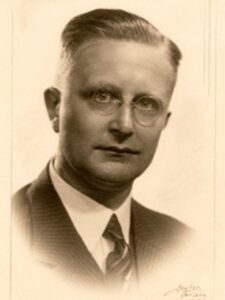 dean of the law faculty of Leiden University, publicly delivers a passionate plea against the dismissal of Eduard Mauritz Meijers
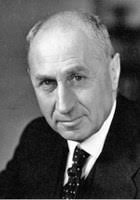 from his professorship, Van Genechten becomes intensively involved in his arrest and interrogation.
On a stormy day in October 1949, his son, Frits van Genechten walked along Nassaulaan in The Hague past the building where the Directorate-General of the Special Court was located. “This afternoon, a decorative iron weighing 5 kg was dislodged from the facade of the building at Nassaulaan 23 due to the storm.” It fell on the head of a 24 to 25-year-old passerby, who collapsed unconscious. [New Newspaper (The Fatherland)] At nite At nite, Frits van Genechten died from his injuries. Five days later, on October 31, he was buried at Soestbergen.
From July 1941, Robert van Genechten was a special professor of economics (‘volkshuishoudkunde’) due to the Foundation for the Promotion of the Study of National Socialism at Leiden University. That didn’t mean much, because the university was essentially no longer functioning.
Van Genechten was within the NSB “one of the most fervent advocates.” He was probably the most important person advocating for the introduction of ‘peace justice’ and the establishment of the ‘peace court’. “With the ‘peace judiciary,’ he particularly targeted compatriots who allegedly misbehaved against party members during the May days.”
Although he was a convinced and zealous National Socialist, Van Genechten came into conflict with the occupiers over various issues. He opposed, among other things, the German actions against students, the recruitment of volunteers for the Waffen-SS,  the killing of hostages for attacks on NSB members, and the oath of allegiance to Adolf Hitler by the Dutch SS.
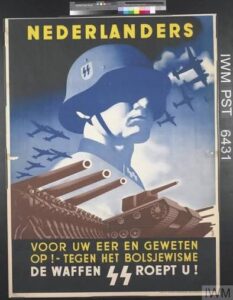 According to De Jonge his critical attitude led to him being relieved of his duties as attorney general on 01-02-1943. Instead, he was appointed as the commissioner of the province of South Holland. He was then told by all the ‘executive councils’ (deputies) that they were not willing to work with him, and he subsequently stopped showing up. Shortly after this fiasco, he had allegedly attempted suicide, according to Lou de Jong. After this failed suicide attempt in early May 1943, Van Genechten was relieved of his NSB duties by Anton Mussert. “His political role was now nearly over, although he continued to publish articles in Nieuw Nederland and other NSB organs.” Van Genechten was treated in the psychiatric clinic of Utrecht University and in August 1943 was appointed by the Reichscommissar in the Netherlands Arthur Seyss-Inquart


 as a full professor of criminal law and criminal procedure at Leiden University. Since the University of Leiden was closed, this appointment effectively meant that Van Genechten was sidelined.
After the liberation, Van Genechten was arrested in his home in Voorburg. He was imprisoned in the ‘Oranjehotel’, 
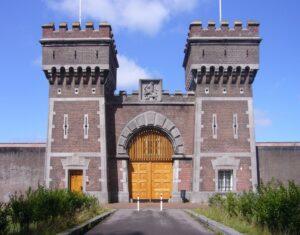
 a complex of cell barracks on the grounds of the Scheveningen penitentiary.
The trial that was conducted shortly after the war by the Special Court in The Hague against Van Genechten was one of the “first three major political trials in the Netherlands”; the other two were against the Dutch journalist, Nazi collaborator Marius “Max Blokzijl” 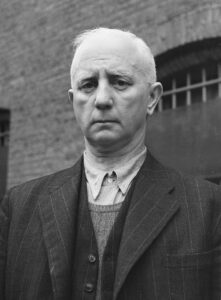
 and Anton Mussert. Mr. Johannes Zaaijer
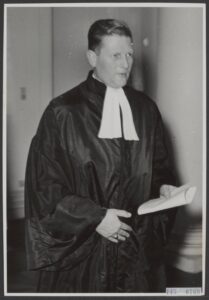 served as the public prosecutor and G. Scholten the chairman. The court aimed for a sober and swift legal process. The trial took place on 03-10-1945.
Death and burial ground of Genechten, Robert van.
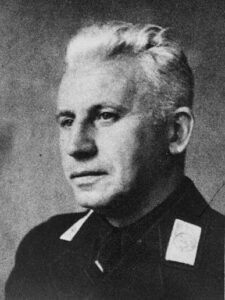
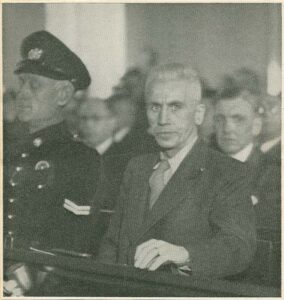
Fourteen days after the hearing, on 17-10-1945, Van Genechten was sentenced to death.
While the appeal in cassation was still ongoing, Van Genechten committed suicide by hanging in his cell in the penal prison of Scheveningen on 13-12-1945. His case was to have been heard by the special court of cassation in The Hague on December 24. He wrote a letter to the clerk of the Special Court, in which he stated that “in the solitude of the cell” he had reflected on the events of recent years, becoming increasingly aware of his guilt. “It’s as if I have awakened from a dream.” (…) The mistakes we have made are (…) too fundamental to be covered by an appeal to good faith.” He realized, according to his own words, that he had deeply offended the Dutch people. He stated that he accepted the ruling of the Special Court and withdrew his appeal in cassation. To prevent an official pardon request from being submitted, he would have decided “to execute the ruling of the Special Court himself.”
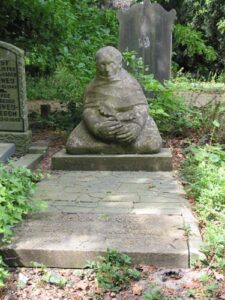
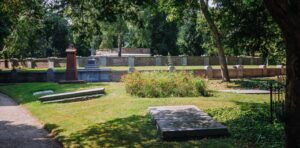
Van Genechten was buried in a mass grave at the General Cemetery of The Hague, where Anton Mussert was later also buried. On 17-11-1958, Van Genechten’s family was granted permission to reinter his remains. He was buried at the Soestbergen cemetery, Gansstraat 167, 3582 EG Utrecht, in the grave where his son Frits had already been buried.


Leave a Reply