

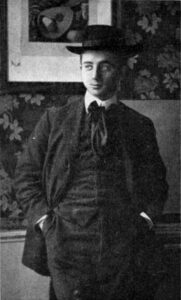
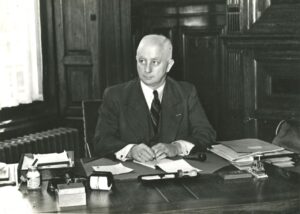
Blokzijl, Marius Hugh Louis Wilhelm “Max”, born 20-12-1884 in Leeuwarden,  Netherlands, to lieutenant Eduard Karel Blokzijl (1852–1899) and his wife Anna Elisabeth, born Hoeffelman, Blokzijl (1861–1940). Max was married three times, first marry in 1909, with Elisabeth Maria Gerardina “Beppie”, born Horst, Tremlett (1888–1970), in 1912 with Anna Elizabeth Henriëtte “Annie”, born Jurgens Heijermans, (1889–1973) and in 1921 with Hermine Eleonore, born Behle, Blokzijl (1897–2003).
Max attended the HBS/(Higher Secondary School) in The Hague. After his final exam in 1903, he became a journalist at the Algemeen Handelsblad. 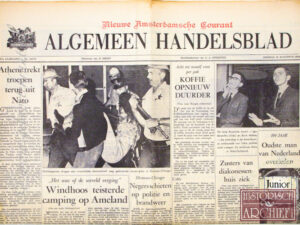 In 1908, he joined the theater company of the cabaret artist Jean-Louis Pisuisse as a chansonnier. With this troupe, Max Blokzijl traveled extensively through Europe and the Far East until the outbreak of World War I, including a visit to the Dutch East Indies. Max Blokzijl became a correspondent in Berlin in 1913, but this stay was short-lived, as mobilization was called off. After the assassination attempt on the Austrian heir to the throne, Franz Ferdinand, and his wife Sophie Chotek in Sarajevo,
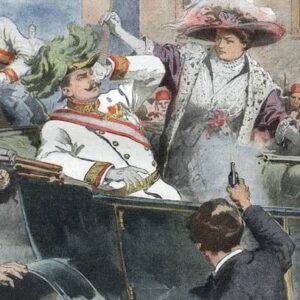 World War I broke out. Max Blokzijl was called up to serve in the Dutch army. After the war, he became a correspondent for the Algemeen Handelsblad in Berlin again.
In Berlin, Blokzijl became acquainted with the National Socialism of Adolf Hitler. Initially, he rejected antisemitism, but around 1935, he became captivated by the political ideas of Adolf Hitler. He could not express this conviction in his articles for the Algemeen Dagblad. From 1938 onward, he therefore wrote anonymously about National Socialism in the magazine De Waag. His membership in the National Socialist Movement (NSB)  of Anton Adrian “Ad” Mussert

 was kept secret with great care, as he would have been fired if this involvement had reached the management of the Algemeen Dagblad. Blokzijl the journalist would only openly express his National Socialist ideas after the German occupation of the Netherlands in 1940. Max Blokzijl became head of the Press Department of the Ministry of Education, Culture and Science
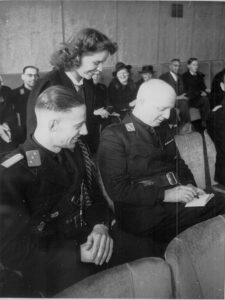
 in 1941. A year later, he also became the leader of the Press Guild. The Press Guild was a part of the Dutch Cultural Chamber, an institution where all writers, journalists, actors, and artists had to join if they wanted to continue practicing their profession. Max Blokzijl provided weekly radio programs for the Dutch Broadcasting Corporation from February 1941 under the titles ‘I Was There Myself’, ‘Political Weekly Chat’, and ‘Burning Issues’. In these, he spoke about the positive aspects and ideology of Adolf Hitler and justified all the actions of the German occupier. Traitor Blokzijl was a good speaker. As a result, his influence was significant, but in 1943, radios had to be handed in because many people were listening to foreign stations, such as the BBC with Radio Oranje.
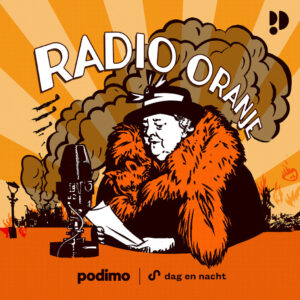 Blokzijl now only reached listeners who were connected to the wired broadcasting service. He remained active as a propagandist until the end of the war. “We will return, listeners,” he promised the misguided Dutch on 06-05-1945.
Max Blokzijl had become the symbol of treason and collaboration. After the war, he was sentenced to death by a Special Court 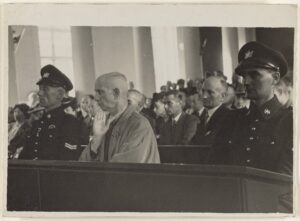
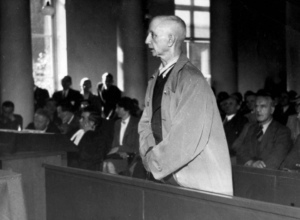 on the basis of passages from his radio talks on 25-09-1945. The death sentence pronounced on Max Blokzijl was the first death sentence issued after the war against a non-military person who had committed an offense in the Netherlands during World War II.
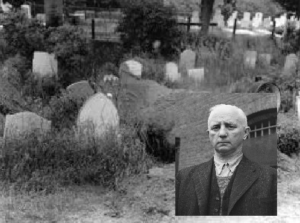
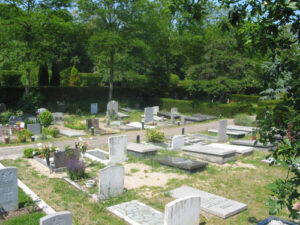
Death and burial ground of Max Blokzijl.
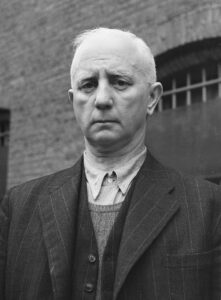
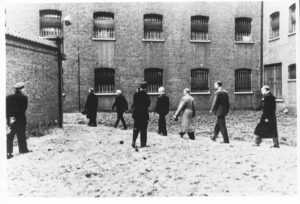
The sentence was carried out by firing squad on 16-03-1946, to Max Blokzijl, age 61, at the Waalsdorpervlakte. His body was buried in a mass grave at the General Cemetery of The Hague. The widow was not given permission to reinter her husband from the mass grave elsewhere, so by the end of 1959, his and Anton Mussert’s remains disappeared into a charnel pit at the cemetery.


Leave a Reply