

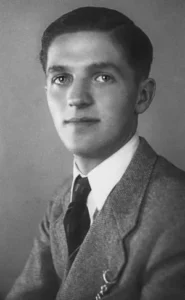
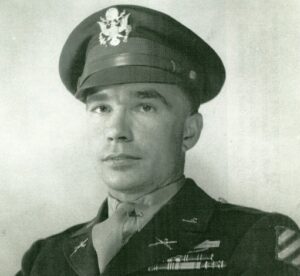
Conijn, Fritz Gerhard Marie, born 27-06-1923, in Alkmaar, Nassaulaan 19, 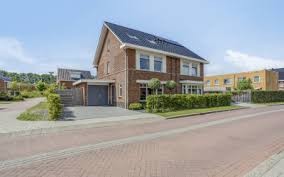 Netherlands, the son of timber merchant Gerhardus Adrianus Conijn, (20-08-1880 in Alkmaar – 17-03-1947 in Alkmaar) and Martha Maria Ignatia, born Schröder (16-04-1884) in The Haque – 06-08-1969 in Alkmaar). As a cub, he is a member of group 1, the Kaninefaten.
 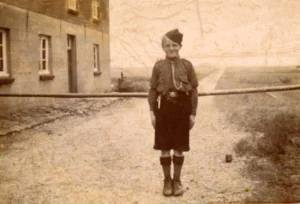 His sister Dicky is Akela here, and his future brother-in-law Doeko Bosscher is a member of the tribe. After the Catholic Scouts were established in 1930, three Catholic scout groups quickly emerged in Alkmaar. In 1932, the St. Laurentius group and the St. Dominicus group were established, and a year later, in 1933, the Andre de Thayegroup
  for underprivileged youth was founded. In 1938, the Don Bosco scout group was established in the St. Joseph parish. Catholic scouts from De Geuzen and the Kaninefaten usually transferred to these groups. Frits and his sister Dicky are present. Dicky becomes Akela there and Fritz is installed as a scout in 1935 with the St. Dominicus group. Gerard Veldman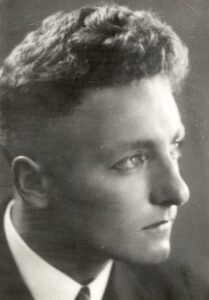
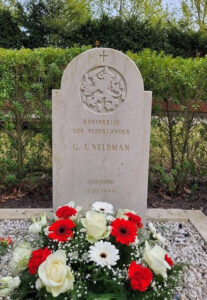 a farmhand is his flag bearer (scout leader). The Dominicusgroep was named after one of the two city center parishes. They had their clubhouse between Nieuwepoortslaan and the driveway of the sports park near Alkmaarse Hout. Before the war, there were eventually two neutral and four Catholic scout groups and one company for girl scouts. In total, 400 girls and boys played the game of Scouting. As a student at the RK Lyceum Petrus Canisius in Alkmaar,
 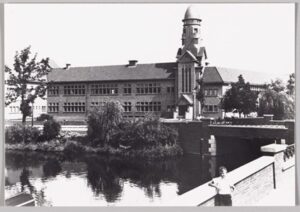 he was already raising money for the families of sailors in Allied service (the seaman’s fund) and maintained contacts with the National Support Fund (NSF). He, along with his Scout group, was active in the May days of 1940 in helping to accommodate evacuees from Amersfoort, and in June 1940 they organized a successful fundraising campaign for the victims of the bombings in Rotterdam
  by frying and selling fries, among other things from the house of the Conijn family. The quarter-hour bombing almost destroyed the entire historic city center of Rotterdam, partly due to the fires that broke out. 711 people died, and approximately 80,000 residents became homeless.
Resistance fighters from Fritz’s group are Herman Jan Josef Bak, Henricus Johannes Jacobus van Engelen “Den Engel”, 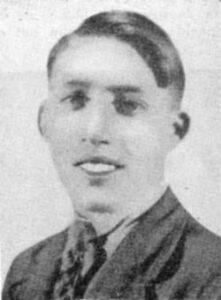 Gerhard Herman “Gift” Veldman, Tinus Niele, and Johannes Post.
 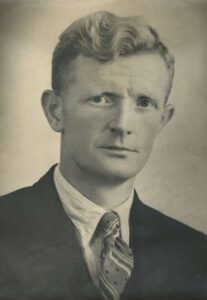 It often concerns resistance fighters who have already carried out acts of resistance on their own initiative.
The connection with other LO 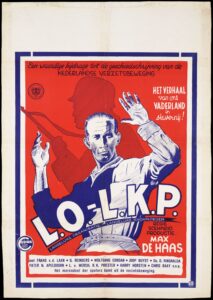 departments only really gets underway when Fritz visits the so-called “fair” of the LO, where hiding addresses are exchanged. The group of Fritz and Gerben Wagenaar
 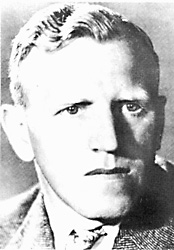 is considered one district. In March 1944, Fritz is once again at the forefront of the establishment of the KP in Alkmaar. KP, Landelijke Knokploegen (National Combat Gangs or Action Squads). Fritz has already assisted in raids elsewhere in the country and thus gained experience. Fritz receives the assignment from Leendert Martinus Valstar
 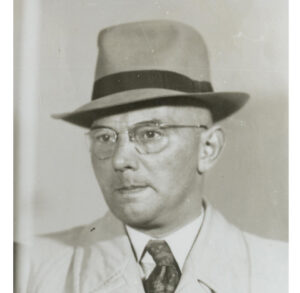 to establish a KP group in Alkmaar. Leendert is the KP leader in the western part of the country, a man who is high on the Germans’ wish list.
On September 3 1944, Brussels was liberated, and on September 4, Antwerp. In a hurry, the Germans set up an evacuation plan for Camp Vught.  Shortly before, an order from Adolf Hitler had also come into effect that “terrorists” were to be killed without trial, the so-called Niedermachungsbefehl. On this basis, 450 resistance fighters were executed shortly before and during the evacuation at the execution site near the camp; this is known as the Deppner executions. Leendert Valstar was executed on 04-09-1944, along with Izaak van der Horst,
 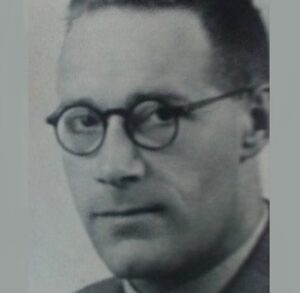 Jacques Johannes de Weert, alias “Black Jack”
 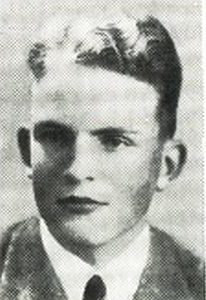 and Josephus Adriaansen (military police / resistance),
 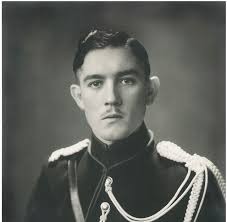 Hendrik Baarschers (bookseller),
 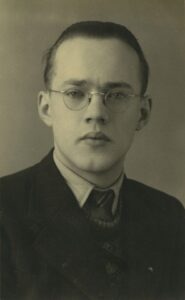 Karel Clemens van Berckel (surgeon / medical resistance),
 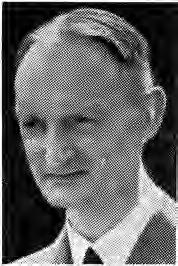 Arnold Blik (controller KLM), Nicolaas Johan Celosse
 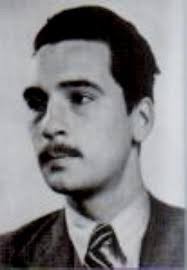 and Hans Hoetink,
 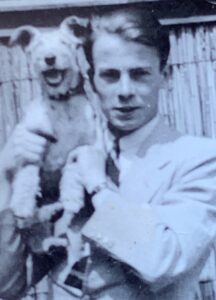 Jan Hendrik Diesfeldt,
 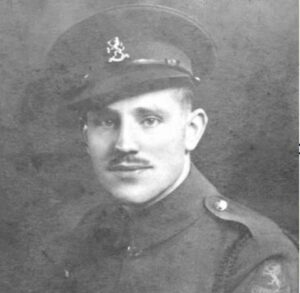 Albert Fieten
 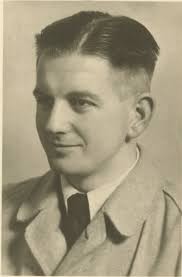 and Harm Steen (1st lieutenant / radio service)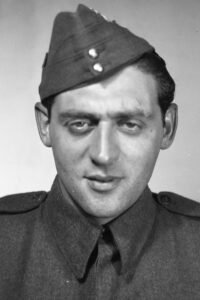
Of the approximately 3,500 prisoners who were transported to Sachsenhausen during this period, almost no one survived the war.
The KP-Alkmaar carries out raids on the distribution offices in Venhuizen and Heiloo, on an SD  apartment in Alkmaar, and on two police stations to obtain weapons. Furthermore, the group participates in the raid on the prison at Weteringschans
 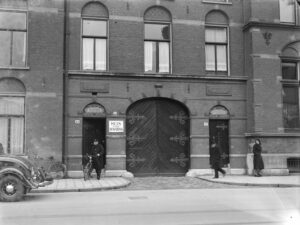 in Amsterdam on 01-05-1944, but this raid fails. On 22-05-1944, the group suffers its first blow when three members are arrested. The SD continues to relentlessly pursue Fritz’s group, and on 25-06-1944, the SD delivers the final blow. The KP-Alkmaar has been eliminated. Fritz retreats to Amsterdam, where he sets up a new KP group. This group has a more provincial character and carries out raids on the distribution office in Ouddorp and intercepts two coupon card transports.
Unfortunately, Fritz is captured on 19-08-1944, due to betrayal, arrested on 19-08-1944 in a restaurant near the Berlage Bridge in Amsterdam. Fritz may, despite his young age, be considered one of the greats of the Dutch resistance. He has set up and led the KP in an exemplary manner. How such a young man managed to build such an organization is something a friend is trying to articulate. “Fritz was the soul of the resistance movement in North Holland.” He founded and built up the KP there. In his ruthless will to serve his country, he went into battle for his comrades, and Fritz was everything to them. Another quote from his friend is even more striking. “He sometimes gave me the impression that he was in a hurry to do as much as possible in the shortest amount of time.” I also know why: Fritz did not believe he would survive this time.”
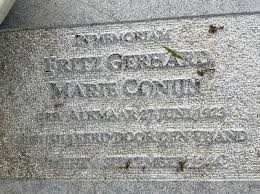
Death and burial ground of Conijn, Fritz Gerhard Marie.
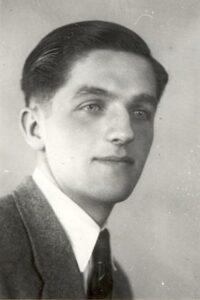
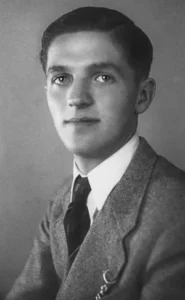
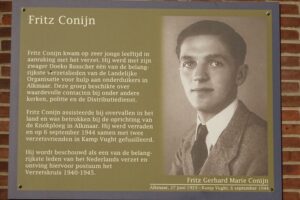
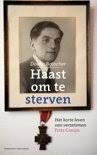
The SD officer responsible for Fritz’s arrest is Gottlob Hermann Felix Herbert Oelschlägel one of the most notorious SD officers, who is later also liquidated on 23-10-1944, age 36. 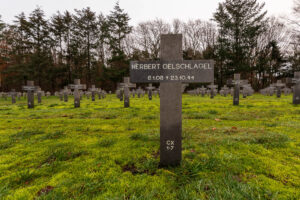 On 06-09-1944, age 21, Fritz Conijn, along with two resistance friends, is killed in Camp Vught.
He was posthumously awarded the Resistance Cross  by Royal Decree on 25-07-1952. Despite his young age, 21, Fritz Conijn is seen as one of the greats of the Dutch resistance against the Germans during the years 1940-1945. His name is on a memorial in the former concentration camp Vught.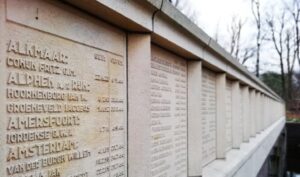
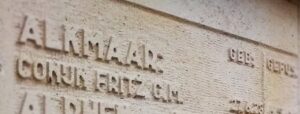 Streets are named after him in Alkmaar, Amsterdam and Heemstede. In Purmerend a street is named after the Conijn brothers, who were all active in the resistance.
Fritz Conijn was cremated in the Vught concentration camp and buried in the Ash Pits Wells, in Camp Vught. At the Municipal Cemetery in Alkmaar, he is being commemorated.




Leave a Reply