


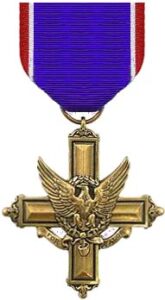




McClure, Robert Alexis born in Mattoon, 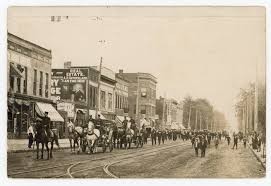 Illinois, on 04-03-1897, Robert moved with his family as a young boy to a farm in Madison, Indiana, near the Kentucky border. He graduated from the Kentucky Military Institute, a preparatory school in Lyndon, Kentucky,
 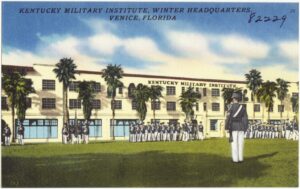 in 1915, the son of George H. McClure (1871–1935)
  and his wife Harriet Julia “Hattie”, born Rudy, Eckert (1873-1961)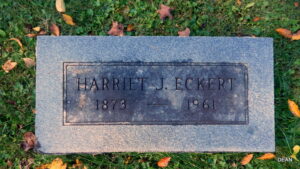
Robert was the eldest child, with two younger sisters, Persis Elizabeth and Mary Susan. He also had a half-brother William Eckert, 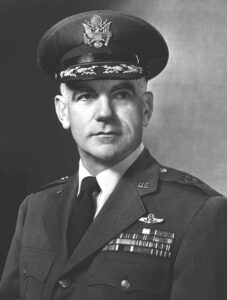 who served as a Lieutenant General in the United States Air Force and later became the fourth commissioner of Major League Baseball. After his parents’ 1907 divorce, McClure’s mother moved the family to Madison, Indiana, where she married Frank Eckert.
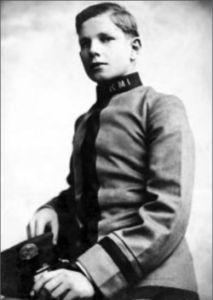 McClure at the Kentucky Military Institute, December 1912.
McClure grew up on a farm a short distance from the Kentucky border with Indiana. He attended school in Madison until transferring to the Kentucky Military Institute in Lyndon, Kentucky, from which he graduated in 1915
In August 1916, he accepted a commission as a lieutenant in the Philippine Constabulary, a militarized Filipino police force established by the U.S. Army  after the Spanish-American War in 1898. Led by U.S. officers, its mission was to conduct counterinsurgency operations.
The Philippine Constabulary was a militarized Filipino police force established by the U.S. Army after the Spanish-American War in 1898. Led by U.S. officers, its mission was to conduct counterinsurgency operations. During his service in the counter-insurgency force, McClure accepted a commission as an Infantry 1st Lieutenant in the United States Army on 09-08-1917, four months after the American entry into World War I.
In 1920 following the WWI draw-down, Captain McClure briefly returned to the Philippine Islands, stationed in Manila with the 27th Infantry Regiment. With the continuing draw-down and realignment of forces, McClure received reassignment.
When the United States declared war on the Empire of Japan on 08-12-1941, after the Pearl Harbor attack,  McClure was serving as military attaché to the American embassy in London. He was later given the additional duty of military attaché liaison to all of the European governments in exile in 1942. With these additional responsibilities, promotions came quickly: he became a Brigadier General in March 1942, only nineteen months after his promotion to Lieutenant Colonel in August 1940.
Brigadier General McClure was given the task of consolidating several military functions into a cohesive unit: public relations, censorship and psychological warfare; with, in McClure’s own words “a slop over into civil affairs” included. The INC included an amalgamation of military and civilian personnel from the U.S. Office of War Information (OWI);  the Office of Strategic Services (OSS);
  the British Political Warfare Executive (PWE);
 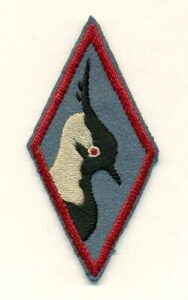 and the U.S. Army.
McClure led the Information and Censorship Section until November 1943, when Dwight David “Ike” Eisenhower  made him chief of the Publicity and Psychological Warfare Division. In February 1944, that organization became the G-6 staff directorate. On 13-04-1944, Eisenhower divided G-6 into separate publicity and psychological warfare divisions; Brigadier General Thomas Jefferson Davis
 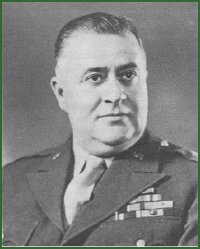 headed publicity, while McClure became chief of the Psychological Warfare Division, SHAEF.
 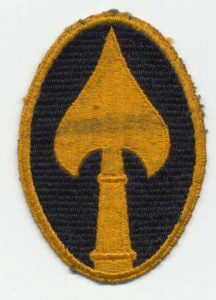 In that role, McClure coordinated propaganda with the U.S. Office of War Information, the Office of Strategic Services, the British Ministry of Information, and the Political Warfare Executive.
Under McClure, PWD/SHAEF coordinated large-scale leaflet, radio, and loudspeaker operations in support of Allied operations in Western Europe. ARSOF History states that PWD coordinated the airdrop of more than three billion leaflets from June 1944 to May 1945, while mobile radio broadcasting companies and broadcasting detachments supported advancing Allied units.
After the end of combat in Europe, McClure shifted from psychological warfare to occupation information control. When SHAEF ceased to exist in July 1945, he became chief of the Information Control Division, U.S. Forces, European Theater. The division controlled or supervised German newspapers, radio stations, theaters, films, publishers, libraries, and other public media as part of denazification and reorientation policy.
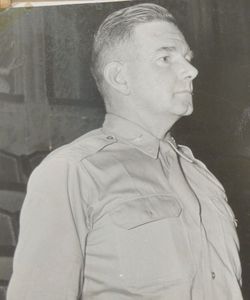
After the outbreak of the Korean War, McClure was recalled to Washington to help rebuild the Army’s psychological warfare capability. On 15-01-1951, the Army formally established the Office of the Chief of Psychological Warfare, with McClure as its head. The office was responsible for developing psychological warfare and special operations plans for the Army and supervising Army programs in those fields. McClure organized the office into Psychological Warfare, Requirements, and Special Operations divisions, the last of which became central to the creation of the Army’s first formal unconventional-warfare capability: Special Forces.
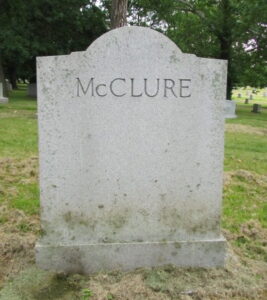
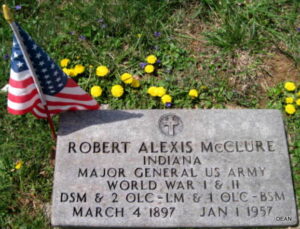
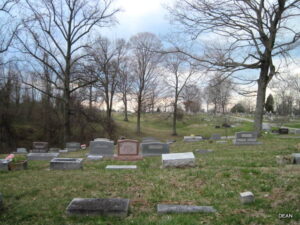
Death and burial ground of McClure, Robert Alexis.
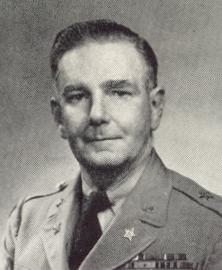
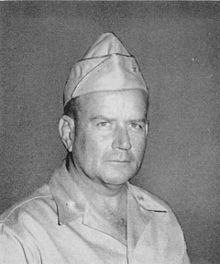
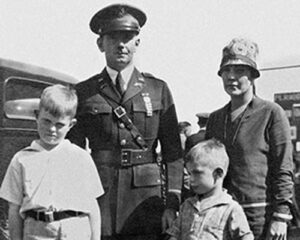 Captain McClure with his wife, Jeanne Marjory Mcclure (1926-2009), and two sons, Robert D. (l) and Richard A. (r). Born in 1920, son Robert graduated from West Point in 1943 and retired as a colonel from the U.S. Air Force.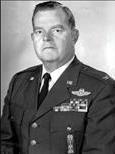
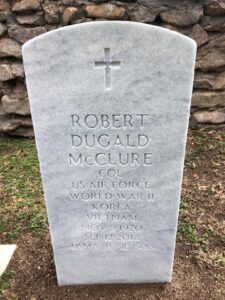 Richard was born in 1924, graduated from West Point in 1947, and retired as a lieutenant colonel in the U.S. Air Force. (1924-1993)
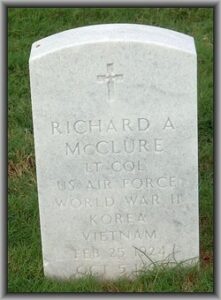 . McClure, Robert Alexis retired from the Army in 1956 and died of a heart attack soon after at Fort Huachuca, Arizona, on 01-01-1957 (age 59) in Sierra Vista, Cochise, Arizona, United States. Robert Mcclure was buried at the Fairmount Cemetery, Madison, Jefferson, Indiana, 1580 Michigan Road, Madison, IN 47250, United States.
Message(s), tips or interesting graves for the webmaster: robhopmans@outlook.com


Leave a Reply