

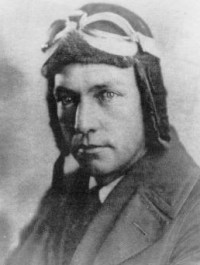
Pangborn, Clyde Edward, born 28-10-1895 in Bridgeport,  Washington, near Lake Chelon, the son of Max Juson Pangborn and Opal, born Lamb, Pangborn.
 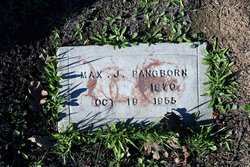 His exact birth year is uncertain, because he used 1893, 1894, 1895, and 1896, on various documents, changing his age to appear older or younger as needed. The 1900 United States census listed Clyde Pangborn (b. October 1893) and his brother Percy (b. January 1891) living with their mother Ola [sic.] in Spokane, Washington. In 1910 Clyde (age 16) and Percy (age 19) were boarders with the Alfred Heimark family in St. Maries, Benawah County, Idaho. Census day was April 15; Clyde would not be 17 until October. “1895” was used on his World War I draft registration in Shoshone, Idaho. When he was two years old, his parents divorced and he moved to Idaho with his mother. He graduated from high school in 1914 and enrolled in the University of Idaho, where he studied civil engineering for two and a half years. Pangborn was a first cousin of American composer George Frederick McKay (1899–1970),
 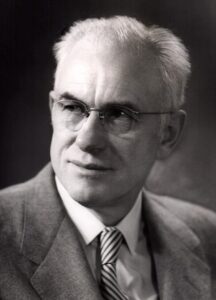 who grew up in Spokane, Washington, and used the penname Arthur Pangborn for the lyrics for some of his compositions.
After college, Pangborn worked briefly as an engineer for a mining company before he joined the Air Service during World War I. He completed flight training and was subsequently stationed as a flight instructor at Ellington Field in Houston, Texas. 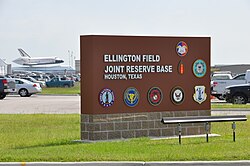 While teaching cadets how to fly the Curtiss JN-4 “Jenny” biplane,
 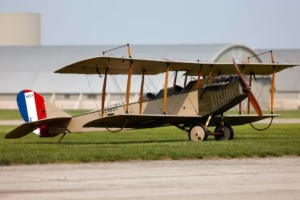 Pangborn learned to roll his plane onto its back and fly upside-down for extended periods, which earned him the nickname “Upside-Down Pang”.
As early as 1935 Pangborn warned of a potential Japanese attack on the United States due to his sighting and analysis of Japanese aviation capabilities, and said that Japanese planes would be capable of reaching Chicago.
In 1934, Pangborn, along with Colonel Roscoe Turner, 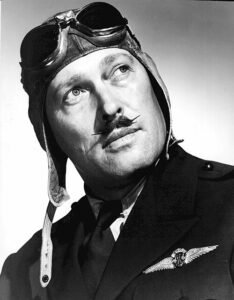
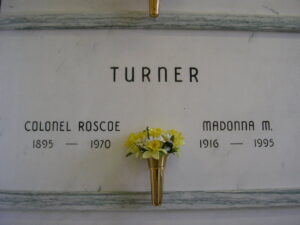 flew a Boeing 247 in the MacRobertson Race. Turner and Pangborn came in second place in the transport section (and third overall), behind the Boeing 247’s eventual rival, the new Douglas DC-2. Turner passed away on 23-6-1970, age 74 and is interred at Crown Hill Cemetery in Indianapolis
In 1936 the Vance Flying Wing was bought at auction in 1936 for $2,500 by the Mason Aircraft Corporation. Pangborn planned on using the aircraft for a Dallas, Texas, to Moscow Flight. Pangborn was detained near the Latvian frontier when he entered the country without a visa. He was released on 21-07-1937, and flew on to Moscow after help from New York Congressman William Irving Sirovich. 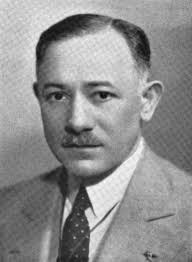
Prior to World War II, he had become the Chief Test Pilot for Bellanca Aircraft Corporation in New Castle, Delaware. In 1937, he demonstrated Burnelli Aircraft 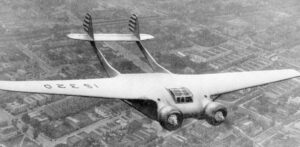 in England and Europe for Cunliffe-Owen Aircraft Company of Southampton, England. He worked for Cunliffe-Owen until the late 1930s testing military aircraft.
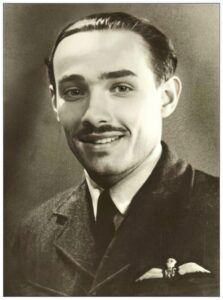
When World War II broke out in Europe in late 1939, Pangborn joined the Royal Air Force (RAF)  and assisted in organizing the RAF Ferry Command. He recruited pilots throughout the United States and Canada for the Ferry Command and Eagle Squadron. From 1941 through the end of the war in 1945, Pangborn served as Senior Captain, Royal Air Force Ferry Command during which time he made approximately 170 trans-ocean flights (crossing both the Atlantic and the Pacific). In 1942, he brought the first Lancaster heavy bomber
 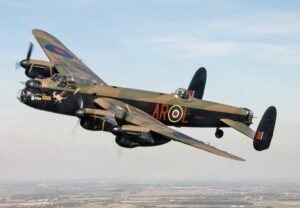 to the United States for tests and later returned with the same aircraft and demonstrated it to the United States Army Air Forces and major aircraft builders throughout the United States and Canada. Meanwhile, Pangborn flew almost every type of multi-engine aircraft used during the war. After the US entered the war in December 1941, he served in the US military.
He was discharged from the RAF in 1946 and continued his career as a commercial pilot. As part of his work, he pioneered commercial flight paths and developed better aircraft. He was instrument-rated to fly any plane, single or multi-engine, land or sea, and had logged more than 24,000 flight hours over his 40 years of piloting.
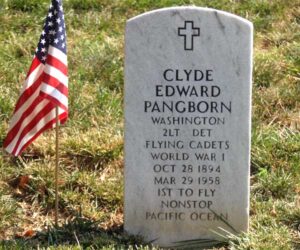
Death and burial ground of Pangborn, Clyde Edward.
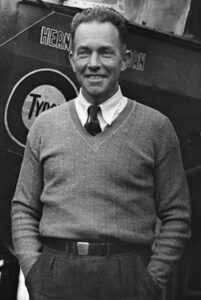
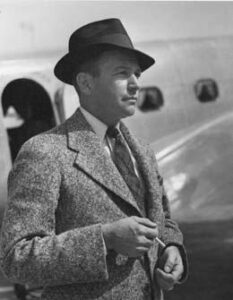
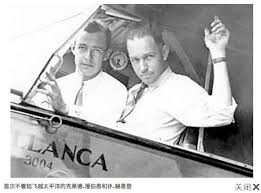
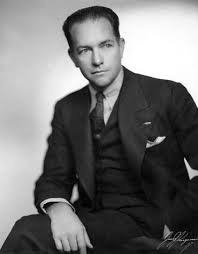
Pangborn died 29-03-1958 (age 63) in New York, New York, New York, United States and was laid to rest with military honors at Arlington National Cemetery. His papers are archived at Washington State University. and the Museum of Flight in Seattle.
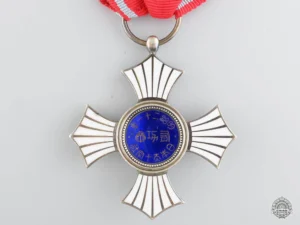
His awards include the Harmon Trophy, 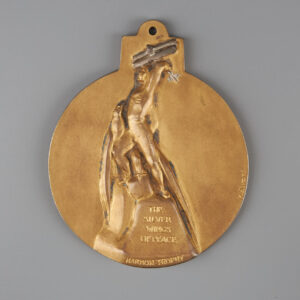 the White Medal of Merit (from Japan),
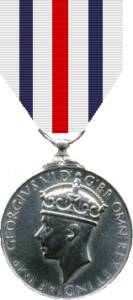
  the King’s Medal (from England),
  and the Admiral Moffett Maritime Aviation Trophy.
  Pangborn was enshrined as a member of the National Aviation Hall of Fame in 1995.




Leave a Reply