

Fred Butterworth born on 25-04-1922 in Winnipeg in the province of Manitoba in Canada.  to Fred Butterworth (1894-1977) and Doris Butterworth (1900-1976) Fred grew up with his brother Stanley and sisters Ruth and Doreen in a Christian family.
Fred loved sports and exercise and was therefore in good health. In his work as a foreman, he was seen as a good leader. He was a real people person. He also helped with chores in and around the house. All this together made him well suited to join the army. He had only one preference: to work in the R.C.A. (Regiment of Canadian Artillery)  or C.A.C. (Canadian Armoured Corps).
  He wanted to join his brother Stanley or a friend. He ended up with the C.A.C. The people he left behind when he would be deployed were his mother Doris, his father Fred Sr. and his sisters. As World War II progressed, Canada decided to send soldiers to Europe as well. Fred enlisted in the Canadian Army on 28-04-1943. This meant Fred had to travel to Europe with his brother Stanley and their unit. Fred went first to the United Kingdom and from there to France, then through the German forest Reichwald
 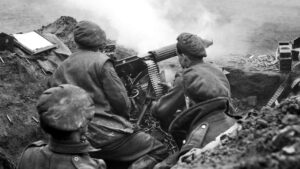 Operation Veritable (also known as the Battle of the Reichswald) (where there was heavy fighting) to Arnhem and then to Groningen. During the journey they were often held up as the Germans collapsed the many bridges in Holland to slow down the enemy. They also had to fight the enemy in several places to get through.
Operation Veritable (also known as the Battle of the Reichswald) was the northern part of an Allied pincer movement that took place between 8 February and 11 March 1945 during the final stages of the Second World War. The operation was conducted by Field Marshal Bernard “Monty” Montgomery‘s 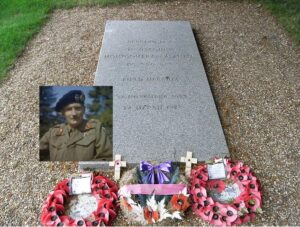 Anglo-Canadian 21st Army Group,
 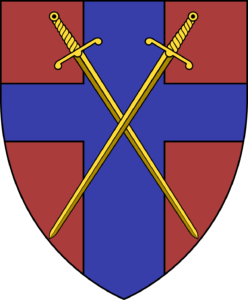 primarily consisting of the First Canadian Army under Lieutenant-General Henry Ducan Graham “Harry” Crerar
  and the British XXX Corps
  under Lieutenant-General Brian Horrocks.

Fred Butterworth and the other Canadians invaded Assen in April 1945 so they could reach Groningen. Liberating Assen was easy. Better said, it only took one day, so they hoped they could liberate Groningen in one day as well. That went harder than they thought, because the Germans were not going to give Groningen away just like that and defended the city with everything they had.
The Canadians invaded Groningen with as little heavy artillery as possible, so that as few civilians as possible would be injured by a stray explosive. Thus a few Sherman tanks entered the city via Eelde. So did Fred Butterworth’s tank. Germans were hard to see because the German snipers hid in buildings and houses and donned civilian clothes, so the Canadians could not tell if they were German soldiers or civilians. Therefore, it turned into a house-to-house battle.
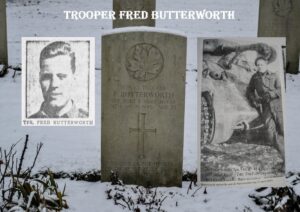
Death and burial ground of Butterworth, Fred.

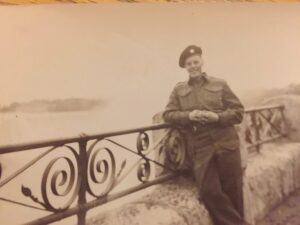
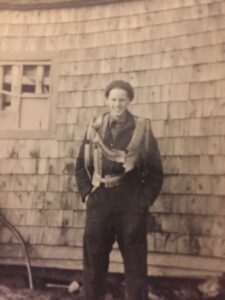
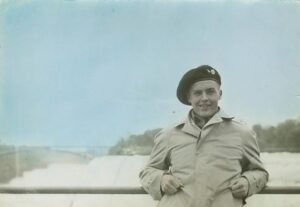
On Friday, 13-04-1945, Private Nedelec piloted a Canadian Sherman tank down Paterswoldseweg to the city.  On the first day of the liberation of the city, there was heavy fighting on the Paterswoldeweg where a German soldier fired a panzerfaust (anti-tank weapon) at a tank Fred was in. He, age 22, died on the spot.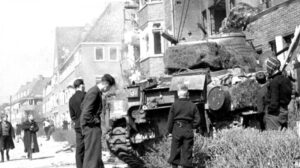
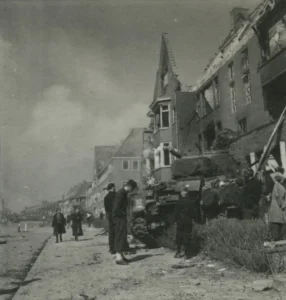
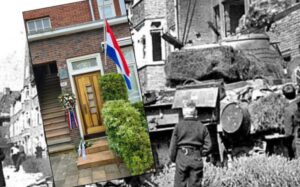 He was the first Canadian to die in the liberation of the city of Groningen. Because of eleven deaths on the first day alone, the Canadians devised a plan. This plan became the deployment of The Black Watch
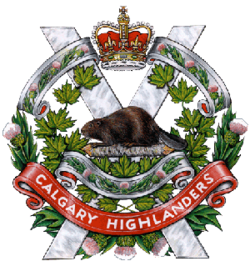
 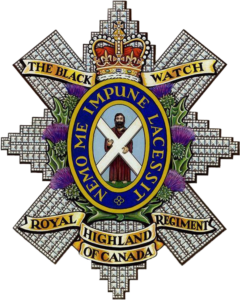 and Calgary Highlanders of the Fifth Brigade.
  under command of Lieutenant Mark Tennant
 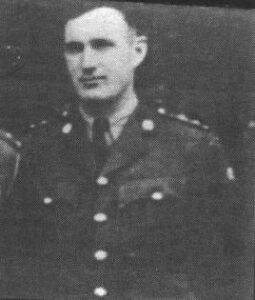 Mark earned the nickname “The Green Hornet”, after the comic book and radio serial character of the same name, because he “always knew what the bad guys were doing” during his turn as orderly officer. He survived the war and died 29-12-1997 (aged 84) in Calgary, Alberta
They were ordered to attack the city from the northwest. This plan more or less succeeded. Groningen was liberated, but there were many dead and wounded on both the Canadian and German sides. There were also over a hundred civilian casualties and hundreds of buildings destroyed.Fred’s brother Arthur Stanley Butterworth
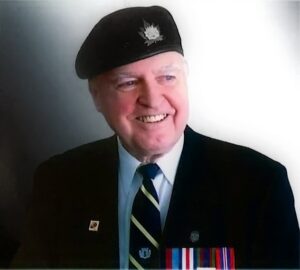
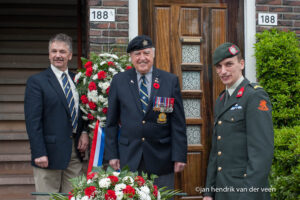
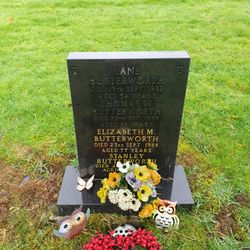 survived the war. He still often came to Groningen to remember his brother Fred on the Paterswoldeweg. The last time he visited Groningen was in 2015. Stanley sadly passed away on 20-02-2020, age 95. He is remembered as one of the liberators of Groningen just like his younger brother Fred Butterworth. Every year they are remembered on May 4.
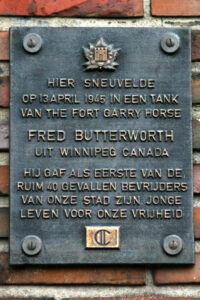
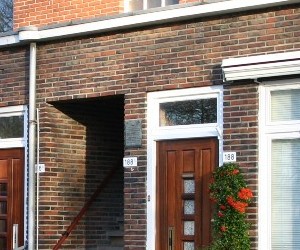 On the spot is a plaque. to remember him and the tragedy.
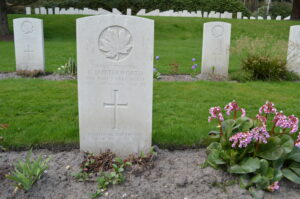
Fred Butterworth is buried at the Canadian War Cemetery Holten. Eekhoornweg, 7451 HR Holte. Section V. E. 8.


Leave a Reply