


Van Horn Moseley Jr, George, born 04-01-1905, in Fort Sam Houston, Texas,  the son of Major General George Van Horn Moseley
 and his second wife Alice Dodds Moseley.
  Mosley’s first wife and the mother of his three children was Katharine G. Payne, born 28-05-1906 in Kansas City, MO, the daughter of Thomas Jones Payne and his wife Grace Barclay Goldsborough. They were married 11-09-1928 and divorced 01-11-1959 in Windham, VT. Katharine died 20-09-2002 in Florida.
His father, who died then an officer in the 1st Cavalry Division,  later rose to become a Major General and Vice Chief of Staff of the Army during the Hoover Administration. Sr died 07-11-1960 (age 86) in Atlanta, Fulton County, Georgia, USA
Moseley Jr. grew up on army posts and in Washington, D.C., where he graduated from Western High School  in 1922. and was commissioned as a Second Lieutenant in the U.S. Army. Georgevsubsequently served on various assignments, obtained a Masters Degree, taught English at West Point
 and served in Tientsin, China as a Company Commander with the 15th Infantry Regiment
  during the 1930s. It was during his World War II service with the 101st Airborne Division
  that Colonel Moseley came to be well known. Although Germany’s airborne assault on Crete on 20-05-1941,
 sounded the death knell for the German airborne, American military planners were oblivious to the unacceptably high casualty rate suffered by the Germans. Instead, they focused on the tactical and strategic successes of the operation, noting that Crete had been captured entirely by an airborne force.As a result, the Army accelerated its plans to organize and activate additional airborne units. On 01-07-1941, the 502nd Parachute Infantry Battalion
  was quickly activated at Fort Benning
  , Georgia, under the command of Major George “Pope” Howell Jr.,
  the former Executive Officer of the 501st Parachute Infantry Battalion.
  under command of Colonel Howard “Jumpy” Ravenscroft Johnson.
  The unit was initially comprised of a small detachment taken from two companies of the 501st.The Japanese bombing of Pearl Harbor
  on 07-12-1941, triggered an acceleration of airborne planning and strategy. On 30-01-1942, the War Department hurriedly authorized the activation of four Army parachute regiments. A month later, on 02-03-1942, the 502nd Parachute Infantry Regiment (PIR) was activated at Fort Benning from the 502nd Parachute Infantry Battalion. Major Howell was promoted to Colonel but left that same month to command the parachute school at Fort Bragg, North Carolina.
  He passed the regiment’s command to Colonel George Van Horn Moseley Jr. who came from a long line of West Point graduates. Like the other airborne regimental commanders of his day, Colonel Moseley made enormous demands on his troops, as well as himself. His troops referred to him as ‘Old Moe’ In July 1942, the activation of two full airborne divisions, the 82nd
  and 101st, was ordered and the 502nd was assigned as a permanent unit of the 101st Airborne Division. Shortly after they became part of the 101st, the 502nd PIR moved from Fort Benning to join the rest of the division at Fort Bragg. Through the rest of 1942 and into 1943, the 502nd PIR took part in a grueling training program, which consisted of individual, unit, and combined division training. During March 1943 they took part in division maneuvers in Southern Pines, NC. This was followed by the Camden maneuvers which started on 23 May of that year. Shortly after the Camden Maneuvers the big Tennessee maneuvers were held. On 04-09-1943, Colonel Moseley and the men of the 502nd boarded the SS. Strathnaver
  for the trip to their new home in England. They settled into quarters in the Chilton Foliat and Denford near Hungerford, Berkshire, which would be their new home for the next seven months. In preparation for the planned D-Day invasion, the Five-O-Deuce’s troopers continued their rigorous training that included 15–25 mile hikes and daily close combat exercises. Instructions were given in a wide variety of items including first-aid, map reading, chemical warfare, and the use and firing of German weapons. Company and battalion-size parachute drops were also rehearsed during this period.
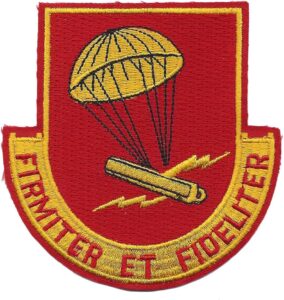
On 06-06-1944, D-Day, Colonel Moseley’s 502nd PIR was dropped into Normandy, France.  On the Normandy drop, Moseley jumped from the lead aircraft of the four leading serials of planes. These carried the 502 PIR and the 377th PFA Battalion.
  ieutenant Colonel Benjamin Weisberg,
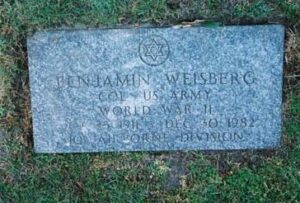 the 377th C.O. was jumping right behind Moseley to coordinate artillery support in taking the 502’s primary objective; the artillery battery near Saint-Martin-de-Varreville.
The drop went poorly, and the battalion lost 11 of its 12 75mm pack howitzers. The Paratroopers of the battalion fought as infantrymen until replacement howitzers arrived on 14-06-1944. On 07-06-1944, 33 artillerymen from the battery, under the command of Lieutenant Thomas B. Swirczynski  captured 130 Germans near Hau-des-dunes. Other artillerymen from the battery served with other artillery units, manning salvaged US pieces and even two captured German howitzers. By 14–06-1944, the battery was consolidated and re-armed with new howitzers landed over the Normandy beaches. The battalion executive officer, Major Louis H. Cotton,
  was wounded during the drop and had to be evacuated
Colonel Moseley also had a bad landing and broke his ankle on the jump. His bodyguards placed him in a wheelbarrow pushed by his orderly and, after receiving first aid, he established a moving Command Post. Despite being injured on the jump, Moseley refused to be evacuated and commanded his regiment from a wheelbarrow for two days. [Colonel Moseley was part of the composite character played by actor John Wayne  in the movie “The Longest Day.”]. Lieutenant Colonel Mike Michaelis,
 Executive Officer of 502nd PIR, described some very erratic behavior by Moseley in Normandy and later claimed that Moseley had pulled a gun on him when he (Michaelis) refused to send a patrol on a suicidal assignment. Moseley said, “I’m in command here and I’m telling you what to do!” Michaelis replied “Not me sir, if you want that, you’d better relieve me.” (Michaelis later stated: “He pulled his pistol and I had to dive to keep from getting shot.”) When General Anthony Clement Nuts McAuliffe
  observed Moseley circa 8 June, the colonel was in sight of the retreating Germans, with his leg in a cast. ‘Old Moe’ was barking commands from his wheelbarrow. In spite of his pleas to remain in action, Moseley received a direct order to relinquish command to his Executive Officer Lieutenant Colonel Mike Michaelis. After two years of commanding and training the 502nd PIR, Colonel Moseley was ordered to leave Normandy only two days after entering battle. Major General Maxwell Davenport Taylor,
  Commanding General of the 101st Airborne Division, overruled Moseley’s objections to being relieved. In summing up, LTC Michaelis (who retired as a four-star General) later said: “Moseley was a superb, tough trainer. He accepted no excuses. He could strike terror into the heart of God. Exactly what you needed in preparation for combat. Let me put it this way. He wasn’t popular, but he gave the outfit a damned fine discipline. All you had to do was whisper and the men came on the run. But he wasn’t a good tactician.” It was true that Coilonel Moseley made enormous demands of himself and those under him. Veterans of the 502nd, justly proud of their combat record, insisted much credit was due their commander, despite the fact that he lasted only a few days in Normandy.’Old Moe’ never returned to the 101st Airborne Division. After convalescing in England, he returned to the U.S. to command the 2nd Parachute Training Regiment at Fort Benning, Georgia. Disabled, Moseley retired from the Army in 1945.
Death and burial ground of Van Horn Moseley Jr, George.


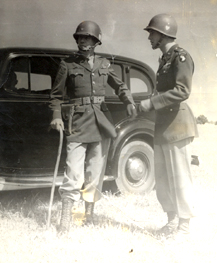

George Van Horn Moseley Jr died 06-12-1976 (age 71) in Montague, Franklin County, Massachusetts, USA and is buried at the Old South Cemetery in Montague, Franklin County, Massachusetts, United States.


Leave a Reply