

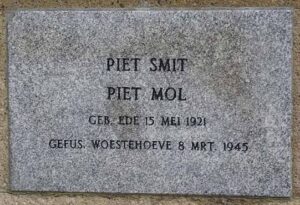
Smit, Piet, pseudonym Piet Moll, born 15-05-1921, at Klinkenbergerweg 13 Ede, 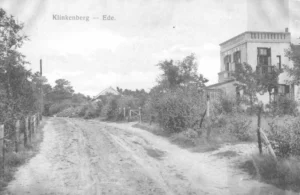 Netherlands, Piet worked as an office clerk at the Nederlandsche Handel-Maatschappij.
 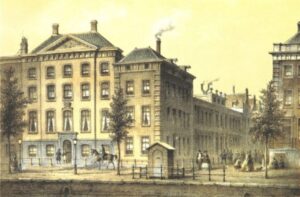 He was a patrol leader with the scouts
  of the Langenberg group in his hometown. A hopman
 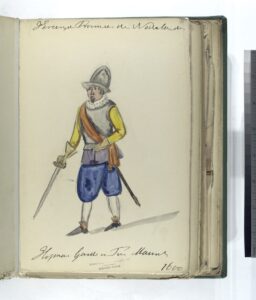 was the rank of a military officer who was in charge of a company or battalion. The title is a corruption of a German Hauptmann, literally headman, a purism for captain. The term entered the Netherlands in the sixteenth century along with German mercenaries.
In June 1943, Piet received the call to report for the Arbeitseinsatz / mandatory employment, in Germany. Instead, he decided to go into hiding, first in Amsterdam and later in Enkhuizen. From May 1943, he was in hiding with resistanceman Hendrik Theodoor Zwaan “Henk” 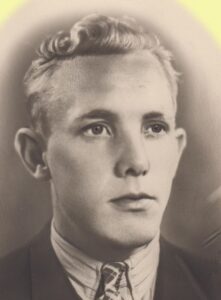
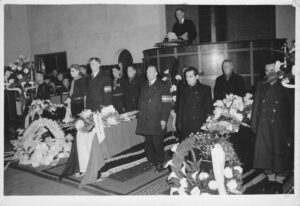
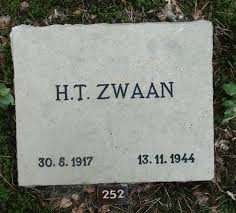 on Heiligeweg. Zwaan had lost his wife and remarried Ina Moll. Thus, Piet acquired the alias Piet Moll. In the winter of 1943/44, he moved because the danger increased. During a raid by the Sicherheitsdienst
  , he narrowly managed to escape thru the backyards.
In West Friesland, he became involved in the organized resistance. He founded several branches of the LO 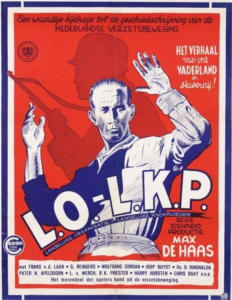 and became the district leader of the LO/ mandatory employment in Enkhuizen. In that capacity, he participated in various raids on distribution offices. Smit was also still in contact with his former neighbor Henk Wildenburg,
 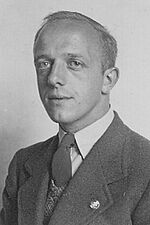 whom he knew from scouting. Their meeting point was Hotel Polen in Amsterdam, where they exchanged important information. Thus, Wildenburg received a microfilm from Smit containing the regimental and unit insignia of the German army, so that the Edese resistance could map out German troop movements.
At the beginning of 1944, he handed over his duties and moved to a central position within the Council of Resistance in Amsterdam. He also became a member of the Packard Group, an intelligence group that was in contact with the Bureau of Intelligence of the Dutch government in London. On 05-09-1944, Smit went to Hengelo under the alias Piet Moll, where he mainly worked for the Packard group. He had his own transmitter at his disposal and worked together with the radio operator Anton Hendrik Kattouw 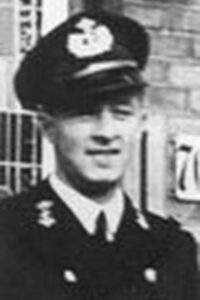
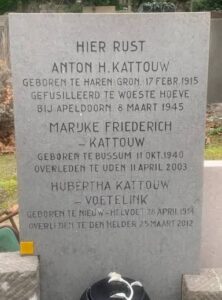 and Julika Snijders. Their transmitter was detected on 26-11-1944, and Kattouw, Smit, and Snijders were arrested. Kattouw and Smit were initially detained in Enschede and were later transferred to Gronau, where they were interrogated by the Sicherheitsdienst. Snijders managed to escape during the transport to a concentration camp and survived the war.
Death and burial ground of Smit, Piet, pseudonym Piet Moll.
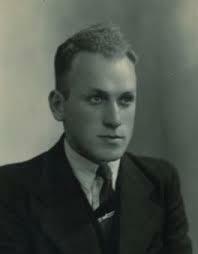
As prisoners of SS-Sturmbannführer and Criminal Director of Department IV E of the Gestapo in The Hague, Joseph Schreieder, 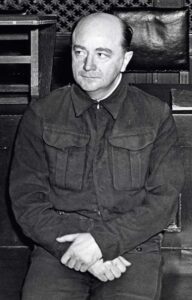
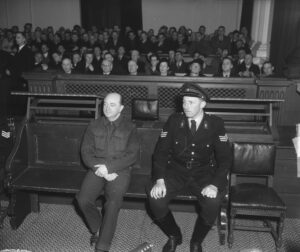 Kattouw and Smit were subsequently transferred to the House of Detention in Zwolle.
  Smit did not provide any information during the interrogations – he was not tortured. Perhaps it was due to the relatively good treatment that he expected to be released one day. It turned out differently. Schreieder was one of the key figures of the Englandspiel (Operation Nordpol). The Englandspiel was a German operation during World War II, referred to as Operation Nordpol or Operation Pol Nord by the German counterintelligence service Abwehr, during which a series of Dutch secret agents were captured. Schreieder survived the war and a Special Court
After 1955, Schreieder was a member of the Landesamt für Verfassungsschutz, where he hunted spies (mainly from the GDR and other Eastern Bloc countries). He was also an informant for the CIA under the name Cabolt during these years.
After 1959, every trace of Schreieder seems to be missing and Joseph Schreieder passed away on 24-12-1990, age 86, in Munich.
In the nite of March 6 to 7, 1945, SS officer Hanns Albin Rauter,  the German police leader in the Netherlands, was seriously injured in a random attack at the Woeste Hoeve in the eastern Veluwe.
  On 08-03-1945, the German occupiers executed 117 prisoners at the site of the attack in retaliation. Among the victims were both Smit and Kattouw. Woeste Hoeve excecution side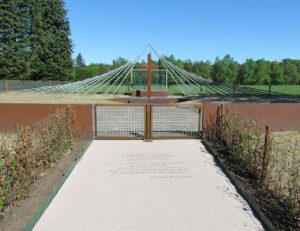
The remains of Smit and his 116 resistance friends were transferred to The Mausoleum in Ede after the war. 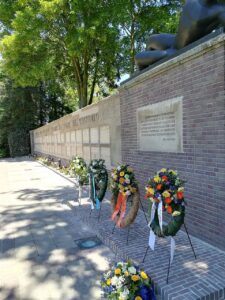 The scouts of the Langenberg group there commemorate him annually on May 4th with a floral arrangement. The resistance fighter was initially reburied under his alias ‘Piet Moll’. His false papers were of such quality that after the war, it did not stand out that they were forgeries. The municipality of Ede announced in 2017 that a ‘Piet Smithof’ would be built in the new Resistance Heroes neighborhood.
Message(s), tips or interesting graves for the webmaster: robhopmans@outlook.com


Leave a Reply