


Knorr, Ernst, born 13-10-1899 in Heiligenbeil,  as a SS-Untersturmführer Sicherheitspolizei and SD
  and Criminal Inspector SD-Außenstelle Groningen, initially worked at the SD headquarters in The Hague. He was an SS officer and a certified police inspector there. After he killed a detainee during a violent interrogation in 1943, he was transferred to Groningen.
His workplace was Binnenhof 7, in the Haque. Until early June 1941, the communists were only being monitored and deliberately not arrested, and as a result, Knorr was also able to be involved in other activities. For example, he was present at the violent interrogation of resistance man Geus Jacobus Joannes Wilhelmus “Sjaak” Boezeman,
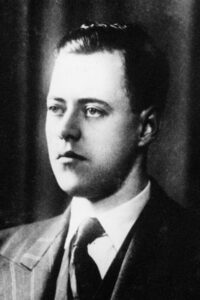
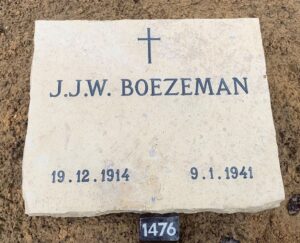 who would succumb to his torture wounds two days later. In the late summer of 1940, Maassluis resident Sjaak Boezeman becomes involved with the Geuzen thru resistance man Arij Kop.
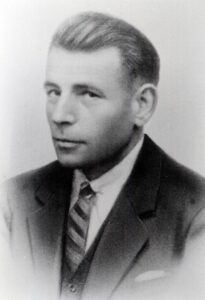
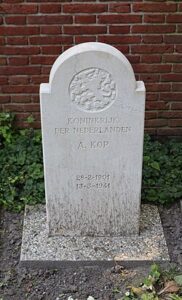 Boezeman leads the resistance group in Maassluis and hides weapons in waterproof crates in the harbor. On December 2nd, Boezeman is arrested and imprisoned in the Oranjehotel. First in cell 333, then he is transferred to cell 344. Resistance man Arij Kop (Vlaardingen, 28-02-1901 – Waalsdorpervlakte, 13-03-1941) was a Dutch resistance fighter who was executed by the German occupiers. Kop, age 40, was one of the condemned in the Geuzen Process.
From early June 1941, Knorr was involved in the violent interrogation of Hague communists. For example, on 02-09-1941, Knorr was the leader of the interrogation of the communist Herman Holstege
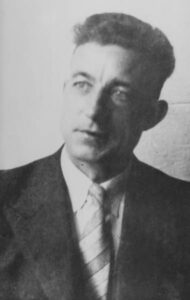
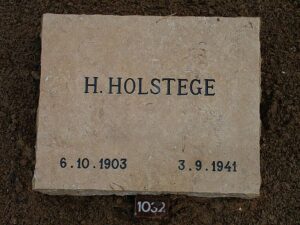 in the Scheveningen prison (Oranjehotel).
  Holstege had not yet been ‘broken’ after a month of interrogation, and the Germans still did not have access to the names of his contacts in the communist party leadership in Amsterdam. Holstege, age 37, was very roughly anally penetrated by Knorr himself with a rubber baton, but still revealed little to no information. The torture, however, had resulted in very serious internal injuries, and Holstege died the next day 03-09-1941. Given the preparations in the Oranjehotel, the torture was fully planned. In a post-war report, this was referred to as foolishness, as it had squandered the chance to track down the party leadership in Amsterdam.
In the course of 1942, Knorr was sidelined and replaced by Hans Munt 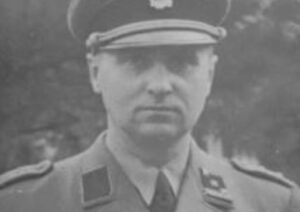 . In post-war accounts, Munt claimed that Knorr’s violent excesses were the reason for the changes in position; in practice, the horrific torture of communists continued unabated.
Hans Munt was an SD officer involved in the selection of death candidates for the shooting at ‘t Haantje on 07-10-1944. He compiled a list of 12 names instead of the required 15 with Friedrich Frank and personally tried to remove two people from the list to spare them.Role in the 1944 shooting:On October 7, 1944, Munt was ordered to select fifteen Todeskandidaten from the Orange Hotel for execution.Together with colleague Friedrich Frank, he reduced this number to twelve.After approval by SD commander Karl Eberhard Schöngarth, Munt reduced the number on the list again, in an attempt to execute fewer people.The final list of names was passed on to Wilhelm Friedrich Callsen of the Ordnungspolizei.
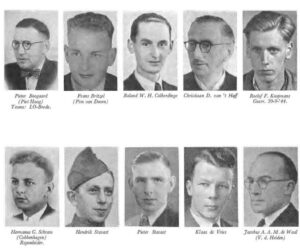 These ten men were executed by the police of the German occupiers on Saturday, 07-10-1944. They were sentenced to death for resistance activities and evading the labor service and were executed as retaliation for a railroad attack near ‘t Haantje
  by the resistance on the evening of October 6th.
On 19-02-1943, a trap was set in Delft for the communist resistance fighter Gerrit Kastein.

 Three SD officers were waiting for him in a café, while Knorr stayed outside in the car. Kastein was arrested and taken to the car, where he pulled out a gun and fired. He injured Knorr so severely that after the cars drove away, a pool of blood remained on the street.
In the course of 1943, Knorr was transferred to Groningen, where he began working in the Scholtenhuis, 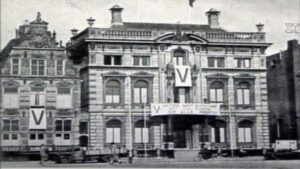 an Aussenstelle of the Sicherheitsdienst. There, too, he stood out for his cruelty. He, together with the brothers Pieter Johan and Klaas Carel Faber,
 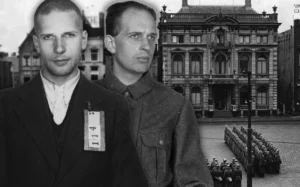 murdered the resistance fighter Esmée van Eeghen, age 26,
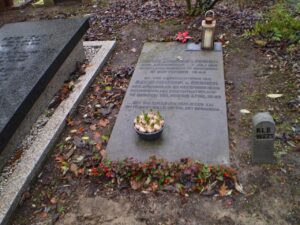 who was hit by seven bullets of three different calibers, causing thirteen entry and exit wounds (it is often mistakenly mentioned that she was riddled with thirteen bullets). Her body was then dumped in the Van Starkenborgh Canal.
  In addition, Knorr has committed a number of similar murders. Klaas Carl Faber survived the war, escapted to Germany from the prison and died 24-05-2012 (aged 90) in Ingolstadt, Germany. Pieter Johan Faber, age 28
 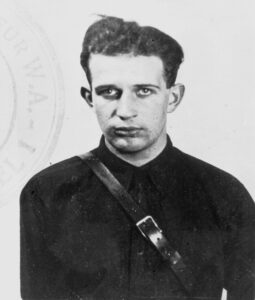 was executed on 10-07-1948 for war crimes.
On 16-04-1945, Knorr retreated with a number of German soldiers to Schiermonnikoog. The intention was that they would be picked up by a boat from Borkum to return to Germany. Only on May 27 did a Dutch officer go to the island to demand the surrender. Just before the liberation, Ernst Knorr fled from the Scholtenhuis to Schiermonnikoog along with a large part of the SD. After the liberation, the roles were reversed. Ernst was brought to the mainland on May 30, 1945, and imprisoned in the House of Detention in Groningen. 
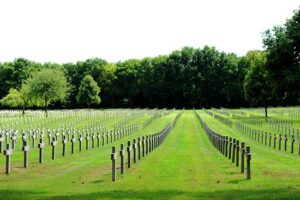
Death and burial ground of Knorr, Ernst.

On 07-07-1945, Knorr, age 45, was found dead in his cell with a piece of rope around his neck. However, there was no high support point in the cell for him to have hanged himself on. According to statements from other Germans in the prison, Knorr had been severely beaten and had died as a result. No post-mortem report was drawn up. Later, a prison doctor stated that it was technically possible that Knorr had committed suicide by attaching the rope low on the wall and hanging himself by leaning forward.
Knorr’s body was transferred to Zuidwal Hospital and, despite the fact that it was very hot that week, was only buried on July 14 at the General Cemetery. No death certificate was issued, so the burial was in fact illegal. On 10-10-1958, Knorr’s body was exhumed and his remains were transferred to the German military cemetery in Ysselsteyn. On the cross on his grave, in addition to his name, his rank is also listed as: Soldier.



Leave a Reply