


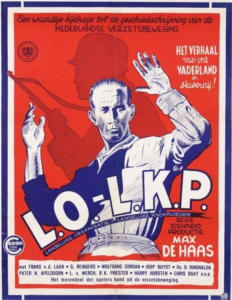
Hellema, Johan Dirk Anton “Jo” born on 24-05-1896 in Zaandam, 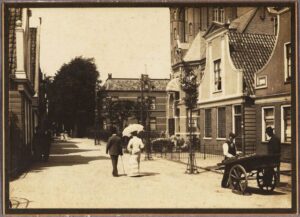 Netherlands, and grew up in Zaandam in a family with five boys. During World War II, he played an active role in the resistance as a transport officer and a member of the National Organization for Assistance to Escaped Prisoners (LO).
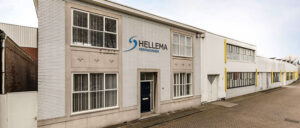
  Together with his brother, Jo was the owner of Hellema Verpakkingen, on the East Side in Zaandam.
  He lived with his wife and son at Raadhuisstraat 76 in Koog aan de Zaan. The sense of justice made Jo decide to help people. When the family of his son’s geography teacher, Mr. Marcus Polak from the Municipal Lyceum (now Zaanlands Lyceum), had to move to Amsterdam, he helped them several times.
Jo Hellema provided provisions and food vouchers for people in hiding and has several times brought aircrew from Wormerveer and Krommenie to Amsterdam. From around August 1944, he was responsible for the transportation of weapons in the northern part of North Holland.
Hellema maintained close contacts with fellow resistance memberr and garage owner Piet Jacob Zwart,
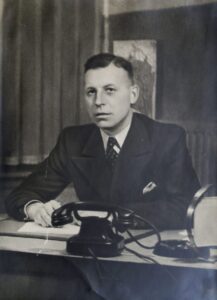
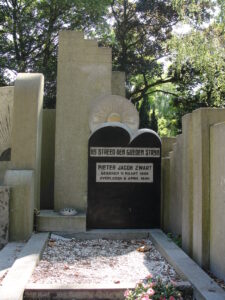 and after his death, son Piet hid with Zwart in Wormerveer for several weeks. A poignant detail is that Zwart himself was killed a few months later (April 1945) by members of the resistance after false rumors about him had spread within the resistance. After the war, the perpetrators of this murder were prosecuted. His acts of resistance and double role, led to serious suspicions of treason. Because Zwart, age 36, continued to deal with the Germans to keep his garage open, he was considered a danger to the underground movement by the Resistance Council in the Zaanstreek. On 05-04-1945, he was liquidated near Koog aan de Zaan.
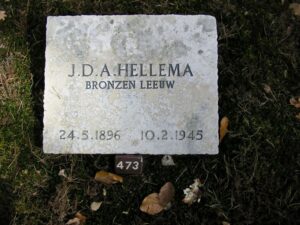
Death and burial ground of Hellema, Johan Dirk Anton “Jo”.
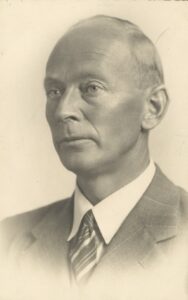
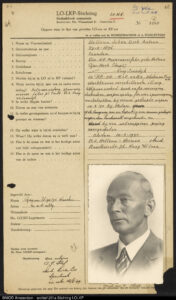
In Obdam, things went wrong on 09-02-1945, when Jo and a group of resistance fighters were arrested by a patrol of Grünen (the German Grüne Polizei) and Landwachters. The term “Green Police” 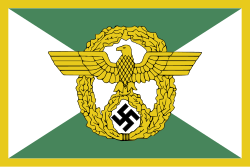 refers to the historical order police from the time of National Socialism (1936–1945), which was named so because of their distinctive moss-green uniforms.
 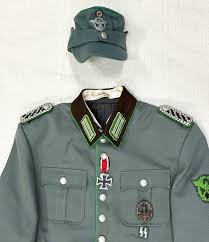 Today, the German police are uniformly dressed in dark blue.
On 10-02-1945, Hellema, age 48, was present at a meeting of the resistance group led by Hil Schipper 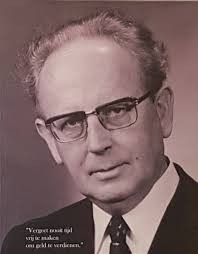 in Spanbroek. Other important underground leaders such as the Alkmaar surgeon Frederik Haverkamp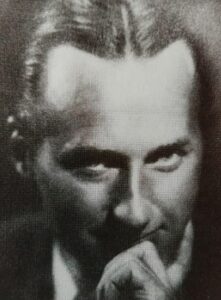
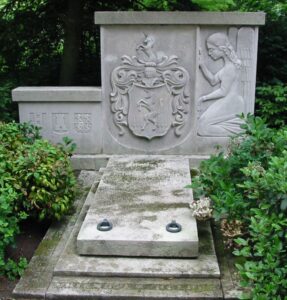 and the Amsterdam resistance fighter Tobias Biallosterski (alias Hans Engelse)
 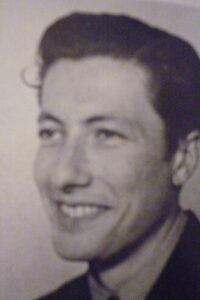 were also present. One of the resistance fighters was wearing English boots, and the Germans had noticed that. During their journey by car toward Amsterdam, they were arrested by the occupiers, who were aware of the English dropping operations, near Wognum. The prisoners were interrogated and locked up in a room of the town hall of Obdam. Schipper, who was aware of the arrest, surrounded the town hall with a number of armed resistance fighters. The prisoners, who heard the shots, saw an opportunity to make an escape attempt. During his flight, Johan Hellema was hit by a bullet in the back of the head.
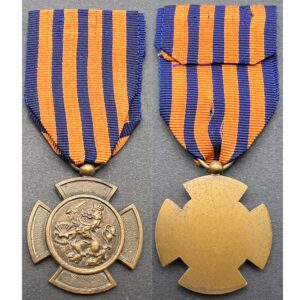
He recieved by Royal Decree, dated 05-05-1953, posthumous the Dutch Bomze medal for bravery and the Nomination: “Distinguished himself thru particularly brave and prudent actions as a transport officer in Region 11 O.D. (Order Service)  – North Holland, north of the IJ, in the six months following August 1944, when the so-called ‘droppings’ of weapons in the northern part of North Holland, particularly in the Wieringermeer polder, began to take on significant proportions.” With ingenious technical aids and camouflage, he managed to direct this transport, which mainly had to take place by water, in good channels, so that no supplies were lost. The transport took place not only within the Region but also to surrounding regions, mainly to Region 10 (AMSTERDAM). By a tragic coincidence, he was arrested on February 9, 1945, age 48, and executed the following day.
Hellema, Johan Dirk Anton “Jo” is buried at the War Cemetery of Honor in Loenen, Groenendaalseweg 64, Loenen, Netherlands. Section E/473.


Leave a Reply