


Declercq, Jérémie Gustave Théophile (Staf), born on 16-09-1884 in Everbeek, 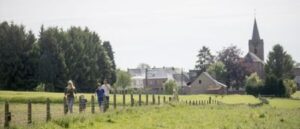 in a catholic and Flemish-conscious family. His father Cyrille Declercq worked as a teacher in Sint-Pieters-Kapelle and six of his eight children would follow in his footsteps, including Staf himself. After secondary education that he followed at the Collège Saint-Augustin in Edingen,
  De Clercq enrolled at the Ecole Normale Agrégeée d’Instituteurs à Bonne Espérance also in Edingen. French-language education indeed, because one should not forget that in the Belgium of that time, education, just like the judiciary, the army, the administration, all took place predominantly in French. Staf obtained his diploma on 01-0-8-1903. Because there was a dire shortage of teachers, he was able to immediately start working as an assistant teacher in Brussels. From 1904 to 1908 he worked in Lettelingen and then in Heikruis. In between, on 17-0-4-1906, De Clercq married Maria van der Meeren.
  The marriage remained childless, In 1919, the couple did adopt the Hungarian Mariska Bermüller .
 That was certainly not unusual, because via Catholic aid organizations, many Hungarian children ended up in Belgium after a famine in their own country.
From 1911, Declercq was active in the organization Taalgrens wakker!, which organized meetings on the language border against the Frenchification. In December 1913, he became the chairman of this organization. Staf also published the daily newspaper De Taalgrens together with Remy de Roeck and was active in the local work of the Davidsfonds. 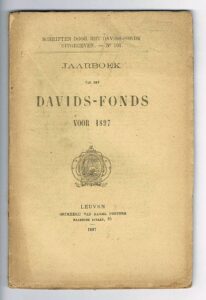 He also founded branches of the Catholic Flemish Association in the Pajottenland.During the First World War,
  Declercq reported as a war volunteer in 1914 and became a barracksman at the Yser Front.
  Declercq was also socially active at the front: he published the front newspaper De Payot der Taalgrens and was chairman of the soldiers’ union Payot Ontwaakt. Declercq had no direct contact with the Front Movement, but he did evolve in the same direction. Nevertheless, he remained moderate and supported Frans Van Cauwelaert
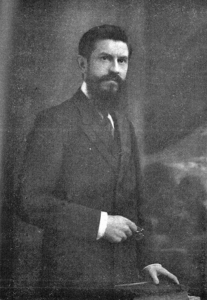
 when he came into conflict with the Front Movement. After the war he was the founder of the National Teachers’ Union (NOS). When a Walloon section of this union was founded in August 1919, Declercq became chairman of the Flemish section. In September 1919 he organised a national teachers’ demonstration in Brussels with the NOS, demanding, among other things, substantial wage increases.
In the meantime, Declercq became politically active for the newly founded Front Party.  For this party, he was elected to the Chamber of Representatives for the Brussels district in 1919. Initially, he was not very active in parliament and was mainly concerned with the development of the Front Party in his district. In the 1921 elections, he was re-elected as the only member of parliament for the Front Party, after which he became chairman of the Flemish National Chamber Group
  until 1932. During that period, he became increasingly active in parliament, where he mainly interpellated on language issues, amnesty, veteran affairs and the military agreement between France and Belgium. In 1932, De Clercq was not re-elected to the Chamber because he was removed from the electoral list due to a violation of the electoral law. He had been mistakenly put on the list as a substitute in both the Leuven and Nijvel districts.
Declercq also sat on the municipal council of Kester from 1921 to 1936. In 1921, he obtained an absolute majority in the municipal council with his list, but the then Minister of the Interior Henri Carton de Wiart 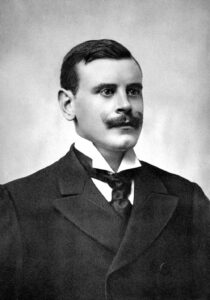 refused to appoint Flemish nationalists as mayor. He was then first alderman from 1922 to 1926. After he was able to break the Catholic majority in the municipal council again, he was alderman a second time from 1930 to 1932.
In 1928, De Clercq joined the board of the General Flemish National Union  and in 1932 he joined the Flemish National People’s Party
  in a new attempt to unite Flemish nationalism. On 30-01-1933 he was appointed as exempt chairman of a leadership committee that had to unite party-political Flemish nationalism. Strongly anti-militarist, he took over the leadership of the VNV,
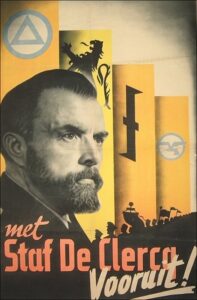
  founded on 07-10-1933, in 1933 and was called the Leader there. This new formation was intended to bring a certain unity to the ranks of the divided Flemish nationalists.
 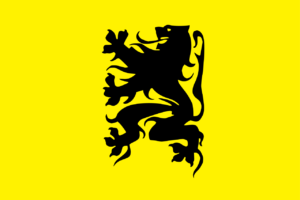 On 05-05-1935, the VNV held its first Landdag on the Kesterheide in present-day Flemish Brabant. The only gigantic banner bore the slogan “One people in its own state”. the Flemish two-time collaborator and self-proclaimed flamingant, August Borms
  hoisted the VNV flag on the mast. The brochure distributed there said about Staf Declercq: “He designs, he commands, he bundles. He is the symbol of order. The leader thinks, the followers act.” Initially, he did not act as an authoritarian leader, but rather played the role of mediator between the factions within and outside the VNV. At the same time, he stuck to the Dietse anti-Belgian and right-wing authoritarian course of his party, which brought him into conflict with the moderate section of his party. With the appointment of the young Belgian National Socialist politician and lawyer Reimond Pierre Jean Emma Marie Tollenaere,

 who had national socialist views, as VNV propaganda leader, he indicated the direction the party was taking. Tollenaere by friendly artillery fire from the Spanish Division Azul was killed on 22-01-1942, aged 32, in Kopcy.
In 1936, the VNV enjoyed a major election victory and Declercq was re-elected to the Chamber for the Brussels district, where he this time remained until his death in 1942. That year, he had to tone down his initially strict Greater Netherlands convictions under pressure from the federalist wing, when the party entered into an agreement with REX Flanders to work towards a federalised Belgium under the crown of Leopold III.


Since April 1937, the VNV had already received a monthly allowance of the equivalent of €3,000 from the German Ministry of Propaganda (an allowance that was increased to the equivalent of €15,000 at the beginning of 1939). When the threat of war for Belgium came very close, Declercq founded the Military Organisation in 1939, an organisation of mobilised VNV members that the German secret service was very likely aware of. When the Germans invaded Belgium on 10 May 1940, De Clercq was arrested together with other leaders of the Military Organisation. After interventions by Minister of Justice Paul-Emile Janson 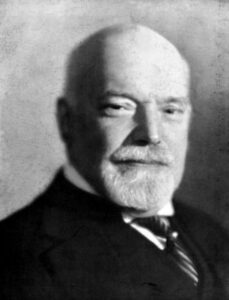 and Prime Minister Hubert Pierlot,
 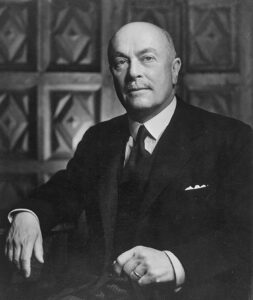 he was released. After some hesitation, he nevertheless joined the VNV in collaboration in 1940. Staf Declercq placed the VNV at the disposal of the German occupier and made this public during a speech on 10-11-1940 in which he stated, among other things: Flanders must participate in the new order, born from the National Socialist revolution.
  The VNV aims to establish the new order in Flanders. This new political order must be established, partly on the principle of leadership, partly on the elimination and rejection of all institutions [parliament, trade unions, etc.], groups or expressions that undermine or affect the organic unity of the Volksgemeenschap. Soon, the Eenheidsbeweging-VNV, which in the meantime also included REX-Vlaanderen
 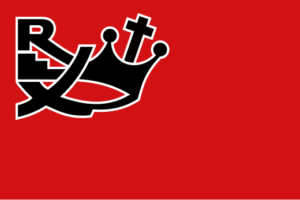 and Verdinaso, had to fight against the competing DeVlag, supported by the SS
  , and the German interests that did not always seem to run parallel to those of Flemish nationalism. In Antwerp on 20-09-1942, Staf Declercq gave his last speech on the occasion of the tribute for his 58th birthday. In it, he reaffirmed his confidence in Adolf Hitler.
Death and burial ground of Declercq, Jérémie Gustave Théophile (Staf).
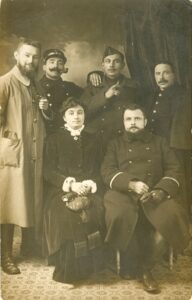
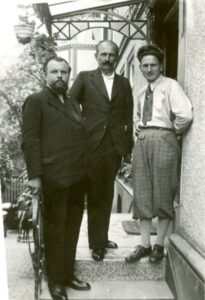


After his death on 22-10-1942, age 58, due to a heart attack, Staf Declercq was succeeded by Hendrik Jozef Elias,  who died age 70 in Ukkel, on 02-02-1973. The then Cardinal Van Roey
  refused to allow the funeral ceremony to take place in the Saint Gudula Cathedral in Brussels.
 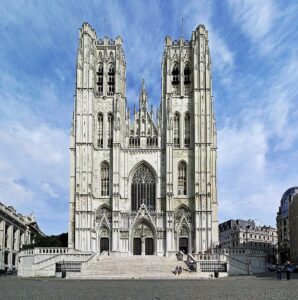 In response, a funeral chapel was set up on the Grote Markt, where the ceremony took place. After World War II, the VNV was outlawed. Staf Declercq was buried in a mausoleum (a large concrete slab with a Flemish lion) next to a footpath on the Kesterheide. During the liberation, his grave was desecrated by resistance fighters who publicly mocked and mutilated the remains. The body was subsequently buried in an anonymous grave in Leerbeek. In 1978, his body was exhumed by the Flemish Militants Order and interred in the cemetery of Asse, with great interest from Flemish Nationalists of the Volksunie and the Vlaams Blok.In 2004, Staf Declercq was commemorated at the IJzerwake
 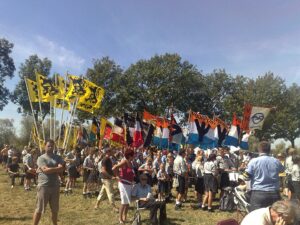 and at a separate commemoration in Kester where he was originally buried. This commemoration, at which former Volksunie senator Robert F “Bob” Maes gave a speech, was organised by Voorpost.


Leave a Reply