

Chemy, Peter, born on 18-06-1918 in Tarnopol,  then part of Austria-Hungary, the son of Mikołaj Chemy and his wife Maria Chemy. When Nazi Germany invaded Poland on 01-09-1939, Peter Chemy was 21 years old. In the weeks following the German attack on Poland, German SS
 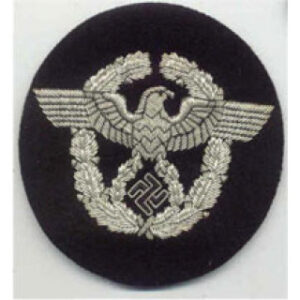 , police, and military units shot thousands of Polish civilians, including many members of the Polish nobility, clergy, and intelligentsia.


In the spring of 1940, the German occupation authorities launched AB-Action, AB-Aktion (also known as the Extraordinary Pacification Action or Ausserordentliche Befriedungsaktion) was a brutal campaign launched by Nazi Germany in occupied Poland during World War II, a plan to systematically eliminate Poles considered to be members of the “leadership class.”.
Peter Chemy was one of the Polish detained by Nazi officials and sent to a concentration camp, from which he was liberated by the Americans at the end of the war, in May 1945. He had been most probably imprisoned in the Mauthausen concentration camp  located in Upper Austria, about 12 miles east of Linz. Mauthausen was a notorious Nazi concentration camp complex in Austria (1938-1945), known for its brutal conditions and forced labor in quarries. It functioned as a “Stufe III” camp, intended for the hardest criminals and political opponents. Of the approximately 190,000 prisoners, half died from hunger, exhaustion, mistreatment, or execution. Franz Xaver Ziereis (13-08-1905 – 24-05-1945)

 was the commandant of the Mauthausen concentration camp from 1939 until the camp was liberated by the American forces in 1945.
Ziereis fled with his wife on 03-05-1945, but was tracked down 160 kilometres (100 miles) away by an American army unit on 23-05-1945. As he attempted to escape, American soldiers proceeded to shoot Ziereis three times in the stomach and brought him to a U.S. military hospital set up at the former Gusen I concentration camp.  Enraged prisoners had to be stopped from beating him to death. Ziereis, age 39, died shortly after interrogation by a former inmate of Mauthausen, Austrian typesetter, political activist, detective, and historian Hans Maršálek.


 In a confession, he had implicated several leading perpetrators at the camp, including Eduard Krebsbach, nickname „Dr. Spritzbach“
 who had ordered the building of the gas chamber at Mauthausen, Erich Wasicky,
 who had built the gas van there, and Gauleiter August “Eileiter Gaugruber”,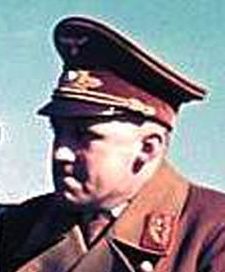

 who was chiefly responsible for the conditions since the area fell under his jurisdiction. His corpse was later hung on the fence of Gusen I by former prisoners of Gusen. Krebsbach, Wasicky, and Eigruber were later tried at the Mauthausen Trial and executed.
After the end of World War II, delinquency in the majority of the European States took on exceptional aspects. On the first days after the liberation, resentment and demand for punishment burst out in allied countries against those who collaborated politically or economically with the enemy. The authorities were compelled to arrest those who had committed such crimes against the security of the State, and those whose activity was of a suspicious nature in order to prevent the population from committing assault against their lives or their property. Masses of arrests took place in all occupied countries and the authorities had to quickly organize concentration camps or to transform buildings into provisional penitentiaries, because the existing prisons had no room for the mass of arrested people. This overcrowding was so acute that the situation became critical and as a result judiciary and penitentiary authorities were compelled to relax the punishment of a considerable number of prisoners under restraint for common-law crimes. In this atmosphere of lawlessness and chaos, Peter Chemy, liberated from a concentration camp, spent his first months of freedom drifting across postwar Germany. On a snowy winter night of December 1945, he found refuge and a meal in the home of a German family consisting of husband, wife, and a daughter. They fed him and gave him a bed. After they went to sleep, however, Chemy found a hatchet and brutally murdered the couple and their young daughter in their beds. The specific names of the family members he killed are not commonly listed in historical accounts of this event.
Death and burial ground of Chemy, Peter.


A betrayal that shocked even a world already drowned in grief.It was more than a crime; it was the collapse of a spirit broken by war. Tried before an American tribunal at Landsberg, no measure of suffering could excuse what had been done. The judgment was death. By January 1947, his story closed not with redemption but with silence before a firing squad. Bound against a post under watch of American MPs, he stood in the same land where millions had perished, awaiting the final volley.
When the rifles spoke, Chemy’s name was bound to darker memory—not of courage, but of ruin. He had endured the unimaginable only to be undone by his own act, another casualty in a world scarred by hatred. His tale remains, not to inspire, but to warn: what becomes of a soul when survival itself is twisted? Peter Chemy forces us to ask—when war takes everything, what remains within the man who walks away?
Peter Chemy was buried at the Spöttinger Cemetery Landsberg am Lech, Grave 156, Hindenburgring 24, 86899 Landsberg am Lech, Germany. The Spöttinger Friedhof contains about 300 graves of war criminals who were executed in the Landsberg prison. There are few exceptions such as Peter Chemy; a Pole who was liberated from a concentration camp in 1945, but murdered a German family in the Winter of 1945.


Message(s), tips or interesting graves for the webmaster: robhopmans@outlook.com


Leave a Reply