


Hartog, Pieter, pseudonym Piet de Graaf, born 09-10-1920 in Amsterdam, 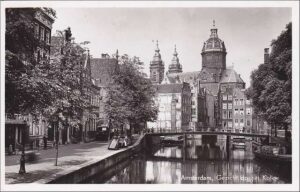 Netherlands, the son of Jan Hartog (20-07-1893 Landsmeer) and his wife Maartje Johanna Stierman (05-12-1894 Amsterdam). Pieter who lived in the Thomsonlaan 37. in Haarlem
  Pieter was engaged to Aty van Woerden, was a Dutch representative, administrator, and during the occupation involved in resistance activities, the National Organization for Assistance to Displaced Persons, Rolls Royce, and the Domestic Forces.
Pieter performed courier services, brought people to hiding addresses, and provided them with ration cards and food. Later, he first became involved with the resistance group around Henk or Herman Slurink, pen name ‘Pickwick’ and then with the intelligence and courier service Rolls Royce, of which he became secretary/chief courier. Piet Hartog went into hiding in 1943 because he refused to comply with the reporting obligation imposed by the occupier in early 1943 for former military personnel to return to captivity. Thru his fiancée, he came into contact with the resistance family Ten Boom in Haarlem and Cornelia “Corrie” Arnolda Johanna ten Boom.
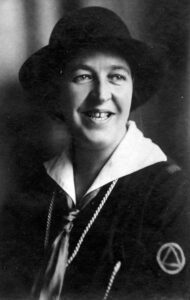
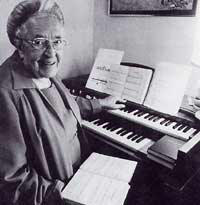

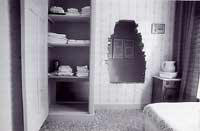
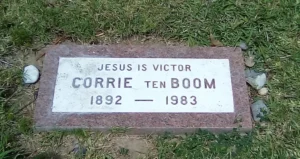 The hiding place in Corrie ten Boom’s bedroom. It was constructed behind a brick wall, accessible through a removable panel in a built-in closet.
The Ten Boom family in Haarlem provided shelter to hundreds of Jews and resistance fighters in their home at Barteljorisstraat 19 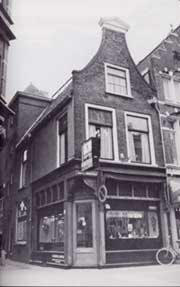 during World War II. Their courage and dedication were based on their deep Christian faith. The family is betrayed by Jan Vogel. He was a Dutch collaborator and an acquaintance of the family from the Haarlem area. Corrie and Betsie and the whole family were arrested and they were taken to the nearby police station and later to Scheveningen Oranje prison,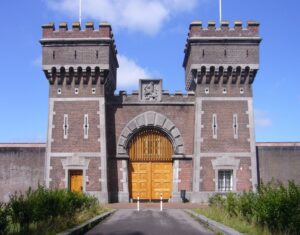
 where father Casper Ten Boom, who was 84 at the time, died ten days after his arrest. Most of the others were released at one time or other, but Corrie and Betsie were eventually transported to Ravensbrück concentration camp in Germany.
  “Betsie died there in December 1944, but Corrie survived. Corrie ten Boom passed away on 15-04-1983 in her home in Orange, California (United States). She died there on her 91st birthday. Their house is now a WW2 museum.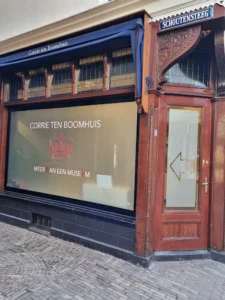
At the beginning of November 1944, dozens of Rotterdam residents destined for forced labor were removed from their train in Haarlem under the pretext that they were sick and were placed in two hospitals.
On November 30, Hartog was involved in the raid on one of the hospitals where many of the ‘sick’ were freed.
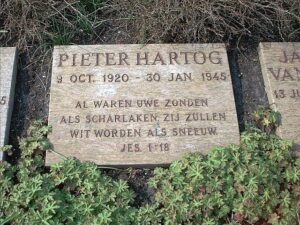
Death and burial ground of Hartog, Pieter, pseudonym Piet de Graaf.

During a raid by the Sicherheitspolizei during the Christmas celebration, Cox managed to escape, but Hartog, Treffers, a courier, and Cox’s wife and two children were violently arrested. The address had been betrayed by a café owner from Haarlem.
Pieter was arrested on 25-12-1944, by the Sipo, Sicherheitspolizei und SD 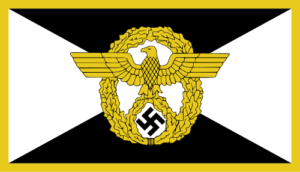 in the home of resistance fighter and dentist Henri Cox at Zomerlustlaan 18 in Haarlem. There, on that first Christmas day, Thomas “Tom” Treffers (August 17-08-1916, Haarlem), age 28,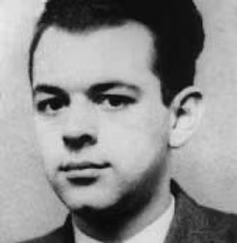
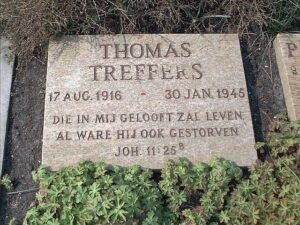 was also arrested. Via the detention centers in Haarlem and at the Weteringschans in Amsterdam, both were taken to the execution site at the Amsteldijk and executed along with three others, possibly as retaliation for the high-voltage buildings destroyed by the Amsterdam KP.
The Knokploeg/fighting group Amsterdam, abbreviated as KP-Amsterdam, was a Dutch resistance organization during World War II. Knokploegen were established to “crack” (raid) distribution offices, regional labor bureaus, and population registers to obtain ration cards, identity papers, and the like. Jacob Hendrikus van der Veen 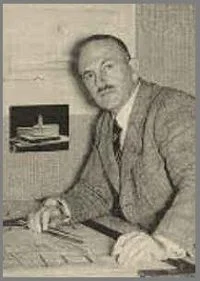 was responsible for the housing of people who had to go into hiding. The KP-Amsterdam was involved in the failed raid on the Weteringschans House of Detention on the nite of July 14 to 15, 1944, under the leadership of Johannes Post.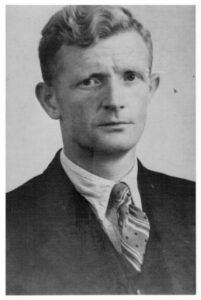
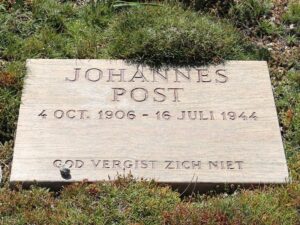 one of the most important Dutch resistance leaders during World War II. As a farmer and former alderman from Nieuwlande, Drenthe, he grew into a legendary figure in the organized and armed resistance. On 16-07-1944, a day after his arrest, Johannes Post was executed by the occupiers at the age of 37 in the dunes near Bloemendaal. Jakob Hendrikus van der Veen was executed at the age of 53 at Kamp Vught
  without trial by a firing squad of the Dutch SS. On the orders of the occupier, the five bodies were buried in a mass grave in the dunes near Overveen. On 25-07-1945, the bodies were recovered and later reburied at the Eerebegraafplaats/Cemetery of Honor in Bloemendaal.


Leave a Reply