

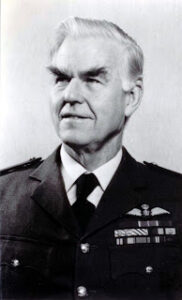
Broom, Ivor Gordon, born 02-06-1920, in Cardiff, Wales, 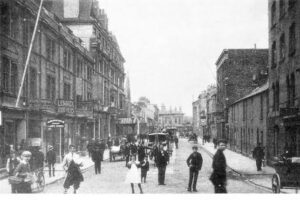 United Kingdom, to parents Albert and Janet Broom. Ivor had 2 siblings: an older sister, Eva Cameron Broom, who died aged 16 of Tuberculosis, and an older brother, Godfrey Kitchener Broom. They all grew up together in Cardiff. Ivor educated at the Boy’s County School, Pontypridd.
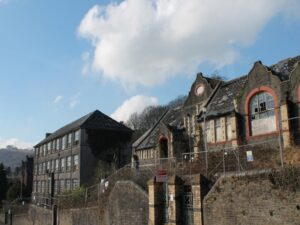 Broom passed the Civil Service Exam and began work with the Inland Revenue.
 , a department of the British Government responsible for the collection of direct taxation, including income tax, national insurance contributions, capital gains tax, inheritance tax, corporation tax, petroleum revenue tax and stamp duty.
Ivor joined the Royal Air Force  under command of Air Chief Marshal Sir Charles Portal,
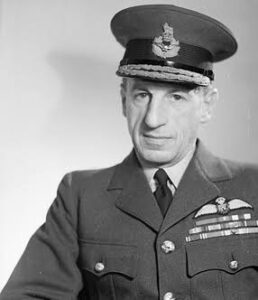
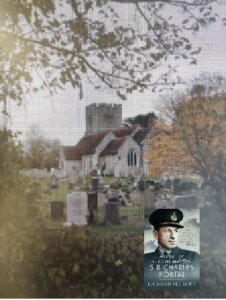 as a trainee pilot in early 1940 at the age of 19. Eleven months later, he was a sergeant pilot on 114 Squadron, nickname “Hong Kong”
 under command of Wing Commander John Henry Powle, undertaking low-level daylight bombing raids in Blenheim aircraft. He flew similar operations from Malta in 1941 with Nos 105
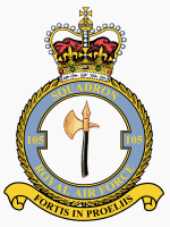 and 107 Squadrons and while there was commissioned after No.107 Squadron
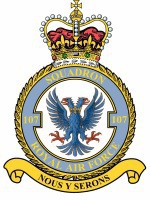 had lost all their officers.
In July 1942, Broom returned home to marry Jess “Jessie” Cooper. (1923-2013). Together they had a son, David Broom, born on 18-03-1944, and a daughter Diane Broom, born on 08-07-1945.
Broom learned to fly in 1940 while the Battle of Britain was being fought, and was posted to No. 114 Squadron in 1941. The squadron were flying Bristol Blenheim light bombers which were flown in low-level daylight operations against Channel and North Sea shipping as well as targets along the French, Dutch and German coasts.
The Battle of Britain was a major air campaign of World War II fought from July 10 to October 31, 1940, in which the British Royal Air Force (RAF) defended the United Kingdom against Nazi Germany’s air force, the Luftwaffe 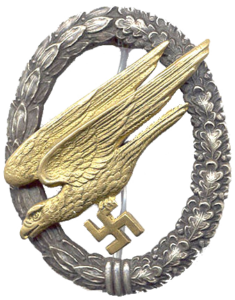 .
Broom took part in the successful raid against the Goldenburg-Werk lignite power stations, Knapsack, Germany in August 1941.
In late 1941, while still a sergeant, Broom was detailed to lead a flight of six Blenheims to reinforce Singapore, en route the bombers landed on Malta which was under siege at the time by the Axis. When they landed on the island, Air Vice Marshal Hugh Pughe Lloyd 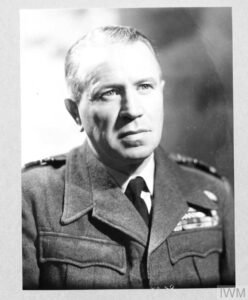 commandeered Broom and his aircraft to replace the islands losses, the other five Blenheims flying on to Singapore.
Broom joined No. 107 Squadron whose Blenheims 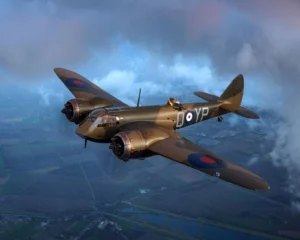 were incurring heavy losses while attacking Axis shipping between Italy and North Africa as well as land targets in Italy and North Africa. When No. 107 Squadron had lost all its officers, Lloyd told Broom “Move into the officers’ mess. We will sort the paperwork out later”. Broom was promoted to Pilot officer.
On 17-11-1941 he bombed and set on fire a 4,000-ton ship in the Gulf of Sirte (most likely the Priaruggia). After flying 43 sorties he was awarded the Distinguished Flying Cross (DFC) 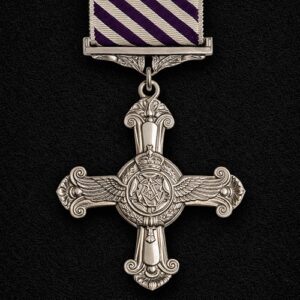 and returned to Britain in January 1942.
Broom undertook an instructors course at the Central Flying School and then spent a year training new Blenheim pilots how to perform low level attacks as an instructor in No. 13 OTU.[5]
In May 1943 Broom joined No. 1655 MTU, a training unit of the British Royal Air Force (RAF) during World War II, as an instructor. In May 1944, Broom joined No. 571 Squadron flying the De Havilland Mosquito XVI  as part of the Light Night Striking Force (LNSF) where he teamed up with his navigator Flight lieutenant Tommy Broom
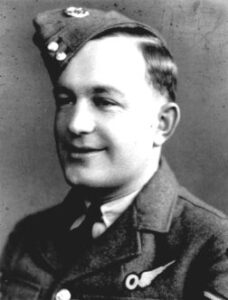 . They were known as “The Flying Brooms” and had a pair of crossed broomsticks painted on the nose of their aircraft. They remained friends until Ivor’s death in 2003.
The Mosquito was modified to carry a 4,000lb bomb known as “cookies” and carried no defensive armament. They made numerous raids over Berlin.
In September 1944 Broom was appointed Flight Commander in No. 128 Squadron, 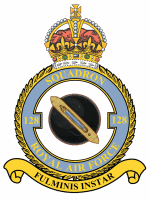 still part of the LNSF.
In January 1945 Broom was appointed as Commanding Officer of No. 163 Squadron. 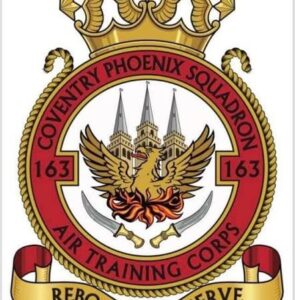 His navigator Tommy Broom joined him as the squadron’s navigation leader. They remained together until the end of the war. For leading raids on Berlin, Ivor was awarded a Distinguished Service Order
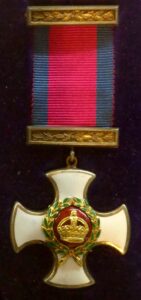 and Tommy a DFC.
After the war ended, Broom dropped rank to squadron leader to command No. 28 Squadron 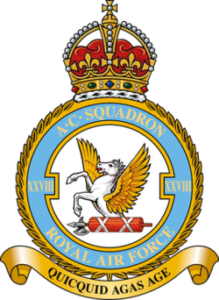 flying Spitfires in Singapore. In 1948 he returned home and dropped rank again, to flight lieutenant, to attend staff college. After passing out he resumed his career as a Squadron Leader and learnt to fly jets.
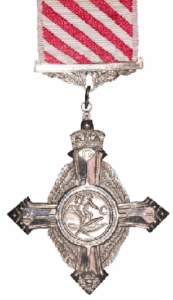
In 1953 he became Commanding Officer of No. 57 Squadron 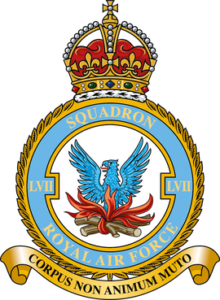 which had been equipped with Canberra jet bombers. He flew a specially modified Canberra from Ottawa to London via the North Pole, Broom was awarded the Air Force Cross.
 In 1956 Broom became responsible for the No. 100 Squadron, Bomber Command Development Unit
 at Wittering.
Broom retired in July 1977 and in retirement, held an appointment as a director of one of Gerald Carroll’s Carroll Group companies. Broom was also a great supporter of charities, these included:
Death and burial ground of Broom, Ivor Gordon.
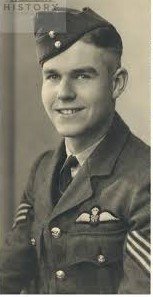
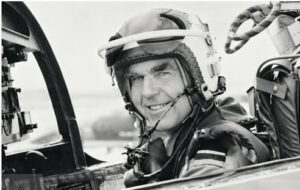
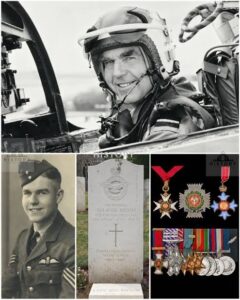
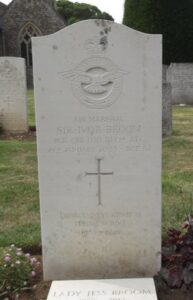
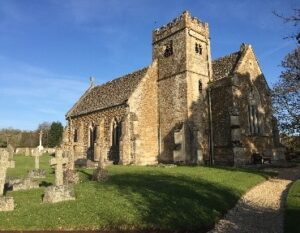
Ivor Gordon Broom passed away 24-01-2003 (age 82) in Rickmansworth (Hertfordshire, United Kingdom. Ivor Broom is buried at the St. Peter’s Church in Little Rissington (Gloucestershire), Church Lane, Little Rissington, Gloucestershire, GL54 2NA, United Kingdom.


Leave a Reply