

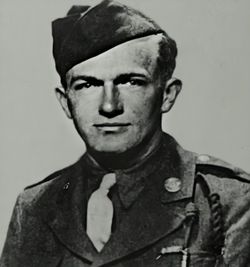
Libby, George Dalton, born 04-12-1919, in Bridgton, Maine, 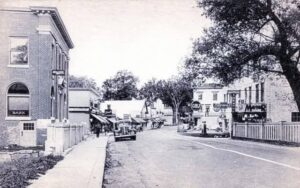 United States, to Benjamin Franklin Libby, (1873–1947) and his wife Marion Blanche, born Garland, Libby (1891–1986). George had two sisters and one half brother, Alice Blanche Libby O’Brien (1915–1982)
 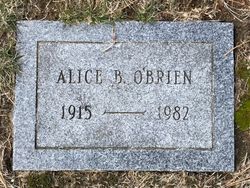 , Madelyn Eva Libby Birt (1921–2006) and half brother Joseph Lawrence Libby (1919–1980). George enlisted in the United States Army in Waterbury, Connecticut. Libby fought in World War II in the European Theatre of Operations, in the 3rd Battalion of Engineers
 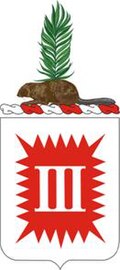 3rd Battalion of Engineers 3rd Battalion of Engineers part of the 24th Infantry Division
  under command of was notably commanded by Colonel Albert Kuali Brickwood Lyman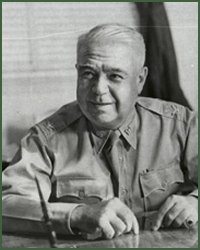
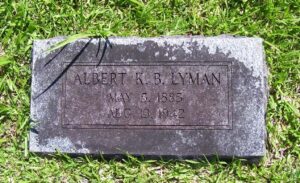 He died as a Brigade General on 13-08-1942, age 57, from the effects of a heart attack (a natural death due to illness) in Honolulu.
On 01-10-1941, the Regiment was reorganized to form the 3d and 65th Engineer Combat Battalions. On the same day the 24th and 25th Infantry Divisions were formed, with the 3d Engineer Combat Battalion becoming one of the organic components of the 24th Infantry Division. Sixty eight days later the battalion had its first taste of combat when the Japanese bombed Schofield Barracks, Hawaii on 07-12-1941. The battalion immediately was assigned the mission of improving the defenses of Northern Oahu Island in Hawaii in anticipation of landing by the Japanese. After the initial threat passed the battalion was built up to full strength and began the arduous training required before commitment to combat.
By the time of the outbreak of the Korean War, Libby was a sergeant and had been assigned to C Company of the 3rd Engineer Battalion, 24th Infantry Division.
On 20-07-1950, the 24th Infantry Division was attempting to withdraw from the city of Taejon, South Korea, after having been badly beaten by the North Korean Korean People’s Army (KPA)  in the Battle of Taejon. By nightfall, the last remaining elements of the division were attempting to leave the town for Taegu. Libby was aboard a truck to the east of town attempting to evacuate when it reached a KPA roadblock. The KPA there ambushed the truck, disabling it and killing or wounding everyone aboard except Libby with gunfire.
Libby disembarked from the damaged truck, taking cover in a ditch and returning fire. During this fight, Libby twice exposed himself to fire to run across the road to assist other wounded soldiers. After rendering medical aid to the wounded, and pulling them out of the line of fire, Libby then stopped a passing M5 Half-track 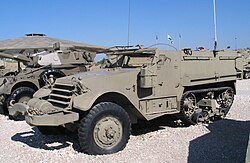 which was towing a 105 mm howitzer and loaded them onto it. Libby then took a position on the outside of the truck, protecting the driver with his own body and again exposing himself to fire, as he was the only unwounded soldier capable of carrying a weapon.
Having the vehicle stop several times to load more wounded onto it, Libby continued to fire his M2 Carbine at the KPA they encountered as they attempted to escape. Libby was struck several times in the body and arms by bullets  as they broke through the first roadblock. At a second roadblock, Libby was struck again by gunfire. Too weak to hold his weapon, Libby pulled himself to an erect position in order to be a human shield for the driver until they were out of the range of enemy fire. Libby eventually collapsed and died 20-07-1950 (aged 30) in Near Taejon, Korea from blood loss, but his actions allowed the truck full of wounded men to reach safety. On 02-08-1951, the army posthumously awarded the Medal of Honor to Libby.
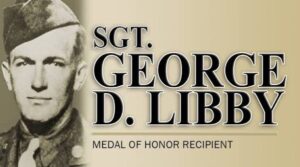
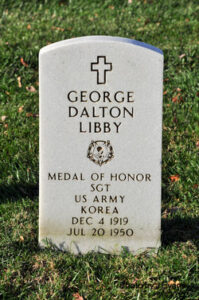
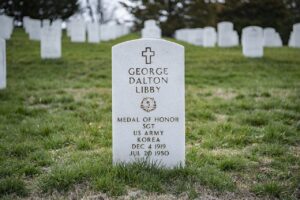
George Dalton Libby is buried at the Arlington National Cemetery, Section 34, Grave 1317.


Leave a Reply