


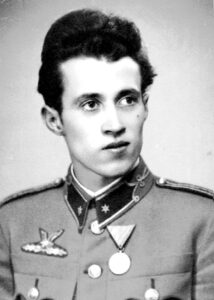
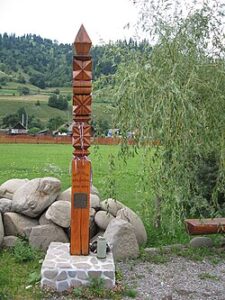
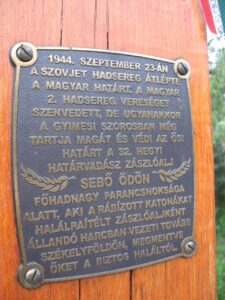
Vitéz Sebő Ödön, born 17-07-1920 in Nagykanizsa, 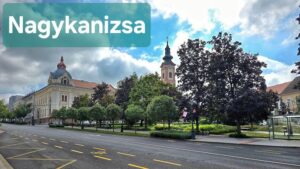 Hungary, was a was a Hungarian military officer, major. The wooden cross
 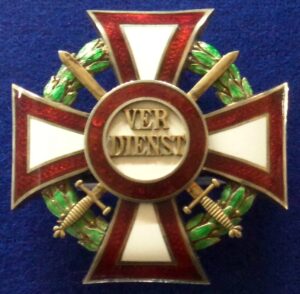 of Ödön SebőIn 1938, he graduated in Székesfehérvár. At the age of 18, he enlisted in the 1st Budapest Infantry Regiment
  with a special permit. In 1940, he was admitted to the Ludovika Academy, where he was promoted to second lieutenant in 1942. As the second in his class, he requested to be assigned to the 32nd Border Guard Battalion in Gyimesfelsőlok. Colonel-General Ferenc Farkas de Kisbarnak
]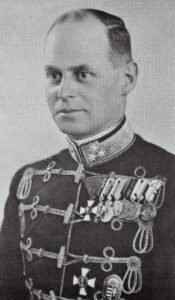
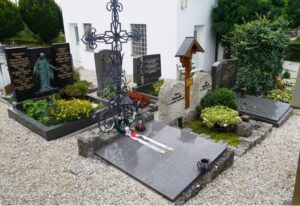 served as the Commander of the Ludovika Academy from 1938 until 1943.
Colonel-General Ferenc Farkas de Kisbarnak passed away in Arnstorf, Germany on 14-04-1980, age 89.
In the autumn of 1944, as one of the officers of the Hungarian Royal 32nd Szekler Border Guard Battalion, he defended the Gyimes Pass with his men against overwhelming odds. In his book titled “The Battalion Sentenced to Death,” he wrote down his memories.
During World War II, the Gyimes Pass (also known as the Ghimeș-Palanca Pass, located in the Eastern Carpathians) became a heavily contested bottleneck in late August 1944 following a dramatic shift in regional alliances. The heavy contest at the Gyimes Pass (Ghimeș-Palanca Pass) in late August 1944 was triggered by King Michael’s Coup on 23-08-1944, when Romania abruptly defected from the Axis powers to the Allies. This political shift instantly turned a previously secure, friendly border into a hostile frontline for Axis forces defending the Eastern.
In January 1944, he was promoted to captain and in the spring, he also received the command of the Gyimesbükk guard.
Around 28-08-1944, the Russian troops began to infiltrate near the border. By this time, he had already taken command over the troops in the valley (including the Germans!). the command and organized the defense along the border. He directed and maneuvered his troops so well that the Soviet command suspected large forces around Gyimesbükk.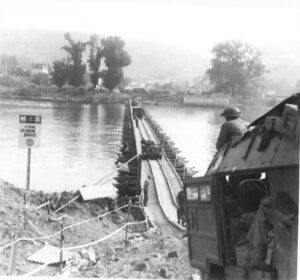
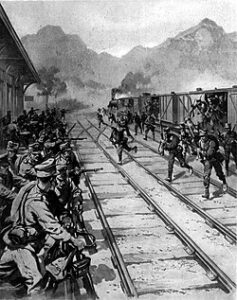
After about three weeks of very hard fighting, at times hand-to-hand and bloody, he had to plan the withdrawal of his troops. The encirclement was threatened by Russian  forces advancing northward in the Ciuc Basin.
On the evening of 16-09-1944, Vitéz began withdrawing his troops from the valley amidst a massive storm. Through the Kovás stream, he successfully made his way to the Felcsík basin, to Csíkszentdomokos.
After the breakout, Ödön Sebő, as the commander of the 22nd Infantry Field Replacement Regiment’s 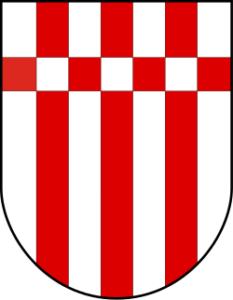 battalion, continued to lead the soldiers entrusted to him through Székelyföld, Felvidék, and Czechoslovakia to Germany, constantly in the rear guard, in continuous combat, as a “doomed battalion.”
At the end of April 1945, he was taken prisoner by the Americans near the town of Nabburg. In the spring of 1946, he returned to Hungary.
His son, Ferenc Sebő, is an architect, singer, musician, folk music researcher, one of the initiators of the domestic instrumental folk music and dance house movement, and the leader of the Sebő Ensemble.
Death and burial ground of Ödön, Vitéz Sebő.
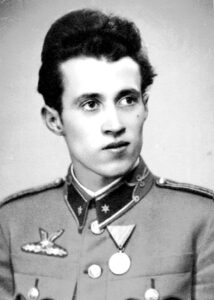
Ödön, Vitéz Sebő, passed away on 09-05-2004, age 83, in Budapest, Hungary and is buried at the Farkasréti Cemetery (Farkasréti temető) Nemetvolgyi ut 99, Budapest 1124 Hongary. Section 21/3 (row 1, grave 87).



Leave a Reply