

Koczak-Marla, Rozka, born 24-04-1921, in Płock, 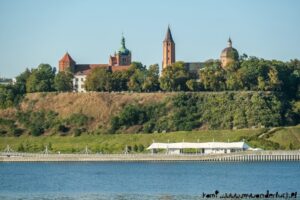 Poland, the daughter of a Jewish cattle dealer. Her family moved to a small village in Płock where she attended public school. In eighth grade, she organized a Jewish student strike to protest Anti-Semitism in the school. As a teenager, she joined a Zionist organization called HaShomer HaTzair
  (the young guard).
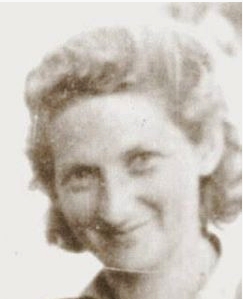
After the Wehrmacht’s  attack on Poland, it managed to flee on foot to Soviet-occupied Vilna (Yiddish Vilne) in present-day Lithuania in September 1939, but in June 1941, the Wehrmacht also marched into Vilna during Operation Barbarossa. All the Jews of the city were rounded up in the Vilna Ghetto in 1941. Here, Rozka Korczak met Vitka Kempner,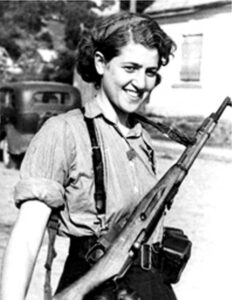
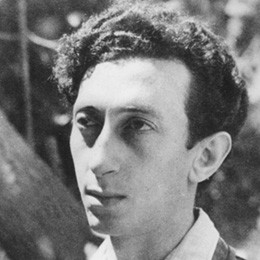
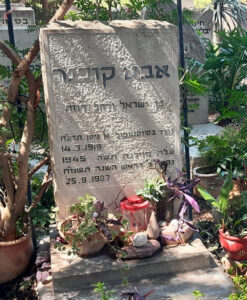
 with whom she shared a bedroom, and Abba Kovner,
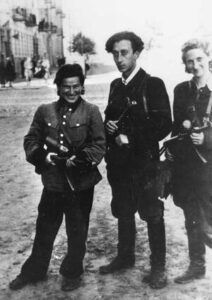 and learned that her family had been deported and her father Gedaliah had been murdered. Her sisters Teibel (* 1924) and Rachel (* 1927), as well as her mother Hinda, also died in 1942.
Rozka Korczak, Vitka Kempner, and Abba Kovner built a resistance organization and participated in the founding of the United Partisan Organization (Fareinikte Partisaner Organisatzije, FPO) 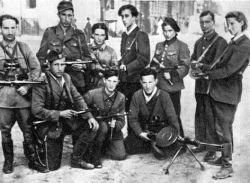 in January 1942, which was initially led by Jitzchak Wittenberg
 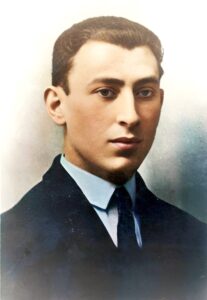 and, after his death, by Abba Kovner. In the ghetto, Rozka Korczak took care of orphans and worked in the library. When the Vilna Ghetto was liquidated in September 1943, Rozka Korczak escaped with Abba Kovner, Vitka Kempner, and several hundred members of the FPO thru the sewers into the forests surrounding the city, escaping with the last 80 to 100 partisans on the final day. The partisans Sonia Madeysker (1914–1944)
 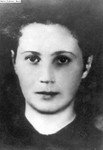 and Vitka Kempner ensured the accommodation of the fleeing individuals in prepared hideouts at the exit. Sonia, the heroine, had been executed, age 30 in 1944.
A smaller number of partisans were tracked down and killed by the Gestapo  and SS,
  but most reached their hiding places – in stark contrast to the majority of the ghetto population, who did not survive the war and the Holocaust. Rozka Korczak, Vitka Kempner, and Abba Kovner reached the forests of Rudniki (Rudninkai) with their partisan unit on 27-09-1943, where they continued the fight under the name Nokmim (“Avengers”) for the next ten months, sabotaging several Wehrmacht transports and participating as part of the Red Army
  in the capture of the city of Vilna in July 1944.
Rozka Korczak worked with the Bricha organization at the end of 1944 and helped to illegally bring several thousand Holocaust survivors to Palestine, where she herself arrived on 12-12-1944. Here, she was one of the first to report on the crimes of the Nazis against the Jews. Toward the end of the war, Abba Kovner urged her to participate in the revenge actions of the organization Nakam (“Revenge”) 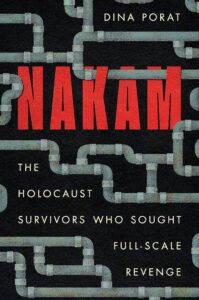 against the Germans, which she, however, declined.
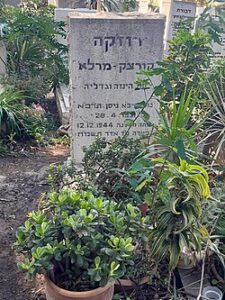
Death and burial ground of Koczak-Marla, Rozka.
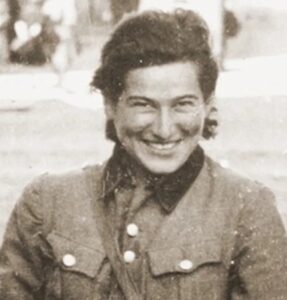
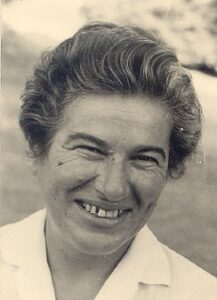
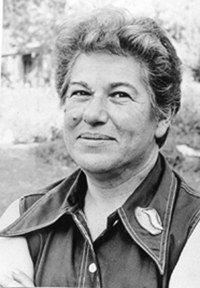
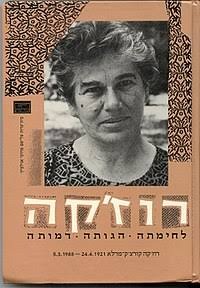
In 1946, Rozka Korczak settled in the kibbutz En HaChoresch and married Avi Marle, with whom she had three children. They were direct neighbors of Vitka Kempner, Abba Kovner, and their two children. Rozka Korczak became a historian and published two successful works in Hebrew: “Flame in the Ashes,” 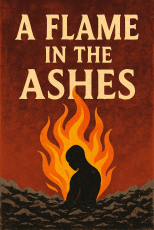 which appeared in 1947, and, with other editors, “The Book of Jewish Partisans” in two volumes. She succumbed to cancer on 05-03-1988, age 66, in her kibbutz in the same year as Abba Kovner, from cancer.
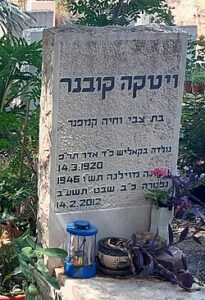
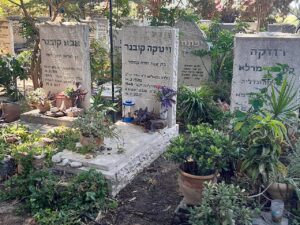
Graves of Abba Kovner, Vitka Kempner and Rozka Korczak on the right.




Leave a Reply