


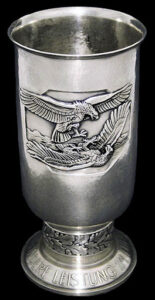

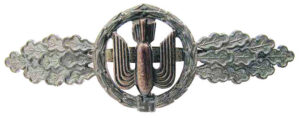

Wiese, Johannes “Bazi” “Lion of Kuban”, born on 07-03-1915 in Breslau, 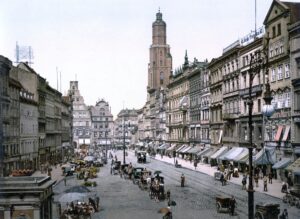 Silesia, then part of the German Empire. Historical records provide scant details on his family background or early childhood, with no documented accounts of significant events or influences shaping his formative years. Prior to military service, Wiese completed the necessary secondary education required for aspiring officers in Weimar Germany, though specific institutions or academic achievements are not recorded in available biographical sources. His path led directly to enlistment as an officer cadet in the Reichswehr on 1 October 1934, marking the transition from civilian life to initial military training.
The Weimar Republic 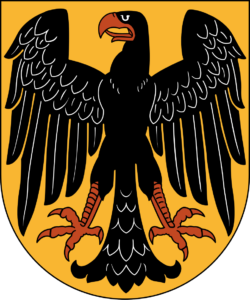 was a historical period of the German state from 09-11-1918 to 23-03-1933, during which it was a constitutional republic for the first time in history. The state was officially named the German Reich,
  but was more commonly referred to, and unofficially proclaimed itself, as the German Republic.
  The period’s informal name is derived from the city of Weimar, where the republic’s constituent assembly took place. During the interwar period in the Anglophone world, the republic was usually simply called “Germany”, with “Weimar Republic” (a term introduced by Adolf Hitler in 1929) not commonly used until the 1930s. The Weimar Republic had a semi-presidential system.
Johannes Wiese volunteered for service in the Reichswehr 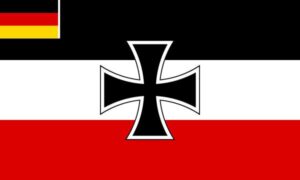 in 1934, joining the Heer and being assigned to Infanterie-Regiment 6. In 1936, he transferred to the Luftwaffe
 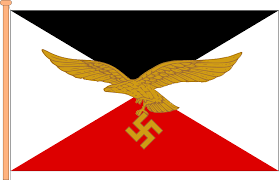 with the rank of Oberfähnrich and underwent initial training to qualify as an observer. Wiese was promoted to Leutnant in 1937. On 01-09-1939, he received a promotion to Oberleutnant while serving in Ausbildungsabteilung (training detachment) of Flieger-Ausbildungs-Regiment 62, a flight training unit. In October 1939, he commenced fighter pilot training at a specialized school, transitioning from reconnaissance roles. From 1940 to 1941, Wiese served as a reconnaissance aviator (Aufklärungsflieger), accumulating experience in operational flying prior to his assignment to fighter units. This period of training and early aviation service equipped him for subsequent combat roles, culminating in his posting to Jagdgeschwader 52’s
 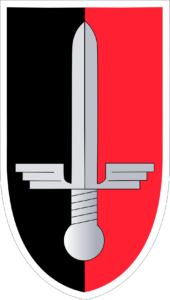 7th Staffel in June 1941.
Wiese began his frontline combat duties with Jagdgeschwader 52 (JG 52) on the Eastern Front in June 1941, immediately prior to the German Operation Barbarossa invasion of the Soviet Union on 22-06-1941. Assigned initially to the Geschwaderstab as Adjutant, he flew  aircraft in escort, interception, and free-hunt missions against Soviet Air Force
 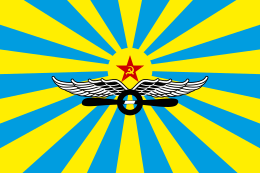 formations, contributing to the Luftwaffe’s
 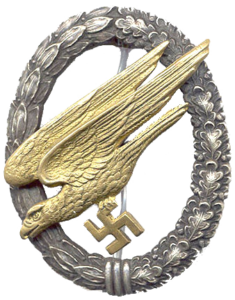 early numerical superiority in the theater. His first aerial victory was a DB-3 bomber claimed on 23-09-1941 at 17:37 hours. This was followed by additional victories starting in early 1942, with seven confirmed by April 1942 in over 100 sorties, reflecting the grueling attrition of Eastern Front air warfare where Luftwaffe pilots faced growing Soviet resistance and numerical disadvantages. For these successes, Wiese received the Iron Cross, Second Class,
  on 27-9-1941. On 26-06-1942, Wiese was promoted to Staffelkapitän of 2./JG 52, assuming leadership of the squadron during a period of static fronts and preparatory operations for Case Blue. These early operations honed his tactics in low-level dogfights and bomber interceptions, establishing his reputation within the wing. Case Blue (Fall Blau) was a massive 1942 strategic summer offensive by Nazi Germany in southern Russia. Launched on June 28, the campaign aimed to destroy the Red Army, capture vital Caucasian oilfields (Baku, Grozny, Maikop), and take Stalingrad.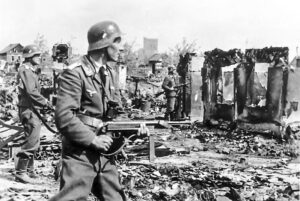
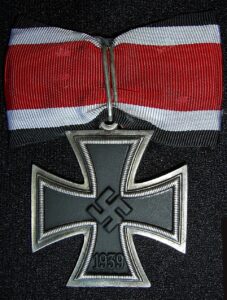
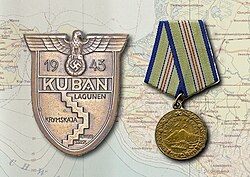
Throughout 1942, Wiese’s score rose steadily amid intense operations over the southern sector of the front. He reached his 25th victory on 29-09-1942. On 25-12-1942, he recorded his 50th confirmed kill. These accumulations reflected Jagdgeschwader 52’s heavy involvement in supporting Army Group South’s advances and defensive battles, with Wiese flying the Messerschmitt Bf 109 in numerous dogfights against Soviet fighters and bombers.On 05-01-1943, Wiese received the Knight’s Cross of the Iron Cross  for 53 victories, recognizing his contributions during the Stalingrad campaign and subsequent retreats. By May 1943, as Hauptmann, he took temporary leadership of I. Gruppe, JG 52, and was officially appointed Gruppenkommandeur on 13-11-1943 amid operations over the Kuban bridgehead. Wiese’s most prolific day came on 05-07-1943, when he downed 12 Il-2 Sturmoviks
 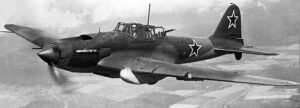 during a single mission over the Kuban region during the Battle of Kursk, bringing his total near 100.
 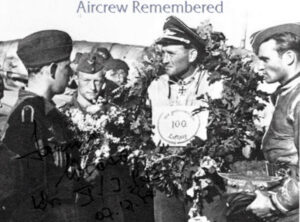 However, he was shot down and wounded
 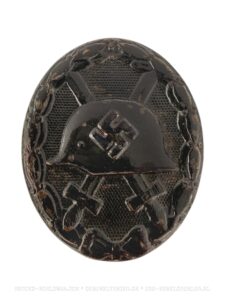 in the same engagement, bailing out at low altitude from his Bf 109 G-4 (W.Nr. 14996). This incident marked a peak in his Eastern Front tally, with the majority of his 133 confirmed victories (out of 480 combat sorties) occurring against Soviet forces between 1941 and 1943.
Wiese relinquished command of I./JG 52 in June 1944 following injuries sustained in combat, after which the unit transitioned under new leadership amid the Soviet summer offensive. In October 1944, he was assigned to the Geschwaderstab of Jagdgeschwader 77 (JG 77),  redeployed for Reichsverteidigung duties defending German airspace against Allied strategic bombing raids. On 07-11-1944, he was appointed Geschwaderkommodore, officially taking command on 01-12-1944, and led Jagdgeschwader 77 during the initial phase of the Ardennes Offensive. He was severely injured in a training accident on 25-12-1944, ending his active role and leading to his replacement. Major Siegfried Gustav Freytag:
 Temporarily took command of JG 77 from 25-12-1944, after Wiese’s injury.
These late-war efforts reflected the desperate shift of Eastern Front veterans to counter overwhelming Allied air superiority, though with limited successes amid fuel shortages and pilot attrition.
Following the unconditional surrender of Nazi Germany on 08-05-1945, Wiese, then a Major in the Luftwaffe, surrendered to U.S. forces and was taken as a prisoner of war. On 06-09-1945, he was transferred by the Western Allies to Soviet custody, a common practice under the Yalta and Potsdam agreements for repatriating German personnel from the Eastern Front. Wiese endured over four years of Soviet imprisonment, characterized by harsh conditions typical of Stalin-era gulags for German military captives, 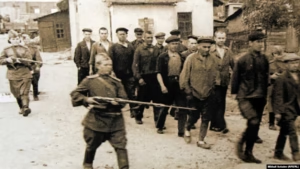 including forced labor and ideological re-education efforts. He was not released until 28-11-1949, age 34, amid the broader repatriation of surviving German POWs following the onset of the Cold War. Upon return to West Germany, Wiese faced the challenges of reintegration into civilian life during the early years of the Federal Republic, including economic hardship under the Allied occupation and denazification processes, though specific details of his activities from 1949 to 1955 remain undocumented in available records. This period marked a transitional phase for many former Luftwaffe officers, who often engaged in low-level employment or awaited opportunities for military resurgence under NATO frameworks.
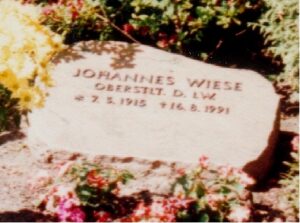
Death and burial ground of Wiese, Johannes “Bazi” “Lion of Kuban”.
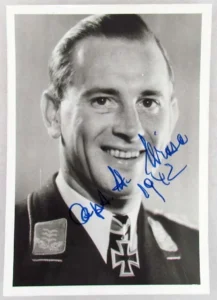
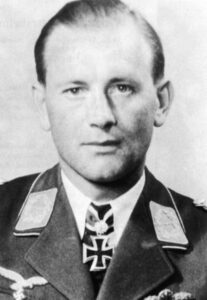
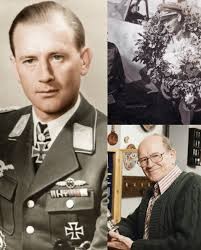
After the war in 1956, Wiese joined the Bundeswehr, the armed forces of the Federal Republic of Germany, and worked for the Military History Research Office/COA 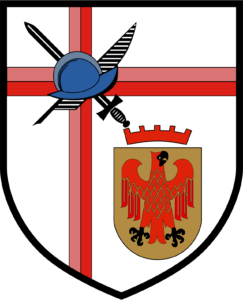 . He retired on 10-11-1970 holding the rank of Oberstleutnant. Wiese died on 16-08-1991, age 76, in Kirchzarten and was buried in Berlin-Nikolassee, at the Waldffriedhof Dahlem, Hüttenweg 47, 14195 Berlin-Bezirk Steglitz-Zehlendorf, Germany.


Leave a Reply