


Vegte, Cornelis “Kees” van der, born 01-02-1900 in Amsterdam, 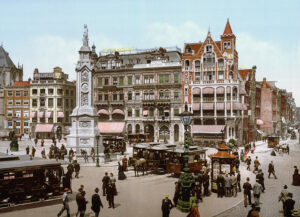 Netherlands, to Gerard Anton Dirk van der Vegte and Cornelia, born Pluimgraaff. Kees was married with Grietje Holtrop. Kees van der Vegte worked at De Arbeiderspers
 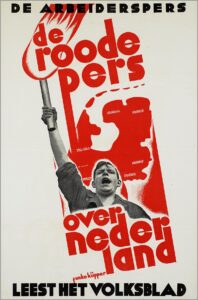 starting in 1924 as the advertising manager for a daily newspaper.
After the company—owned by the SDAP  and the NVV
  —was brought into line in July 1940, he remained in his position so that he could use the address database to help build an underground organization.
The Social Democratic Workers’ Party (SDAP) was a major Dutch political party that existed from 1894 to 1946. As the predecessor of the modern PvdA, the SDAP sought to improve living and working conditions for workers, expand suffrage, and achieve a socialist society through democratic means
In August 1940, the Committee for Vrij/Free Nederland was established at Singel 138 in Amsterdam on the initiative of Anne Anton Bosschart “Tom”.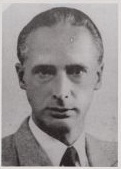
 Van der Vegte joined the committee alongside Rudolf Pieter s’Jacob.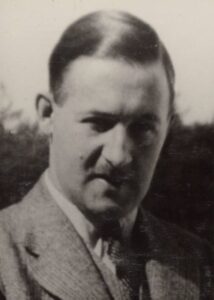
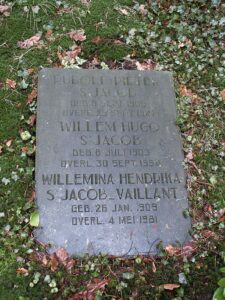 After both had initially been engaged, starting in August 1940, in reprinting and distributing the magazine published by the Free Netherlands organization, they began stenciling and distributing, starting in November, the publications issued by the Committee: “Communications from the Committee for a Free Netherlands” (in which they claimed that the Committee “already comprises tens of thousands”) and “Free Press”; an organ for informing the Dutch people. Van der Vegte was also involved in gathering military intelligence and transmitting it to England. In mid-December 1940, Bosschart and s’Jacob were arrested by the Sipo; Sicherheitspolizei. Sipo a German term meaning “security police”. In the Nazi era, it referred to the state political and criminal investigation security agencies. It was made up by the combined forces of the Gestapo
  (secret state police) and the Kriminalpolizei (criminal police; Kripo)
 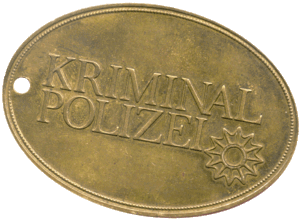 between 1936 and 1939. As a formal agency, the SiPo was incorporated into the Reich Security Main Office (RSHA)
 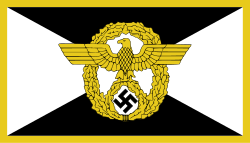 in 1939, but the term continued to be used informally until the end of World War II in Europe.
Van der Vegte’s arrest followed on the day before Christmas. They were held at the Oranjehotel in Scheveningen for over six months. 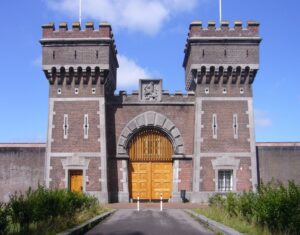

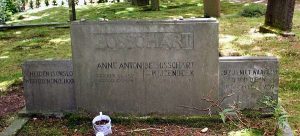
Death and burial ground of Vegte, Cornelis van der.
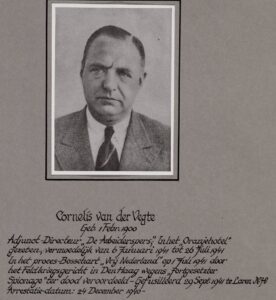

For more than six months, Bosschart, s’Jacob, and Van der Vegte were held at the Oranjehotel prison in Scheveningen. Van der Vegte spent the first three months in solitary confinement. During interrogations, which often took place at night, they were regularly subjected to severe abuse.
After a trial before a Feldgericht, they with two other, Dutch Navy officer Lodewijk Anne Rinse Jetze van Hamel,
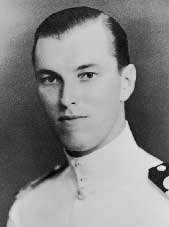
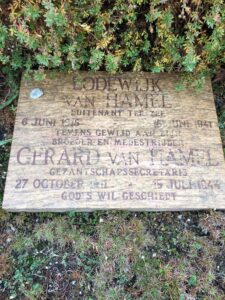 age 26 and Andreas Johannes (Han) Leendert van Zomeren

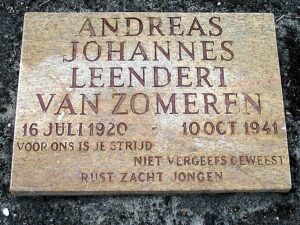 age 21, were executed by firing squad on 29-09-1941, at the Bussumerheide (not far from the Crailo military camp, in the municipality of Laren). The Oranjehotel Foundation has produced four “books of the dead,” photo albums containing portraits of approximately 750 prisoners who were killed. These prisoners were executed by firing squad at the Waalsdorpervlakte or died in a concentration camp.
The urn containing the ashes from Lodewijk van Hamel, Andreas van Zomeren and of Kees van de Vegte and Anne Anton Bosschart “Tom” were found at the Hegerfriedhof cemetery in Osnabrück, Germany. Not the urn with Rudolf Pieter s’Jacob. They were reburied at the Cemetery of Honor. Bloemendaal te Overveen, Netherlands.
The memorial cross 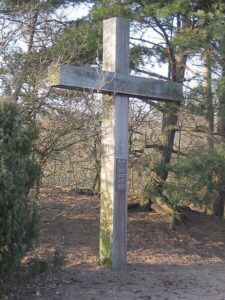 for members of the resistance on the Bussumerheide in Hilversum is a wooden cross with a plaque affixed to it bearing the names of the six victims.
It is a Christian cross, and the message is this: despite their different backgrounds in terms of beliefs and religion, everyone deserves a Christian cross at the spot where their soul left their body. The memorial was erected in memory of people who were regarded as resistance heroes after the war. It is the site where the execution took place, but not the place where their remains are buried.





Leave a Reply