


Beukman, Fransiscus “Frans”, born 23-11-1921 in Amsterdam/Noord-Holland, 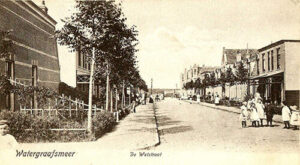 Netherlands. Frans studied medicine at the University of Amsterdam.
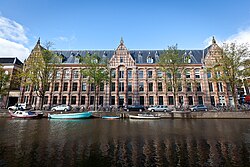 In April 1943, he refused to sign the loyalty oath that the occupying forces required students to take in order to continue their studies.
On May 6, he heeded the call from Höhere SS- und Polizeiführer Rauter to report to the Polizeisicherungsbereich in Amsterdam. That very evening, along with approximately 3,200 other students, he was transported under the guard of the Ordnungspolizei and the Dutch police by a special NS train to the concentration camp in Ommen. 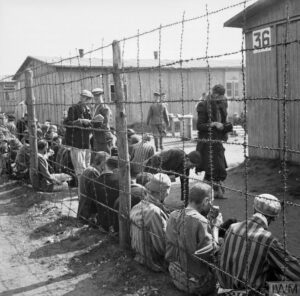 In total, this meant that over 40% of the male students were imprisoned.
Hanns Albin Rauter (born Johann Baptist Albin Rauter; 04-02-1895, in Klagenfurt, Carinthia; was an Austrian-born SS-Obergruppenführer (1943), General of the Police (1943), and Waffen-SS (1944), as well as Higher SS and Police Leader (HSSPF) of the occupied Netherlands. After the end of World War II, he was arrested and, following a trial in the Netherlands in 1949, 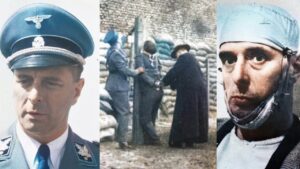
 executed as a war criminal on 25-03-1949, age 54, near Scheveningen.
In total, this meant that over 40% of the male students were imprisoned in Ommen. Because he suffered a nervous breakdown shortly thereafter in Ommen, he was transferred to a psychiatric hospital in Deventer. 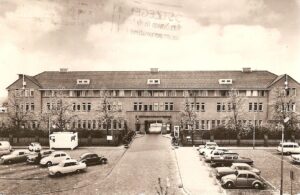 In doing so, he escaped the fate of the vast majority of the imprisoned students, namely forced labor in Germany. Later, still mentally weakened and “forgotten” by the occupying forces, he returned to Amsterdam.
In August 1944, Beukman became involved with the underground newspaper *De Wegwijzer*. “De Wegwijzer” was a resistance newspaper published during World War II, from July 1944 through 17-03-1945, in Amsterdam. The newspaper was published daily with a circulation of between 200 and 20,000 copies. It was mimeographed and printed, and its content consisted mainly of news reports.
In addition to editorial work, he was responsible for distributing the paper. He was also a member of the Ordedienst (OD),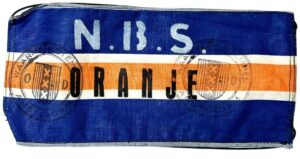 a nationwide underground organization that had partly originated in military circles. Later, he also became a member of the Binnenlandse Strijdkrachten/National Armed Forces
 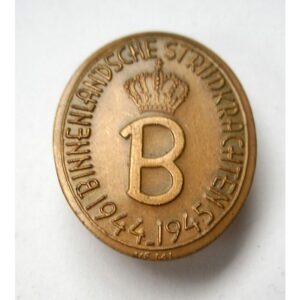 in Amsterdam. On 19-12-1944, Beukman was arrested at home by Dutch members of the Sicherheitspolizei.
  . The Security Police (SiPo) was a new police organization in Germany established in 1936 by Heinrich Himmler,

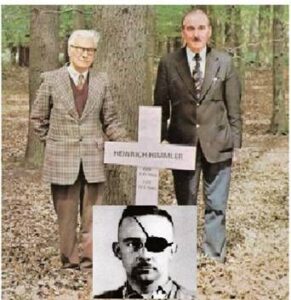
 the SS Leader and Chief of the German Police. The Security Police combined the Criminal Investigation Police (Kripo)
 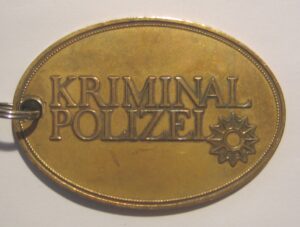 and the Political Police (Gestapo)
  . It worked closely with the SD (Security Service), the intelligence service of the SS
  . The institution and the members of the Security Police played a significant role in the Holocaust.
It was early March 1945, toward the end of World War II, when a resistance group in Apeldoorn received a tip. On March 7, a large shipment of pork was to be picked up in Epe, destined for the German army in the area. This seemed like a golden opportunity: both meat and a truck. On the evening of March 6, six men, most of them dressed in German uniforms, set off for the “Woeste Hoeve” inn. Around midnight, they thought they heard the truck in question approaching from Arnhem. It turned out to be a passenger car: a large BMW with an open top. There were three men inside, and a brief but intense firefight ensued. The three men in the car appeared to be dead. 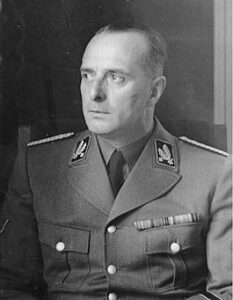
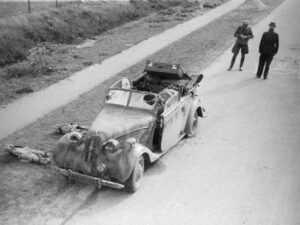
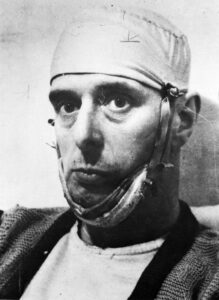
It later turns out that the man in the front right seat was seriously wounded but still alive. This is Hanns Albin Rauter, the highest-ranking German police chief in the Netherlands and one of Hitler’s top officials.
Rauter was not the target of the attack; the Apeldoorn unit of the Home Forces was actually attempting to seize a truck used to transport weapons and a shipment of 3 tons of pork. On 08-03-1945, 117 prisoners were executed at the site of the attack in retaliation. 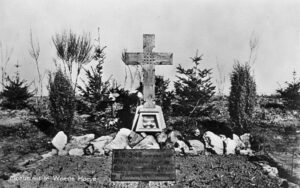
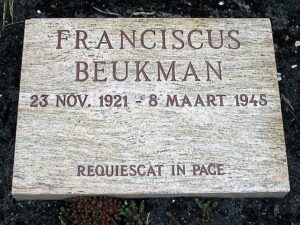
Death and burial ground of Beukman, Frans.
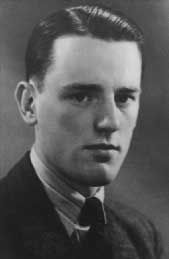 Frans Beukman was imprisoned in the Amsterdam Detention Center and placed on the list of Todeskandidaten—those eligible for execution as a reprisal. On 08-03-1945, as retaliation for the—incidentally unintentional—assassination attempt on the Höhere SS- und Polizeiführer in the Netherlands, Rauter, Frans Beukman, age 23, was executed by a German firing squad at the Amsteldijk. Their bodies were provisionally buried in a mass grave in the dunes near Overveen on the orders of the occupying forces. Later the bodies were reburied at The Memorial Cemetery in the Kennemer Dunes near Overveen (municipality of Bloemendaal) commemorates 372 members of the resistance who were executed by the occupying forces during World War II. The reburial of Jannetje Johanna “Hannie” Schaft
 (the only woman among those executed) marked the interment of their remains.
Never before had the Germans taken such ruthless revenge as they did following yesterday’s attack on SS General Hanns Albin Rauter. Across the occupied Netherlands, 263 people were shot to death. At the site where Rauter was wounded, near Woeste Hoeve, 117 men were murdered.The victims were forced to travel by bus to the hamlet between Arnhem and Apeldoorn. They had been hastily rounded up last night from prisons throughout the eastern Netherlands: Apeldoorn, Almelo, Deventer, Zwolle, Assen, and Doetinchem.
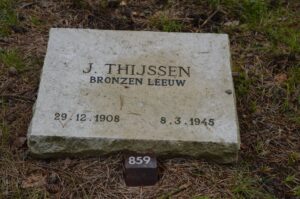
Among the dead are Jan Thijssen, a founder of the Resistance Council, and Piet van de Velde, a hospital director from Hoogeveen, 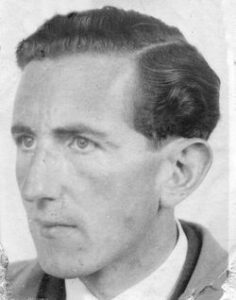
 who disguised people in hiding as patients. Seventy-five-year-old Matthijs van der Harst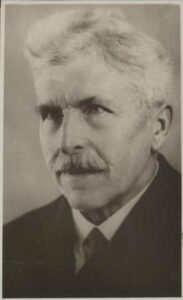
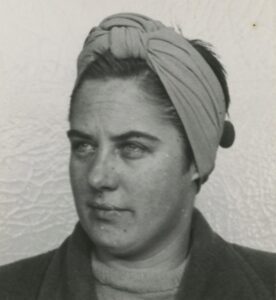
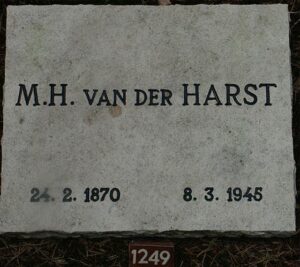 and 17-year-old Jewish person in hiding Julius Hoek. Several people from Assen were betrayed by Geessien “Geesje” Bleeker,
  and the Polish RAF pilot Czeslaw Oberdak, age 23,
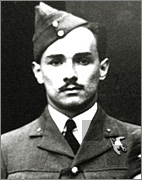
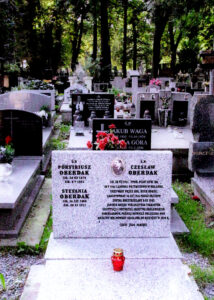 was also murdered. After the war, the Special Court sentenced Geesje Bleeker to death; the sentence was later commuted to life imprisonment. Bleeker was released on 18-08-1960. In the final years of her life, Bleeker lived in a nursing home in Emmen, where she passed away in Emmen, 13-03-2011, age 90.


Leave a Reply