


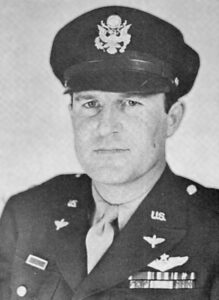
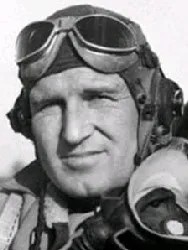
Claiborne, “Clay”, “Zoot”, Holmes Kinnard Jr., born 29-10-1912 in Franklin, Tennessee, 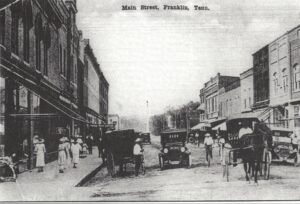 United States, to Claiborne Holmes III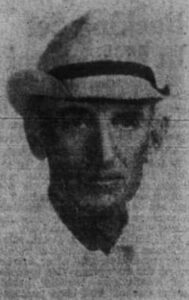
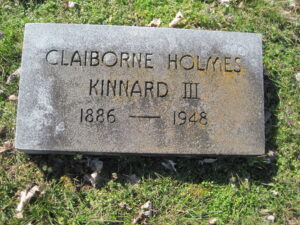 and Porter May, born Amis, Kinnard.
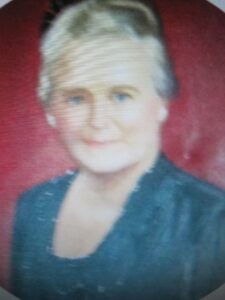
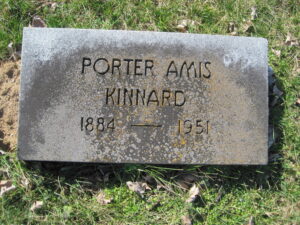 Clay had two brothers, Lewis Amis Kinnard (1916–1966) and Porter Thomas Kinnard (1921–1921)
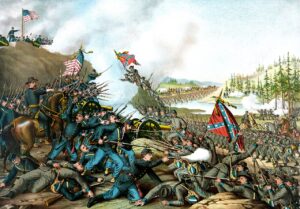
“Clay” was born and raised in Franklin, Tennessee in the historic Claiborne Kinnard House on a farm owned by his father, Claiborne Kinnard Sr. 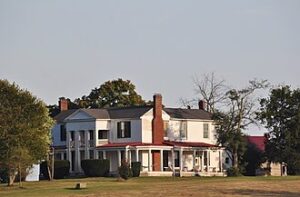 The family farm was located at the corner of Lewisburg Pike and Carnton Lane (now the Heath Place subdivision). The property has historical significance as being the site of the eastern flank of the Civil War Battle of Franklin in 1864. Kinnard’s farm was the encampment site of Lieutenant General John Bell Hood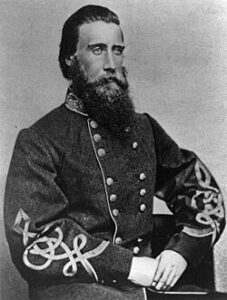
 a Confederate General during the American Civil War in 1864.
  The Kinnard family built a large swimming pool on the property, a business venture known as “Willow Plunge” which was very popular and remained in business from 1924 to 1967. Kinnard managed the swimming pool and its associated nine-hole golf course in his youth and helped run other family businesses. Kinnard attended Vanderbilt University and graduated with a degree in civil engineering.
He became a skilled golfer and competed in state and regional tournaments. Kinnard married Ruth McDowell of Montgomery, Alabama, whom he met during a tour of duty at Maxwell Field. The couple had three children, Judith, John (1954-2022) and Thomas Claiborne 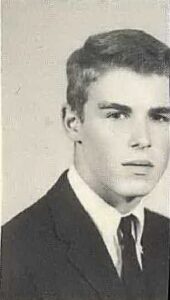 (1945-2011).
Holmes joined the U.S. Army Air Corps  as an aviation cadet in 1938 and was commissioned a second lieutenant in 1939. He trained at Randolph Field and had experience in flying every type of American fighter plane available at that time. He served as instructor pilot at Randolph Field and later at airfields in Louisiana, Alabama and Georgia, from September 1940 to May 1943.
Deployed to England during WWII, Kinnard became commander of the 360th Fighter Squadron 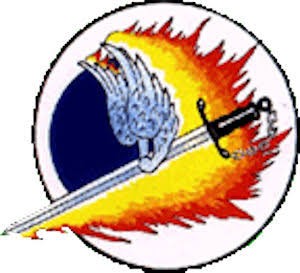 of the 356th Fighter Group
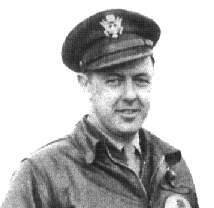
  under command of Lieutenant Colonel Harold J. Rau,
  in May 1943. He was commander of the 354th Fighter Squadron
  of the 355th Fighter Group
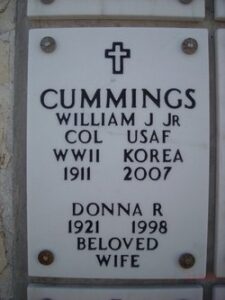
  under comand of Colonel William James Cummings Jr.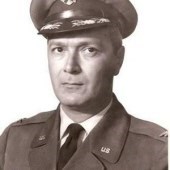
 from November 1943 to June 1944. On 29-03-1944, Kinnard shot down a Focke-Wulf Fw 190
 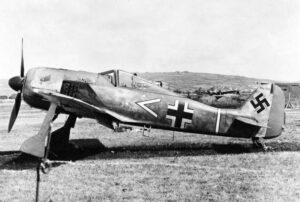 near Braunschweig, Germany, his first aerial victory. He destroyed 4 more aircraft on the ground while leading the 354th Fighter Squadron on a strafing mission which in total destroyed 44 German aircraft. On the April 5th, the 355th Fighter Squadron set a record, that was to stand until September with Kinnard becoming the first Eighth Air Force pilot to score his fifth total air and ground kill in one day. The 355th Fighter Squadron received a Distinguished Unit Citation
 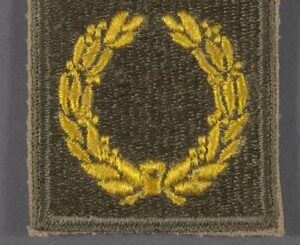 for the mission. Kinnard served with Headquarters 355th Fighter Group from July to September 1944.
Kinnard continued his leadership as one of the top tacticians in the Eighth Air Force  for strafing attacks. Largely due to him, the 354th Fighter Squadron would emerge as the top squadron for enemy aircraft destroyed on the ground. He became the 355th Fighter Squadron’s seventh flying ace on 07-07-1944, when he shot down three German fighters including 2 Messerschmitt Me 410s and a Messerschmitt Bf 109
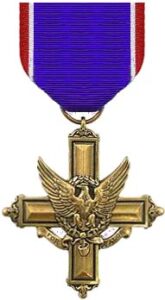
  while breaking up a German fighter attack on B-24 Liberators near Merseburg, Germany, for which he received the Distinguished Service Cross.
  Kinnard scored his last two aerial victories near Prague, Czechoslovakia, when he shot down two Bf 109’s on 20-04-1945.
Writing about Kinnard, author and flying ace Norman Fortier 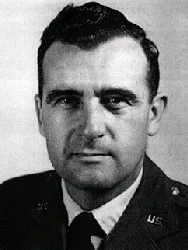
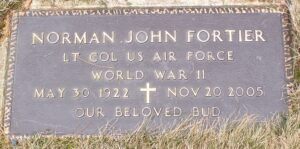 said there was “no question in anyone’s mind that he was in charge”. He was with the 4th Fighter Group
 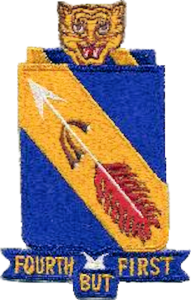 from September to December 1944 and commander from November to December before returning to the 355th Fighter Group.
Kinnard was credited with destroying 8 enemy aircraft in aerial combat plus 1 damaged, and he destroyed 17 more on the ground while strafing enemy airfields. He flew an aircraft bearing the legend “Man ‘O War”. All of Kinnard’s fighters – a P-47D, two P-51Bs and five P-51Ds – bore this name.
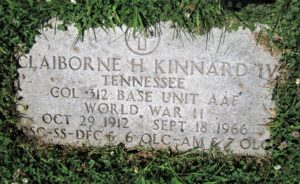
Death and burial ground of Claiborne, “Clay”, “Zoot”, Holmes Kinnard Jr.
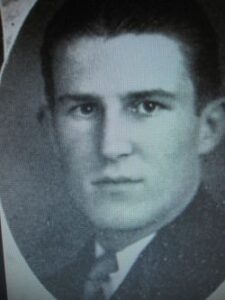
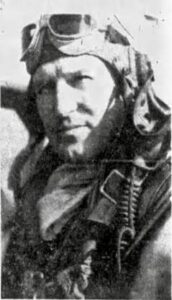
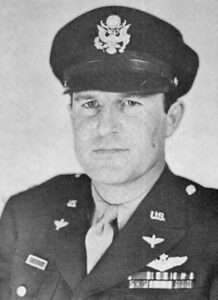
After the war, Kinnard returned to Tennessee to live on his family farm. He left active duty in December 1945, and served in the U.S. Air Force Reserve  before transferring to the Tennessee Air National Guard
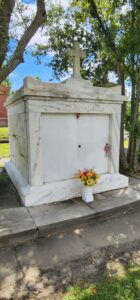
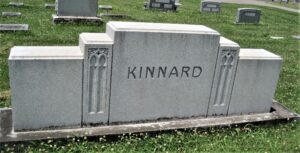
  in 1953. With partner Howard Johnson, he owned the Superlock Block Company in Franklin. Other business interests were Breeko Block and Brick Company and Span Deck, a machine company. With his father, he co-managed the Willow Plunge Pool and recreation area that occupied a portion of the farm. Kinnard purchased an airplane and built an airstrip on the property in 1947, and for a couple of years, offered plane rides to Willow Plunge patrons. Claiborne, “Clay”, “Zoot”, Holmes Kinnard Jr. died 18-09-1966, age 53, of a brain tumor, in Franklin, Williamson, Tennessee, United States and is buried at the Mount Hope Cemetery, Franklin, Williamson, Tennessee, 608 Mt Hope St, Franklin, TN 37064 United States, Section F.
Based in England, he was officially credited with the destruction of 8 enemy aircraft in aerial combat and another 17 on the ground while strafing heavily defended enemy airfields. Kinnard received 12 medals for distinguished service, including the Distinguished Service Cross, Silver Star, Distinguished Flying Cross with silver and bronze oak leaf clusters, the Air Medal, and Air Force Presidential Unit Citation.
Message(s), tips or interesting graves for the webmaster: robhopmans@outlook.com


Leave a Reply