


Globocnik, Odilo Lothar Ludwig , born 21-04-1904 into a family of Slovene descent in the Imperial Free City of Trieste,  in what was then the capital of the Austrian Littoral administrative region of the Austro-Hungarian Empire. He was the second child of Franz Globocnik from the Upper Carniolan town of Neumarkt who served as a Habsburg cavalry leutnant in the Austro-Hungarian army
  . His father was unable to accumulate the money to apply to resign from the army, so was instead given a job in the reserves as a postman. In 1914, the family left Trieste for Cseklész where Franz Globocnik was recalled to active duty with the outbreak of World War I. The same year, Odilo Globocnik joined the army via a military school. The war ended his military education prematurely. Odilo and his family moved to Klagenfurt. Globocnik enrolled in a civilian high school, leaving 1923 without obtaining a certificate. He performed jobs such as carrying suitcases at the train station in order to help support the family financially. Globocnik first appeared in politics in 1922, when he became a prominent member of the pre-Nazi Carinthian paramilitary organizations and was seen wearing a swastika
  . At this time he was a building tradesman. He was introduced to this when he was engaged to Grete Michner. Her father, Emil Michner, talked to the director of Káewag, which was a hydro-power plant, and secured Globocnik a job as a technician and construction supervisor.
in what was then the capital of the Austrian Littoral administrative region of the Austro-Hungarian Empire. He was the second child of Franz Globocnik from the Upper Carniolan town of Neumarkt who served as a Habsburg cavalry leutnant in the Austro-Hungarian army . His father was unable to accumulate the money to apply to resign from the army, so was instead given a job in the reserves as a postman. In 1914, the family left Trieste for Cseklész where Franz Globocnik was recalled to active duty with the outbreak of World War I. The same year, Odilo Globocnik joined the army via a military school. The war ended his military education prematurely. Odilo and his family moved to Klagenfurt. Globocnik enrolled in a civilian high school, leaving 1923 without obtaining a certificate. He performed jobs such as carrying suitcases at the train station in order to help support the family financially. Globocnik first appeared in politics in 1922, when he became a prominent member of the pre-Nazi Carinthian paramilitary organizations and was seen wearing a swastika . At this time he was a building tradesman. He was introduced to this when he was engaged to Grete Michner. Her father, Emil Michner, talked to the director of Káewag, which was a hydro-power plant, and secured Globocnik a job as a technician and construction supervisor.![Der Gauleiter von Wien: Globotschnigg [Globocnik] 6949/38](https://ww2gravestone.com/wp-content/uploads/2015/04/Bundesarchiv_Bild_183-S41858_Odilo_Globocnik-300x213.jpg)
 In August 1933, Globocnik was arrested for the first time, for attempting to contact imprisoned Nazis in Klagenfurt. This was also the same year that he became a member of the Austrian SS.
  He was arrested because of his public support for the National Socialist German Workers’ Party, commonly known as the Nazi Party, as he had become a member of the Nazi party three years earlier, in 1930 while in Carinthia. Although he was arrested four times between 1933 and 1935, he spent little over a year in jail. This was due to Reichsführer SS, Heinrich Himmler’s (Did you know)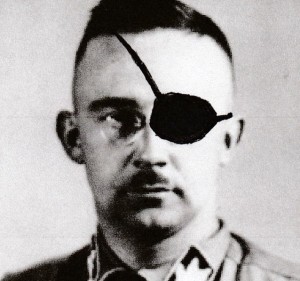
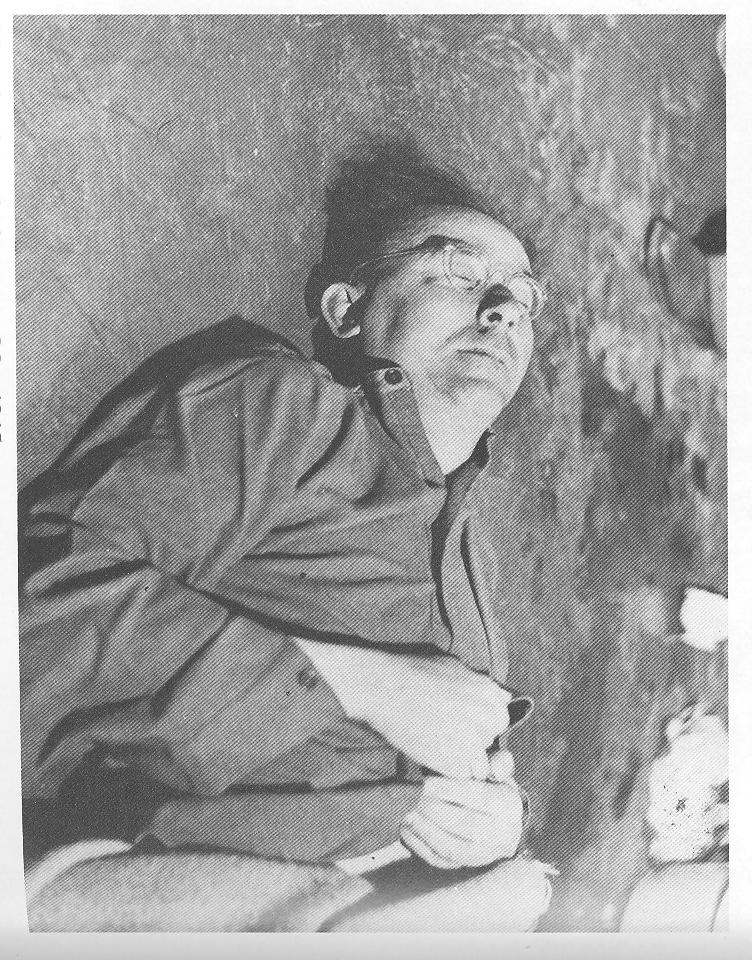
 intervention, after two years of arguments between Globocnik and the authorities. His first documented activity for the NSDAP
  occurred in 1931, when his name appeared in documents relating to the spreading of propaganda for the party. By this point he had more or less abandoned his career as a building tradesman, and attached himself very closely to the NSDAP. One of his tasks for the NSDAP was to construct a courier and intelligence service, which channeled funds from the German Reich into Austria. Globocnik was inducted into the SS on 01-09-1934 with the number 292,776. In June 1933, in Vienna, a bomb was thrown at the shop of Jewish jeweler Norbert Futterweit
  , killing him. This was one of the first murders in Austria attributable to the Nazis, and a number of historians believe that Globocnik was involved in the attack. His fanatical devotion to the Nazi cause, like SS Obersturmführer, Adolf Eichmann

another desk murderer, paid off for Globocnik, as he quickly climbed the ladder of the party apparatus in his native Austria. He became a Deputy Gauleiter for the whole of the country in 1933 at the age of 29, and was a key player in the usurpation of the Austrian government by the National Socialists. Globocnik, here with Reichscommissar in the Netherlands. Seyss Inquart, was rewarded for his diligence, being appointed Gauleiter of Vienna on 24-03-1938 by Adolf Hitler. 
 While Gauleiter of Vienna, Globocnik spread anti-Semitic propaganda. As corrupt as he was fanatical, Gauleiter Globocnik here with his wife Lore Peterschinegg,
 was relieved of his post and stripped of his party honours in 1939 when it was discovered he was involved in illegal foreign currency speculations. Himmler transferred Globocnik to the Waffen SS
  in the rank of corporal as punishment, where he served with SS Standarte Germania
  during the Polish campaign. Himmler liked Globocnik and recognized the value of the ruthless Austrian. In late 1939 Globocnik was pardoned, promoted to SS Brigadeführer and assigned to Lublin province. On 09-11-1939, Himmler appointed Globocnik SS and Police Leader in the Lublin district of the General Government.
 After a disappointing party career, Globocnik now had a second chance in the ranks of the SS and the police responsible for: Liquidating the Warsaw Ghetto, which contained about 500,000 Jews, the largest Jewish community in Europe and the second largest in the world after New York. Liquidating the Bialystok Ghetto, which stood out for its strong resistance to German occupation. Resettling a large number of Poles under the premise of ethnic cleansing and implementation and supervision of the Lublin reservation, to which 95,000 Jews were deported, with its adjacent network of forced labour camps in the Lublin district. He was also in charge of over 45,000 Jewish laborers. Following Italian leader, Benito Mussolini’s
While Gauleiter of Vienna, Globocnik spread anti-Semitic propaganda. As corrupt as he was fanatical, Gauleiter Globocnik here with his wife Lore Peterschinegg, was relieved of his post and stripped of his party honours in 1939 when it was discovered he was involved in illegal foreign currency speculations. Himmler transferred Globocnik to the Waffen SS in the rank of corporal as punishment, where he served with SS Standarte Germania during the Polish campaign. Himmler liked Globocnik and recognized the value of the ruthless Austrian. In late 1939 Globocnik was pardoned, promoted to SS Brigadeführer and assigned to Lublin province. On 09-11-1939, Himmler appointed Globocnik SS and Police Leader in the Lublin district of the General Government. After a disappointing party career, Globocnik now had a second chance in the ranks of the SS and the police responsible for: Liquidating the Warsaw Ghetto, which contained about 500,000 Jews, the largest Jewish community in Europe and the second largest in the world after New York. Liquidating the Bialystok Ghetto, which stood out for its strong resistance to German occupation. Resettling a large number of Poles under the premise of ethnic cleansing and implementation and supervision of the Lublin reservation, to which 95,000 Jews were deported, with its adjacent network of forced labour camps in the Lublin district. He was also in charge of over 45,000 Jewish laborers. Following Italian leader, Benito Mussolini’s
 downfall and having looted some of the stolen assets from the labor camps, Globocnik was transferred from the General Government of occupied Poland to the Julian March in the German-occupied portion of Italy in September 1943 and was stationed in his hometown of Trieste. He was appointed Higher SS and Police Leader of the Operation Zone of the Adriatic Littoral, as well as command of the Risiera di San Sabba concentration camp in Trieste.
  Globocnik took with him a number of his staff from Operation Reinhard. His main task there was combating Yugoslav partisans, but again, he played a leading role in the persecution of Italian Jews. With the advance of Allied troops, Globocnik retreated into Austrian Carinthia and finally went into hiding high in the mountains in an alpine hut near Weissensee, still in company of his closest staff members. Globocnik was tracked down and captured by a British armored cavalry unit, the 4th Queen’s Own Hussars, nickname ” Pagets Irregular Horse”
  , at the Möslacher Alm, overlooking the Weissensee on 31-05-1945. In 1895 Winston Churchill

 was the commander of the 4th Queen’s Own Hussars.
Death and burial ground of Globocnik, Odilo Lothar Ludwig .


The British unit, under the command of a Major Alan Ramsey  from SIS (MI6), had been tracking potential war criminals in Austria. Globocnik was taken to Paternion to be interrogated, and around 11.30 hours committed suicide in by biting on a cyanide capsule.
from SIS (MI6), had been tracking potential war criminals in Austria. Globocnik was taken to Paternion to be interrogated, and around 11.30 hours committed suicide in by biting on a cyanide capsule.At least two contemporary photographs show Globocnik’s body shortly after his death, and there are several reliable reports, including the Regimental Diary and Field Reports of the 4th Queen’s Own Hussars  , detailing the circumstances of his capture and suicide. His body was taken to be buried in a local churchyard, but the priest reportedly refused to have ‘the body of such a man’ resting in consecrated ground. A grave was dug outside the churchyard, next to an outer wall and the body was laid to rest without ceremony. His body was photographed, together with Hermann Julius Höfle
  , Ernst Lerch
 , and SS Sturmbannführer Georg Michalsen.
, detailing the circumstances of his capture and suicide. His body was taken to be buried in a local churchyard, but the priest reportedly refused to have ‘the body of such a man’ resting in consecrated ground. A grave was dug outside the churchyard, next to an outer wall and the body was laid to rest without ceremony. His body was photographed, together with Hermann Julius Höfle , Ernst Lerch , and SS Sturmbannführer Georg Michalsen.SS Sturmbannführer Hermann Julius Höfle was not immediately brought to justice. He then lived in Italy, Austria and Germany. He was arrested in 1961 in Salzburg. From there he was transferred to Vienna where he hanged himself in his cell on 20 August 1962, age 51.
In 1960 Ernst Lerch was sentenced to 2 years imprisonment by a de-Nazification court in Wiesbaden (8JS 1145/60 StA Wiesbaden). In 1971 he was accused again of being involved in the Holocaust. The trial was held in Klagenfurt. His case was finally dropped on 11 May 1976 because Lerch denied having done anything in Poland, and because of lack of witnesses (LG Klagenfurt: 25VR 3123/71). Until 1971 or 1972 he led a café in his home town Klagenfurt. Lerch died in 1997, age 83.
On 25-07-1974 SS Sturmbannführer Georg Michalsen  was sentenced by the Hamburg Regional Court to a prison sentence of twelve years. The subject of the proceedings was, inter alia, the deportation of the Warsaw and Bialystoker Jews to the extermination camps. Michalsen said in his trial to the fullest, which earned him “some respect from the prosecutor”. As a witness in a criminal case in Wiesbaden Michalsen commented on questions from the judge: “In the whole thing with the Jews, nothing was thought of. You simply did your job and did not think about it. ” Michalsen died on 21-05-1993, age 86.
was sentenced by the Hamburg Regional Court to a prison sentence of twelve years. The subject of the proceedings was, inter alia, the deportation of the Warsaw and Bialystoker Jews to the extermination camps. Michalsen said in his trial to the fullest, which earned him “some respect from the prosecutor”. As a witness in a criminal case in Wiesbaden Michalsen commented on questions from the judge: “In the whole thing with the Jews, nothing was thought of. You simply did your job and did not think about it. ” Michalsen died on 21-05-1993, age 86.

Message(s), tips or interesting graves for the webmaster: robhopmans@outlook.com


Leave a Reply